The infrastructure developed to harness it is just as essential as offshore wind energy in the context of powering the world with renewable energy. Tjesper, 2019 highlights how systems and structures within an offshore wind farm function together to achieve maximum efficiency; the same exact principle can be seen in array and export cables. Even though people consider these two cables interchangeable due to their design and function, knowing the difference allows one to optimize offshore wind farms. This article will cover the main aspects that differentiate array cables from export cables focusing on their specific roles, system performance, and contribution to clean energy. By the end of this post, you understand the importance of array and export cables on the operational efficiency of sustainable energy systems.
What is the purpose of an inter-array cable with respect to an offshore wind farm?

In what ways do the array cables integrate wind turbines with the offshore substation?
Array cables link each wind turbine to the offshore substation by means of a system of interconnected cables that forms a network. These cables harvest the energy produced by several turbines and channel it towards a substation. Subsequently, the power is conditioned for delivery to the onshore grid. Array cables, which are usually mounted on the seabed, are built to withstand marine conditions and ensure the smooth transfer of energy throughout the wind farm system.
What is the general voltage rating of inter-array cables?
Inter-array cables voltage ratings are medium to high, depending on the particular configuration of the wind farm. The voltage levels are almost always rated within 33kV and 66kV, and in some instances higher as offshore wind farms increase in size and sophistication. There has been a recent increase in the adoption of 66kV cables because of their superior power handling capabilities, greater operational efficiency, and reduced losses. For example, a 66kV system can transmit about two times more power that 33kV system with a lesser number of cables, which results in savings in both cost and space.
Improve technology and materials used in construction have allowed for stronger inter-array cables with higher voltage ratings, which are reliable under strenuous marine conditions. These cables are protected with cross-linked polyethylene (XLPE) or ethylene propylene rubber (EPR), which provide thermal and mechanical resistance. The selection of voltage levels in inter-array cables is dictated by the turbine distances, the scaling of the wind farm, grid interconnections, and operational efficiency while conforming to standards such as IEC 63026.
What is the process involved in the installation of inter-array cables?
The installation of inter-array cables follows the general procedures that guarantee both reliability and efficiency. Due to changes in construction impedance interferences, a detailed seabed survey is carried out in order to identify suitable routes while trying as much not to be obstructed by any available hurdles. After the route is identified, the cables are laid carefully with the use of cable laying vessels that have sophisticated positioning systems. Furthermore, the cables are either buried or protected by means of jetting, plowing, placement of rocks and other methods to prevent physical destruction A final check where the connections to turbines and the substations are tested electrically to confirm that they are functioning normally is done before the system is commissioned. All the steps are completed with minimum risks as according to the standards set by the industry.
What role does an export cable serve in an offshore wind turbine project?

In what way is power transported from the offshore substation through export cables?
Export cables have significant importance in the context of offshore wind farms, as these cables serve the fundamental purpose of conveying the generated power to the onshore grid. Power generated at the wind farm is transferred to an offshore substation from where it is routed through high-voltage export cables, which are optimized for minimal energy loss during long-distance transmission. These cables are usually placed under the seabed to shield them from physical harm and adverse environmental conditions. At the onshore measure point, the subsea cables are connected to an onshore converter station and the wind generated electricity is thereafter integrated into the electricity grid of the relevant country. This provides seamless access to renewable energy resources to the country while ensuring long-term grid stability through proper reserve management and predictive scheduling.
What is the minimum voltage level defined for an export cable?
The cables have a key function in powering up wind turbines installed offshore and connecting them to the subsurface electricity grid. The offshore renewable energy infrastructure has to be interfaced with the electrical grid submerged within the earth’s surface. The voltage ranges for the cables are determined by a mix of factors which include distance to the onshore connection, the extent of offshore generation capacity, and nature of transmission technology implemented.
In general, high-voltage export cables are optimized for AC systems with operational ranges between 132 kV to 400 kV. These values are sufficient for managing substantial power levels alongside minimized transmission losses. For increased distances and efficiency, high-voltage direct current (HVDC) technology is commonly used, with operating voltages from 320 kV to 525 kV or higher in some sophisticated systems. For offshore wind farms positioned at significant distances from coastlines, HVDC is particularly useful for loss reduction over extended distances.
The level of voltage also corresponds to the size of the wind farm and aggregate power output, which varies from hundreds of megawatts (MW) up to several gigawatts (GW). Modern export cables are designed to achieve a compromise between electrical performance, thermal handling capacity, and mechanical strength to maintain reliability in energy transmission while conforming with international cable rating standards like IEC 60287. Additionally, advanced radiation-crosslinked insulation materials along with new designs of the conductor ensure high operating voltages and environmental risk factors over the life of the cables are sustained.
What steps comprise the process of laying export cables?
Export cables require a number of different procedures to be completed in order to function properly.
- Route Survey and Planning: The geographical features of the area are scoped to ensure an optimal path for the cable is identified while surveying for any other obstacles.
- Seabed Preparation: Any broken structures, sediments, or artifacts are removed by dredging or leveling uneven areas on the seabed so the cable is safeguarded and will not suffer damages.
- Cable Installation: The cable must be secured onto specialized ships which will cascade it onto the seabed; proper care must ensure the cable does not suffer any bending, strain, or contortions.
- Cable Burial or Protection: Once the cable has been installed it must be buried with jet trenching or plowing, if these techniques are not achievable protective measures with boulders must be placed for external deterrence.
- Testing and Commissioning: The cable must undergo extensive diagnostics to ensure the functionality, insulation, and capacity are working properly before it is made publicly accessible.
This demonstrates how these various measures ensure that export cables function properly while simultaneously guarding the area from potential damage.
What are the similarities and differences between inter-array cables and export cables?

In what specific ways do they serve offshore wind farms differently?
Inter-array cables are utilized in offshore wind farms to link the turbines within the farm and monetarily transfer the energy each turbine produces to an offshore substation. These kinds of cables are used for medium voltage levels of electricity because they can manage internal power distribution at a certain level, usually termed medium voltage.
On the contrary, Export cables are meant to carry the power from an offshore substation to an onshore power grid. Their design is meant for long-distance, high-voltage transport because they incur minimal energy loss whilst transporting the electricity. This difference is critical in the overall energy transmission system in an offshore wind farm.
What are the different technical details proportional to the type?
Array Cables
- Voltage Ranges: Used mainly on medium voltage levels like 33kV to 66 kV.
- Insulation: Subsea and mechanical strain robust infrostucture protections necessitates the use of strong materials
- Design Features: Subsea connection between turbines wherein uneven seabeds exist requires strong and flexible obternculshed designs.
Export Cables
- Voltage Ranges: Used mainly on medium voltage levels like 220kV to 400 kV.
- Insulation: Minimal energy loss at higher voltages requires advanced energetic sistics infrosturctural protection at higher levels.
- Design features: Built for withstanding strong marine conditions while enduring harsh subsea energy transmissions at longer distances.
In what way is HVDC technology implemented in cable systems both offshore and onshore?

What function do HVDC cables serve in the distribution of high voltage electricity?
HVDC cables are crucial in the distribution of high voltage electricity because they transmit power efficiently over long distances with minimal energy losses. These cables are engineered to sustain elevated voltage levels while maintaining low power dissipation and stable energy supply. This is particularly beneficial when integrating renewable energy procured from offshore sources to onshore grids. Furthermore, their capability to span greater distances, alongside fewer conduits and lesser negative environmental impact, makes them a vital part of contemporary energy systems.
What are the advantages of using HVDC in Long Distance Transmission Networks?
High Voltage Direct Current (HVDC) technology has an advantage for long distance transmission networks because of greater efficiency, lower costs, and improved grid reliability. Unlike AC systems that experience energy losses over large distances, HVDC systems have significantly lower losses, approximately 3-4% per 1,000 kilometers, in comparison to 6-8% for AC systems. This offers great value in transmission over large terrains or calls for remote renewable energy sources, such as offshore wind farms which need further connectivity to urban centers.
Moreover, HVDC systems have a smaller environmental impact than other types of power systems due to requiring fewer transmission lines, as well as narrower right-of-way corridors that result in lower land acquisition costs. Furthermore, the ability to interconnect asynchronous grids is another important advantage because HVDC can supply and draw from regions more efficiently than AC systems in balancing supply and demand. The recent development of VSC technology has improved the flexibility and control of HVDC systems, integration of renewable energy sources, and reliability of the grid further. Those innovations and advantages are important considering the role of HVDC systems in accelerating the shift towards more sustainable and interconnected global energy systems.
What are the difficulties encountered when installing subsea cables in offshore wind farms?
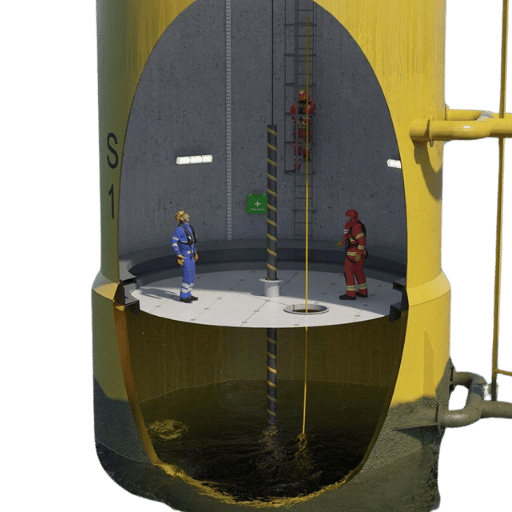
How does nature impact subsea cable installation?
Nature has a strong influence on the installation process of subsea cables in offshore wind farms. Strong currents and high waves can create dangerous conditions for workers, either stopping the operation completely or increasing the likelihood of the cable being damaged during handling. Features of the seafloor like rock formations or shifting sands can cause problems with the burial or anchoring of the cables. Moreover, installation work can come to a complete standstill during extreme weather, such as storms. Detailed planning, site surveys, and advanced installation techniques can be used to mitigate these challenges while ensuring efficiency and safety for the subsea infrastructure.
What are the key considerations for seabed cable laying?
- Site Surveys – To ensure the proposed route does not have any geographical, geological, or man-prepared obstacles, preliminary topographic, sedimentary, and even biological surveys need to be conducted.
- Environmental Conditions – Analysis of weather and sea traffic to the area alongside study and prediction of tidal actions greatly enhances chance of minimum disruption to installation activities.
- Cable Protection – Disturbance Prevention Measures (DPM) such as trenching and armoring cables greatly add physical protection, greatly reducing chances of outside interference.
- Regulatory Compliance – As Deployment use of cables affects marked boundaries, International and Deployed Area law compliance becomes imperative.
- Collaborative Planning – Engaging with various stakeholders and planning for several different outcomes contributes to the operational efficiency of complex installations.
Frequently Asked Questions (FAQ)
Q: What are Array Cables, and how do they function in offshore wind energy?
A: In the context of a wind farm, array cables connect offshore wind turbines to the substation within the wind farm. They are crucial resolving the issue regarding the collection of power from the wind turbines and transferring it to the substation where it can be further exported to an onshore substation.
Q: What is Export Cable in offshore wind projects?
A: Export cables run from the offshore substation to the onshore substation, and these cables are essential in the transmission of electricity derived from offshore wind farms to the land based grid.
Q: What is the difference between array cables and export cables in terms of their functions?
A: Array cables mainly connect the turbines within the wind farm and take power generated from the wind turbines to an offshore substation. Export cables, however, take the power collected at the substation to the onshore substation where it is disseminated.
Q: Why Does Cable Length Matter In Offshore Wind Energy?
A: In offshore wind energy, cable length is a vital consideration because it impacts the efficiency and cost of energy transmission. Longer cables translate to higher resistance which can result in power loss, so selection and optimization is crucial during offshore wind development.
Q: What are the implications of floating offshore wind farms for cable selection?
A: Floating offshore wind farms usually have deeper water column installations which require other cable solutions. These farms need flexible cables that withstand movement and tension in water, impacting the design and selection of array and export cables.
Q: What types of cables are typically used in offshore wind projects?
A: During offshore wind projects, AC cables and DC cables are used depending on distance and power requirements. For shorter distances, AC cables are common while DC cables are used at longer distances to reduce energy loss.
Q: Can you explain the role of equipment and vessels in the installation of offshore cables?
A: Precise execution of array and export cable installations in wind farms and other marine infrastructure projects requires sophisticated tools and vessels. Often, the vessels have automated systems for cable laying and interfacing, which helps in high-seas operating dynamics.
Q: What is the significance of the MV rating in cables used in offshore wind?
A: The MV (Medium Voltage) rating would, in that sense, mean that the cables and/or line are outfitted with and/or compartmented for efficient energy expenditure in modular offshore wind farms. The rating ensures the operating limits of electrical conductors and components are within safe operational conditions.
Q: How does early offshore wind development influence cable technology today?
A: The development of offshore wind facilities has greatly driven the development of cable technology used in wind energy today. There are many lessons from these initial projects which have driven advancements in materials, designing, installing, and optimizing performance conducted in gran reliability in modern offshore wind projects.
Q: What is the role of LS Cable in the offshore wind industry?
A: LS Cable is known to be one of the offshore wind cable solutions manufacturers and providers. They supply a range of cables that are customized for the harsh conditions of offshore environments which ensures efficient power transfer as well as project success.
Reference Sources
- Experimental and Numerical Study of Suspended Inter-Array Cable Configurations for Floating Offshore Wind Farm
- Authors: Di-Rong Li, Yu-Shiou Su, Ray-Yeng Yang
- Publication Date: 2024-05-21
- Journal: Journal of Marine Science and Engineering
- Summary: This research investigates the practical application of a fully suspended inter-array cable system for an offshore wind farm. It comprises numerical simulations as well as a small-scale experiment intended to corroborate the simulations. The research considers the tension, curvature, and cumulative fatigue damage of the dynamic cable system while analyzing the performance of inter-array cables relative to export cables in their structural integrity and operational conditions.
- Methodology: As stated, the research uses Orcina Orcaflex 11.4 for running fully coupled simulations and also tests the results numerically by performing experiments at a scale of 1-49. Its Taiwan Hsinchu offshore area environmental modeling is specific towards the cable’s operations under severe sea conditions.(Li et al., 2024).
- An Optimisation Methodology for Suspended Inter-Array Power Cable Configurations Between Two Floating Offshore Wind Turbines
- Authors: I. Ahmad, D. Liu, M. C. Ong
- Publication Date: 2023-06-01
- Journal: Ocean Engineering
- Summary: Also, the study works with Orcina Orcaflex 11.4 sequentially for fully coupled simulations and numerically validates the results by conducting 1:49 scale model experiments. Its particular modeling focus for Taiwan Hsinchu offshore region is related to cable’s operational performance in rough sea states.
- Methodology: The research focuses on the dynamic response of the cable as well as performance-related metrics driven by environmental factors, specifically tuning cable configurations through numerical simulations(Ahmad et al., 2023).
- Failure Analysis of a Suspended Inter-Array Power Cable Between Two Spar-Type Floating Wind Turbines: Evaluating the Influence of Buoy Element Failure on the Cable
- Authors: Dan Liu, I. Ahmad, M. C. Ong
- Publication Date: 2024-06-15
- Journal: Journal of Marine Science and Engineering
- Summary: This research analyzes how failures in buoy elements affect the structural health and fatigue life of power cables within offshore settings. It emphasizes the gaps in inadequacies in inter-array versus export cables concerning their failure modes as well as operational stresses.”
- Methodology: The study utilizes numerical simulations, as well as fatigue analysis with OrcaFlex to evaluate maximum tension, minimum bend radius, and fatigue life for a given set of failure cases.(Liu et al., 2024).
- Offshore wind power
- Substation