Electricity is a key pillar of modern society as it powers gadgets and tools used in homes or factories. However, not all electricity is the same. There are AC – Alternating Current and DC-direct current, which have different attributes, uses, and benefits. Knowing the difference between the two, as well as distinguishing which type is in use, is very important for professionals, amateurs, and regular users. In this article, we intend to explain everything surrounding AC and DC power, discuss their technical differences, and help the reader identify which kind of electricity is used in different situations.
What Is the Difference Between AC and DC?
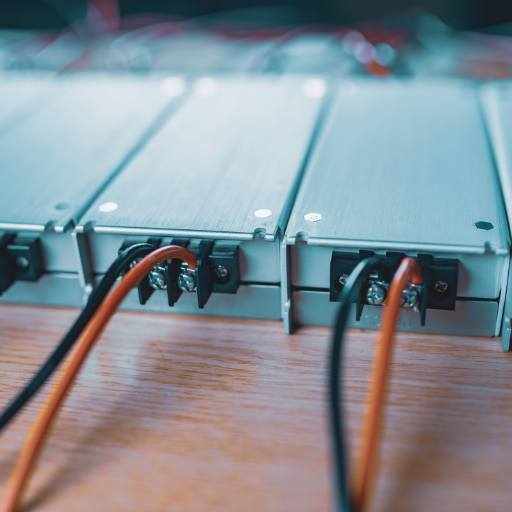
What Are AC and DC?
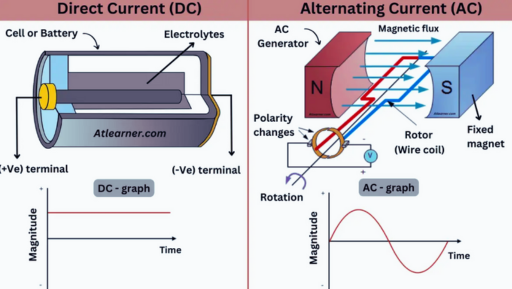
AC or Alternating Current and DC or Direct Current are the two main types of an electrical current. While AC changes direction periodically–usually following a sine wave–DC maintains a constant flow in a single direction. These forms of currents serve as the backbone of contemporary electric power distribution and consumption.
Key Differences in Voltage and Current Flow
Current Flow:
AC: Frequency is measured in hertz (Hz) which indicates the number of cycles per second. The United States standard is 60Hz while In Europe it is 50Hz. In both regions, AC current alternates the direction of flow periodically.
DC: There is no periodic change in the flow of current. The current flows in a single direction steadily.
Voltage:
AC voltage can oscillate to positive and negative values within a sine curve. An example would be like V(t) = Vmax * sin(2πft); where Vmax is the peak value and f is the frequency.
DC voltage is set at a fixed number, meaning it also can be referred to as a constant voltage. An example can be 5V or 12V.
Electricity Distribution:
Because of the ability to easy step up or down with the use of transformers, AC is more efficient for long distance, high voltage electricity distribution.
With more complex large scale voltage alterations, DC is better used for low-voltage or short distance applications.
Applications of AC and DC Power
Applications of AC Power:
- Residential and Commercial Power Supply: AC is the dominant method of powering homes and businesses around the globe because of its efficiency when it comes to transmission.
- Industrial Motors and Machinery: These large machines are usually powered by AC because of the alternating nature of the energy supplied in the factory.
- High Voltage Transmission: AC is used on long transmission lines because it delivers better efficiency with less energy wasted through heating after transformation.
Uses for DC Power:
Electronic and Battery Operated Devices: Devices like mobile phones, laptops, and even tools that are easy to carry require DC to operate because batteries store and provide power in the form of direct current.
Electric Motor Vehicles (EMV): DC is used for the motors as well the infrastructure for charging the batteries in EMVs.
Integrating Renewable Energy Systems: Renewable energy resources such as solar panels produce DC which is importantly changed later whenever it is needed for storage or to supply power for the grid.
Knowing these advantages and applications, one can understand the allied functions of AC and DC in electric modern systems as in many levels of technologies and industries prove define versatility and efficiency.”
How to Identify AC and DC Voltages?
Using a Multimeter to Measure Voltage
Measuring voltage with a multimeter begins with verifying the device settings for voltage type: alternating current (AC) or direct current (DC). For DC voltage, the multimeter should be on one of the appropriate DC voltage levels (usually represented by a solid line above a dashed line). For AC, choose the AC voltage section usually marked with a sine wave. The probes from the multimeter should be connected to the circuit red to the plus or live contact and black to the negative or ground contact. From the multimeter, there will be a stable reading for DC voltage while the AC voltage reading will fluctuate slightly depending on the signal.
AC and DC Signals on an Oscilloscope
An oscilloscope shows the changes in electric signal within the period, thus distinguishing between the AC and DC signals. An oscilloscope captures the DC voltage signal as a horizontal straight line on the display, showing a constant value, while AC signals change as time progresses. AC signals will appear wavy on the screen, generally in a sine shape, showing the cyclic alteration and change in amplitude(forward and backward voltage). AC signals have also been simplified to wave signals whose stability can be monitored):))) The frequency of the signals, their strength, and form are useful for diagnosing or monitoring the state of a system for any malfunctions.
Distinguishing Between AC and DC in Waveform Recognition
When distinguishing between AC waveforms, they always have a sine wave shape although they can also be in a square or triangular form. AC signals have both positive and negative polarity. Their DC counterparts have a fixed polarity and voltage level which translates to a straight, feign line on telemeters, multimeters, and oscilloscopes. Being able to distinguish between the two helps in correctly identifying the voltage sources and managing various electrical systems.
What is AC Power Supply and How Is It Used?
How Does a Transformer Work with AC?
Electromagnetic induction serves as the basis for how a transformer works. Electrical energy is transferred seamlessly between two or more windings or coils of wire. In the case of the primary winding, when AC voltage is connected, a time-varying magnetic field is produced. This leads to a transformer being able to either step up (increase) or step down (decrease) output voltage, as an additional inactivated voltage is induced in the secondary winding as a reaction to this changing magnetic field. Transformers are solely designed for alternating current (AC) because only AC current produces the changing magnetic field that is needed for induction. Important characteristics that determine how well a transformer works include the turns ratio as (N1⁄N2) – (primary to secondary winding), core material properties, and overall performance which is often between 95% to 99% in these well-designed systems.
Benefits of Using AC for Power Transmission
Transformers aid in either stepping up or down the voltage, thus making it possible to use higher efficiency methods for long distance transmission. This makes AC the best candidate for heavy power transmission. Reducing the value for I, the current, in the formula of I2R will also lower the value of P-loss in transmission loss, which is already significant for long-distance travel. Transmission companies with transmission loss need to worry less when the voltage is scaled up. In most systems, the configured upper voltages are found to be more economically agreeable than their low voltage equivalents. In addition, aligning with mechanical standards, load, and consistent power delivery to large countries can be achieved by ensuring line transmission loss is minimal. Unlike DC systems, where equality is used, the ease of maintenance for AC systems is unparalleled.
How to Measure AC and DC Currents?
Using a Multimeter in AC and DC Mode
Measuring AC and DC current on a multimeter is quite the experience. First, I make sure to set the multimeter on the right mode. AC is usually labeled with a symbol resembling a “~”. For DC, a “−” symbol is used. In the case of DC, I place the meter probes in series with the circuit so that the positive probe leads to the positive current flow direction. For AC, the procedure is the same, but I focus on the current’s alternating characteristic rather than its polarity.
To begin with, I check the current value on the multimeter to avoid damage as well as the value range for the multimeter. As always, safety steps, is also critical. For example the isolation of the circuit during the connection or disconnection of the probes. Following this and reputable multimeter AC and DC current specific instructions should lead to accurate reliable measurements.
Why Do We Need to Convert AC to DC?
Rectifiers of DC power are critical in numerous fields that require a stable and constant DC voltage. They can be found in the following specific areas:
Telecommunication: Devices linked to the network infrastructure need constant DC power. This includes communication equipment. Hence, uninterrupted DC supply is critical as far as dependability is concerned.
Consumer Electronics: Gadgets like phones, laptops and TVs need a source of DC power which is usually obtained through rectified AC from adapters or power plugs. In simple terms, consumer electronics rely on DC power and requires rectifer.
Industrial Machinery: DC power is indispensable to equipment such as motor drives and automation systems because they need precision control and reliable operation. Hence, DC is required here too.
Renewable Energy Systems: Solar power systems produce DC power, but when connected to AC grids, rectification takes place backward. This is done to enhance efficiency and compatibility with the system.
Electric Vehicles (EVs): EV battery charging systems use rectifiers to change AC power obtained from charging stations into DC, which can be stored.
AC is turned into DC with the aid of rectifiers, making it possible for the above uses to have the required performance and dependability stemming from the proper voltage attributes. This shows that rectifers perfom an important role in technology.
What Are the Common Uses of AC and DC?
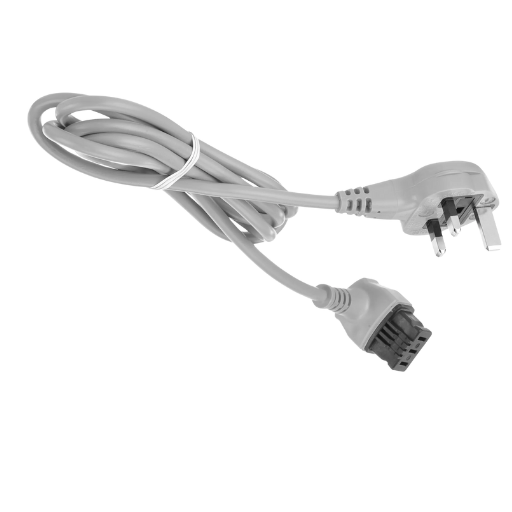
Everyday Applications of AC Power
Due to its efficiency in long-distance transmission, alternating current (AC) is broadly utilized for power distribution in homes, businesses, and industries. Some specific examples include:
- Residential Power Supply: AC powers household appliances such as refrigerators and air conditioners. Lights also function on AC voltage. The voltage range is 110-120V in North America and 220-240V in Europe and Asia.
- Public Utilities : AC energy is incorporated into city grids and used in public infrastructure for efficient electricity distribution to buildings and facilties with transformers that change voltage. In transmission lines, AC voltage is reduced from hundreds of kilovolts.
Where is DC Power Commonly Found?
Direct Current (DC) forms the backbone of modern electronics needing a stable and fixed power supply. Applications of DC include:
Portable Devices: Smartphones, laptops, and other gadgets make use of li-ion batteries, which provide power at the required voltage range between 3.6V and 12V.
Electric Vehicles (EVs): Batteries used for storage in EVs also use DC, normally at 400V to 800V, to drive modern high-performance systems for effortless acceleration and propelling.
Data Centers: Firmly adapt servers by using 48V DC to get rid of voltage fluctuation and ensure the critical operations are performed without interruption.
Renewable Energy Systems: Solar panels provide an output voltage in the range of 12V to 48V in the DC form which gets changed into AC via inverters for use in the grid.
Telecommunications: Base stations and repeaters smoothly serviced in the field with 48V DC power for their efficiency and ease of maintenance.
Appropriate supplements, voltage level and others, are defined for the AC and DC parameters ensuring streamlined effectiveness across the system allied with other technologies.