Power relationships and cords represent some of the most basic elements in any electrical system, yet they are often used synonymously. Both may appear to transmit power, which, in essence, requires some functions that are similar at a superficial level. Understanding the nuance is important for many professionals and even consumers who are trying to select the right equipment for their electrical systems. In this article, we shall analyze the key differences between the two terms by explaining their models, applications, and technical specifications so that you can make informed decisions.
What is the Difference Between a Power Cord and a Power Cable?
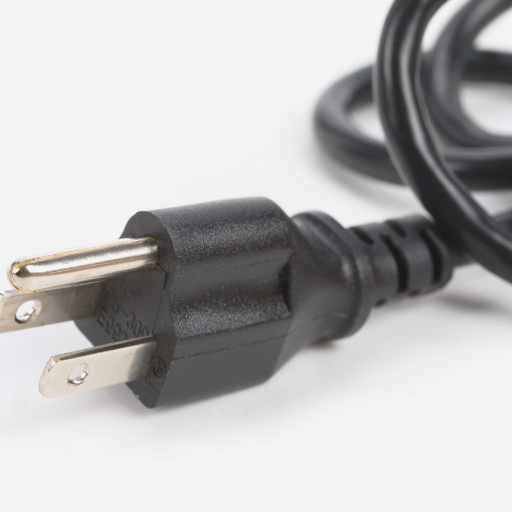
Main Characteristics of a Power Cord
A power cord can simply be defined as a flexible electrical wire that connects an appliance directly into an electricity outlet and powers it. Like every cord, a power cord includes a set of insulated wires and an attached plug. One end of the plug is shaped as a mold, while the other end varies based on usage, either as a connector or bare end. Power cords are primarily utilized for home appliances, mobile gadgets, and other electronic devices. They are manufactured in a way that ensures compliance with safety regulations like UL or IEC certifications, thereby protecting users from possible electrical dangers. For practicality and efficiency concerns, power cords have an established maximum length and are best suited for indoor and low-voltage applications.
Differences Between a Power Cable and Cord
A power cable includes various electrical wire solutions while a power cord only refers to a singular straight cord, while they may look the same. A power cable is built for more extreme conditions like high voltage and outdoor usage, thus requiring greater performance. These cables contain multiple conductors and have more than one layer of insulation which increases resistance to harsh environmental factors like intense heat, damp areas, and mechanical stress. Unlike power cords, power cables are industrial grade and meant for infrastructure and power distribution projects like installations behind walls, inside conduits, or underground.
Are Power Cords and Cables Used Interchangeably?
Due to their different designs and specific purposes, power cords and power cables are not fully interchangeable. Power cords are most often used in portable or temporary contexts, whereas power cables are meant for fixed installations and high voltage areas. Using the wrong one for a given application may pose safety risks or hinder the system’s performance. Selecting the right type depends on electrical load, the environment, and regulations for the given piece of equipment.
How to Choose the Right Power Cord or Cable?
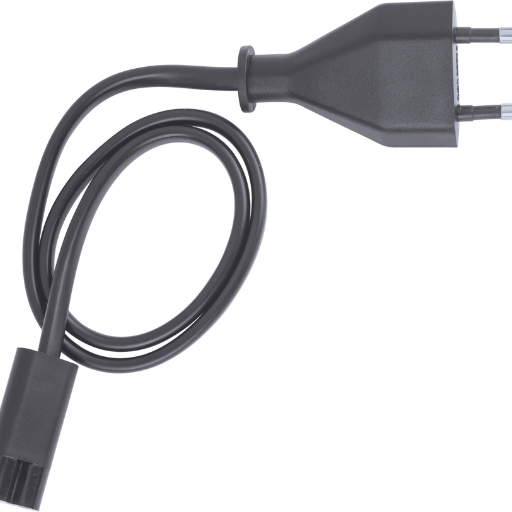
Factors to Consider When Choosing the Right Power Cord or Cable
There are various factors to consider when choosing your power cord or cable, such as safety measures, how efficient the cable is, and its overall functionality. These include but are not limited to:
Evaluating Voltage and Current Rating
Always ensure that the power cord or cable can service the adequate voltage (e.g., 120V, 240V) and pull the correct current (which is measured in amps) . Doing otherwise may overheat or bring failure to the cord or cable. For example, cables used in high-voltage industrial environments need to have specific ratings like 600V or 600V.
Environmental Conditions
Evaluate the aesthetic for the area where the cord or cable will be stationed. For outside access or industrial areas, these cables should have appropriate weather and moisture protection. For extreme heat or corrosive areas, using silicone rubber or Teflon insulation may be required for these components to be deemed safe.
Its Length and Gauge
One area these guidelines fail to touch is the length of the cord. This has several repercussions on voltage drop, which affect its performance. Longer cables require thinner wires to achieve efficiency. As an example, 16-gauge cords for light-duty work, whereas 12-gauge and 10-gauge is needed for heavy-duty tools.
Role of Plug Type in Selection
As an addendum, the importance of the plug type is particularly related to the geographical region and the socket it will be used with. For example:
NEMA Rated Plugs (e.g. NEMA 5-15P) are mostly found in the United States while Type C or Type G are used internationally in Europe or the UK.
Special plugs, for instance, locking plugs or twist lock configurations, enable mechanized equipment to disallow accidental disconnection.
Certifications need to be checked with the region-specific UL, CE or IEC related to the power cord compliance.
The Importance of Insulation in Cable Selection
Insulation is important to ensure the safety and proper functioning of electrical components. The main factors to consider are:
Material
Polyvinyl Chloride (PVC): This is an inexpensive insulation material that has universal application. For high voltage usage with thermal resistance, Cross-Linked Polyethylene (XLPE) is ideal.
Operating Temperature Limits
PVC insulation is appropriate for temperatures between 60°C to 105°C. Silicone allows even higher temperatures, being suitable for up to 200 °C.
Dielectric Strength
A higher dielectric strength means better voltage surge resistance. Thus, surge resilience will be compromised only in case of breakdown.
With these guidelines and additional technical specifications, an appropriate power cord can be selected while ensuring compliance and operational effectiveness.
What Types of Cables are Used for Power Transmission?
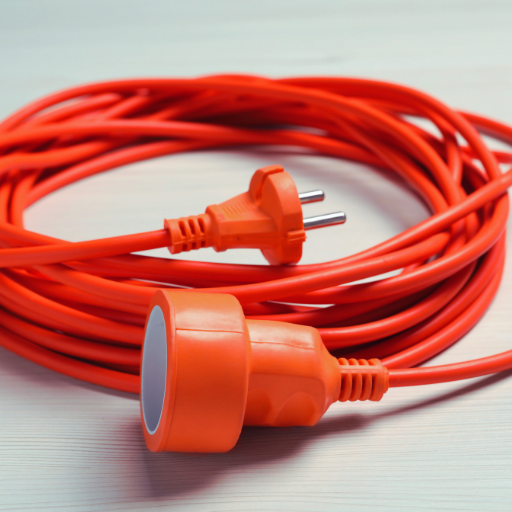
Common Materials Used in Power Cables
Efficiency and safety measures are in the construction of Power cables with regards to use of suitable materials. Aluminum and copper are the most common conductors because they are cheaper and have great electrical conductivity. When tensile strength and conductivity are the most important factors, copper is the preferred choice. Aluminum is selected when cost and weight are the most critical factors. Materials like rubber, PVC, and cross-linked polyethylene are commonly used for insulation because of their flexibility, thermal resistance, and electrical insulation.
Most Efficient Cable for Power Delivery
If efficiency is the sole consideration, copper cables tend to be the most efficient option for power delivery. With the lowest electrical resistance, copper permits energy to flow freely without considerable loss causing loss, ensuring dependable delivery, making it perfect for properties where dependability is paramount. confianza. Nevertheless, in certain budget-restricted or weight-sensitive scenarios, aluminum cables could serve as a feasible solution.
Importance of the NEMA Standard in Power Cords
The NEMA (National Electrical Manufacturers Association) standards offer safety and relevance in the power cords’ compatibility. These standards provide the structuring of design, testing, and safety policies of any electric apparatus to guarantee that the power cords will stand up to the volts and amps thrust upon them as well as interoperate harmoniously with various devices. The use of NEMA compliant cables is necessary in order to be within compliance with the law as well as operational safety in homes, businesses, or industrial settings.
What is the Role of a Plug-in Power Cords and Cables?
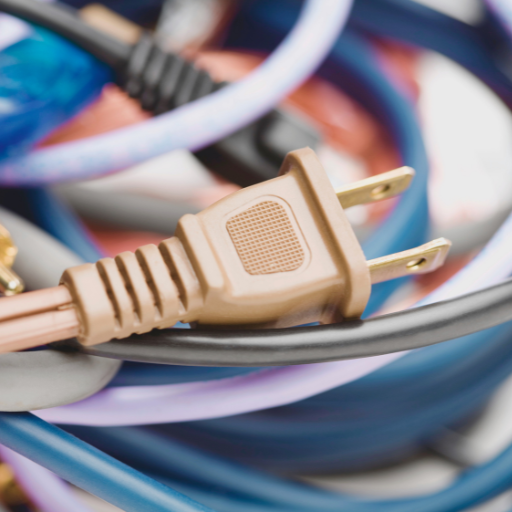
The functionality of power cords and their compatibility plugs at a technical level is affected by the design of a plug, which ensures connectivity, power transmission, and overall functionality. “Every plug must be designed to meet a specific shape, size, and configuration standard in NEMA or IEC relevant to the voltage and current ratings attached device.” A perfect example features the NEMA 5-15P plug with a common rating of 125V at 15A, depicting usability with American residential appliances. Refinements like ergonomics further promote functionality by providing reinforced grips and facilitating seamless usability during repeated plugging cycles.
Safety hazards relating to electrical short circuits or overheating and connectors and plugs electric shocks require utmost safety. “Don’t forget the reinforced protection provided by the constituent materials other with great dielectric strength.” Safeguards, in addition to snapping barriers, include prong grounding, a polarization gap, and insulation barriers of connectors that protect live cables, reducing risks of incorrect miswiring. The sole aim of safely allocated earth active pins permitting ground wires for fault currents comprises zap electricity flow. Integrated fuses are a principal device-hurt user-preventing mechanism to the user.
In summary, a plug that is well engineered “works” as intended in terms of function while meeting safety standards necessary for compliance and operational demands.
How Do Power Cables Transmit Electrical Power?

What Types of Conductors Are Typically Found in Power Cables?
Due to their effective electrical and mechanical properties, power cables commonly use copper and aluminum as the core conductors. Copper, which has a conductivity of about 59.6 × 10^6 S/m, is preferred due to its higher electrical conductivity, tensile strength, resistance to oxidation, and suitability for high-performance applications. Aluminum, on the other hand, is significantly lighter and less expensive, making it ideal for long-distance power transmission where weight and cost are critical factors, despite its lesser conductivity of 37.7 × 10^6 S/m.
Why is insulation important in electric cables?
The importance of insulation in electric cables revolves around electrical safety and maintenance of signal, as well as energy leakage protection. Insulators such as PVC (Polyvinyl Chloride) and rubber are preferred because of their high dielectric strength alongside resistance to moisture, temperature changes, and physical damage. For instance, XLPE is suitable for high-voltage applications because it has a dielectric strength of about 25–40 kV/mm and can tolerate temperatures of up to 90°C. It also lowers the risk of short circuits and electrical arcing, which are critical to system reliability.
In What Manner Do Multiple Wires in a Single Cable Aid in Power Distribution?
Multi-core cables, as they are generally known, aid in the distribution of power by allowing several circuits to be sent in one cable. Such an arrangement minimizes electromagnetic interference (EMI) as well as load distribution imbalance, which are critical to three-phase electrical systems. Consider a three-core cable that serves three-phase power systems. It has properly balanced phase loads that help to enhance system energy efficiency and stability while minimizing losses. Apart from that, enclosing several wires in one sheath saves space and makes installation easier.
What Are Common Applications for Cords and Power Cables?
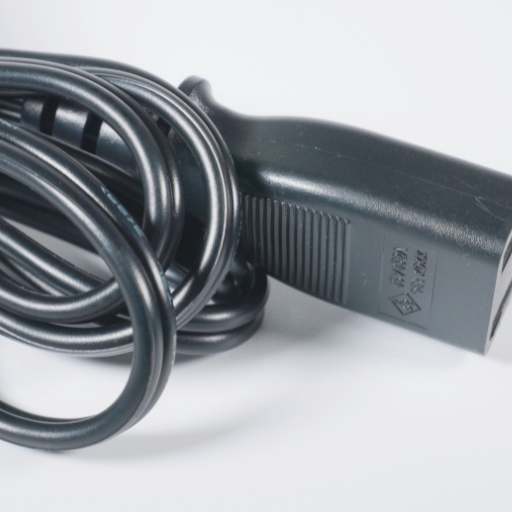
What Types of Appliances Commonly Use Power Cords?
Power cords are critical for both residential and commercial appliances. Household appliances such as refrigerators, ovens, washing machines, televisions, and microwaves are powered by connecting to electrical outlets via power cords. Similarly, smaller devices like laptops, chargers, and lamps rely on power cords to be functional. Industrial tools, from power tools to welding machines and other heavy machinery, are equipped with specially insulated power cords to cope with the greater electrical demands.
Commonly Used Extension Cords Scenarios
These cords are most commonly used where the primary or standard power outlet is too far from the needs. For example, in construction sites to power tools temporarily or at home for seasonal decorative lights. These cords can also be helpful in occasions or outdoor activities when multiple devices need to be powered but there is only one power source available. Care should be taken not to use cords with too few ratings for the power load.
How Do Ethernet Cables Compare in Function to Power Cables?
Ethernet cables and power cables differ in connectivity and energy distribution; they serve different functions. A power cable supplies electricity to a specific appliance or device, whereas Ethernet cables transmit data signals to facilitate networking. Within a network, ethernet cables allow devices to communicate, connect to the internet, and transfer data rapidly. Ethernet cables, unlike power cables, have more stringent requirements regarding the integrity of signals, as they are used for networking purposes, thus requiring shielding to reduce interference. Together, these cables ensure the modern electronic and communication systems function optimally.