Choosing the right cable for your project can greatly influence the effectiveness and safety of electrical wiring. A repetitive dilemma faced on a frequent basis is choosing between 3-core and 4-core cables. Without the proper knowledge, determining which is best suited for your needs can be a difficult task. The difference in choice for these cables depends largely on one’s application, power sufficing, and even governing wiring laws. In this article, we provide the most appropriate and effective information regarding 3-core and 4-core cables, their distinguishing factors, their usual applications, and other vital details to help you carefully and wisely choose the right cable. These distinctions need to be understood before one plans a residential installation or manages an industrial project. Continue reading to learn about which particular cable is most suited to your needs and requirements.
What is a 3-Core Cable?

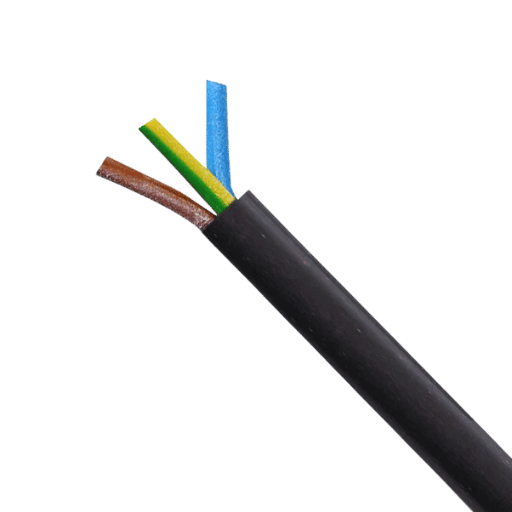
An electrical 3-core cable is an electrical wire that contains 3 separate wires, each of them insulated and placed within a cover. Usually, the wires found in a 3-core cable include a phase wire, a neutral wire, and an earth / grounding wire. The main goal of having these conductors too is as far as safe and reliable connection is considered for ensuring smooth flow of electricity while at the same time done a grounding for safety.
These conductors serve to provide a reliable connection that ensures electrical flow, and at the same time grounding for safety. 3-core cables are used very often in single-phase operations such as home electrical wiring, lighting circuitry and light duty appliances where provision for electrical grounding needs to be provided in accordance with safety norms.
Understanding 3 Core Cable Structure
A standard 3-core cable is made up of 3 insulated conductors, which have distinct roles for proper operation and safety. The following are the conductors:
- Earth (Grounding) Wire (Green and Yellow Striped) – Provides a safety path to discharge excess electricity and protect against electric shocks or faults.
- Live Wire (Brown/Red) – This wire carries the electrical current from the power source to the relevant device or appliance.
- Neutral Wire (Blue/Black) – This wire returns the current back to the power source completing the circuit.
A 3-core cable is protected against temperature, humidity, and other forms of damage by an outer sheath which further reinforces the durability of the conductors inside. These cables are particularly important in circuits where compliance with safety protocols is required due to grounding.
Applications of 3-Core Cable in Electrical Wiring
Residential Electric Wiring
- 3-core cables take care of the wiring for circuits with a grounding requirement for most households. Lighting, power supply sockets, and kitchen appliances are some of the devices that require these cables. These circuits follow the electric safety standards, so minimal risk of electric shock is warranted.
Commercial and Industrial Installations
- This type of cable is widely used in industrial buildings, warehouses and office blocks with heavier electrical loads. Grounding elements are necessary for the operational safety for powering devices such as machinery, HVAC systems, and other high demand electric devices.
Cables for External Installation and Underground Cables
- The range of applications for 3-core cables includes garden power sockets, outdoor lighting, and even underground installations due to their having robust outer sheaths, toughness, durability and insulation from moisture, UV rays and physical damage.
Wiring of Portable Electrical Equipment
- 3-core flexible and safe wires are common in many portable gadgets like power tools. The grounding wire of the tool keeps the user safe in case of any electrical faults when in operation.
Connection of Fixed Electrical Equipment
- Air conditioning units and other electric devices like heaters and ovens require 3-core cables to guarantee grounding while coping with high power demands.
Systems for supplying temporary power
- Events and construction sites require flexible power supply systems and these types of cables can be used for such temporary installations. The dynamic nature of these setups require assured connections and reduced hazard risk.
Their flexibility while still observing safety measures makes 3-core cables essential in many different fields of electrical work.
Benefits of Using a 3-Core Cable
Improved Safety with Grounding
- The addition of a grounding wire to a 3-core cable greatly minimizes the possibility of electrical shocks and fire risks. Grounding provides a safe route for fault currents and guarantees user and equipment safety. Industry data indicates that adequately grounded systems can minimize equipment damage during electrical faults by as much as 30%.
Adaptability to Different Uses
- 3-core cables can be used in a variety of settings, from industrial plants and residential buildings to temporary sites. It is the default choice of many engineers and electricians due to its ability to carry high current loads while keeping safety caps.
Meeting Safety Requirements
- Almost all 3-core cables are produced according to international safety requirements such as IEC 60228 and BS 7671, ensuring compliance with set legal standards. This accuracy makes them a dependable and endorsed option across sectors.
Strength and Endurance
- Wear and tear resistant, and high-quality insulation materials are often used in the construction of 3-core cables. Research suggests that over 25 years can be added to the lifespan of a cable with strong insulation when exposed to harsh conditions, reducing the need for costly replacements and repairs.
Load Balancing Capability
- The architecture of a 3-core cable enables the equal distribution of power to three conductors, which prevents overloading a single wire and overheating. This equilibrium promotes optimal performance while reducing failures.
Noise Reduction in Circuits
- Three wires within the cable can protect a system against electromagnetic interference (EMI). This also aids in maintaining the reliability of the signal, particularly within sensitive devices and in industrial or electronic environments where interference is prevalent.
Cost-Effective in Long-Term Use
- The initial cost of a 3-core cable is likely more expensive than simpler alternatives, but its reliability concerning sturdiness, safety, compliance, and less frequent maintenance or replacements makes it cost-effective in the long run for both residential and industrial settings.
These advantages outline why 3-core cables are increasingly becoming fundamental to contemporary electrical systems, providing safe solutions to multifaceted electrical challenges.
What is a 4-Core Cable?

4 Core Cable Composition and Design
A single 4-core cable includes four individual cores comprised of conductors such as aluminum or copper, which are also sheathed within an insulated covering. So as to simplify identification during installation, wires inside the 4-core cable are usually color-coded. Like most cables, a 4-core cable also has durable and moisture-resistant sheath that provides protection against abrasion and other environmental factors. This type of cable is used where signals, power, or data is transmitted across different circuits since it provides organized and efficient wiring.
When to Use a 4-Core Cable?
Different systems that require several circuits to function together within a single setup work well with 4-core cables. Such applications include data control in telecommunications automation and even in residential wire setup for electrical power transmission. In addition to all the above, the cable also provides neat arrangements of wiring along with consistent performance which makes it useful in different types of surroundings and weather both indoors and outdoors.
Advantages of 4-Core Cable over Others
Improved Performance in Power Distribution
- Utilization of 4-core cables is more efficient in power distribution as it houses multiple circuits in a single cable compared to 2-core or single-core cables. With this construction, the amount of individual cables needed is lowered which saves space and simplifies the installation process.
Cost-effectiveness
- Material and labor costs are better spent when 4 cores are integrated into one cable. In large scale or complex projects, cost-effective options are a must and due to the decreased overall time needed for wiring, 4-core cables prove to be effective.
Easier Structuring and Maintenance
- Having an organized structure due to the compact layout of 4-core cables makes them easier to maintain and troubleshoot. Such features are extremely helpful in data centers and industrial control panels which have dense wiring systems.
Wider Range of Uses
- Control systems, signal transmission, and power distribution are just some of the areas to which 4-core cables can be applied. Their flexibility allows use for different industries such as building automation, infrastructure projects and telecommunications.
Improved Durability
- For industrial and outdoor surroundings, most 4-core cables are protected with strong insulation and sheathing materials. These help the cables withstand extreme temperatures, moisture, and mechanical stress, ensuring that the cables will last a long time and maintain steady performance.
Reduced Electrical Interference
- The four-core cable configuration significantly diminishes electrical interference that may exist between circuits, optimizing the efficacy and dependability of power and signal transmission. It is extremely important in places with sensitive equipment or strong electromagnetic interference.
Compliance with Safety Standards
- Like other cables, many 4-core cables are designed and built according to specific standards, optimizing them for increased safety and protection against electrical faults or hazards, ensuring the safety of the installation and its users.
How to Choose Between 3-Core and 4-Core Cable?

Factors to Consider in Cable Selection
Electrical Load Requirements
- Two factors need to be considered when deciding whether to use a 3-core or 4-core cable. These factors include the electrical load and the application. For example, industrial devices supplied with three-phase power plus neutral protective grounding or splitting transformer ancillary equipment setups tend to use 4-core cables. Simpler three-phase systems may only need 3-core cables. Whether the cable will be overloaded and overheated is related to a lot of other factors, but when it comes to cables, the current-carrying capacity has to be calculated properly.
The Application Type and Purpose
- Complex mechanical engineering structures with heavy machinery, HVAC systems, or data communication need neutral and grounding conductors and as such, demand a 4-core configuration. Smaller tools, appliances, and machinery on the other hand, can operate with 3-core cables. Each one of these require a specific purpose and application configuration.
Voltage Rating and Insulation
- Analyze the system voltage rating and make sure the cable insulation is appropriate for operating voltage as well as the environment. The strapping should also be able to withstand the temperature and chemicals moisture and temperature if the installation place has those extremities.
Environment and Installation Conditions
- Factors like temperature, humidity, mechanical impact, and exposure to chemicals or UV radiation can drastically lower the performance and lifespan of a cable. For certain outdoor or industrial environments, it is recommended to use cables with robust shielding as well as protective sheaths. For example, 4-core cables have reinforced insulation which provides durability in extreme environments.
Regulatory Compliance and Safety Standards
- Make sure that any chosen cable integrates and complies with relevant national and international standards such as IEC, NEC, or BS regulations. Meeting these compliances not only provides operational safety, but also make sure that there is no issues with system design requirements across various domains. For example, LSZH (Low Smoke Zero Halogen) cables tend to be used for critical applications which require utmost safety.
Cost-Effectiveness vs. Life Cycle
- Due to added functionality and safety, 4-core cables may be more expensive up front, but they offer better long-term value when compared to 3-core. Doing a cost-benefit analysis of installing, maintaining, and the expected lifespan, will help guide decisions for which option is best long term.
Signal Interference and Shielding
- For applications which involve data transmission, or operate outdoors in high EMI (Electromagnetic Interference) regions, it is better to use 4-core cables as they have superior shielding properties which provide better protection. Since 4-core cables are designed for better protection against EMI, they are also better suited for more sensitive environments.
Future Scalability
- Because of ease of accommodating additional circuits and bridging requirements, in 4-core cables, installations with possible extensions have more flexibility in meeting future power needs. This helps reduce re-cabling in the future.
Selection is made from these criteria after carrying out thorough analysis considering safety, efficiency, reliability and the intended application. Always consult with technical documentation and industry standards before making any decision.
Understanding Your Power Distribution Needs
Begin by calculating the total energy consumption, in kilowatts (kW), of your system in order to understand your power distribution requirements. You should find the most important pieces of equipment and their power requirements at this stage to guarantee they have enough capacity. Don’t forget about potential peak load demands, future expansion plans, and energy efficiency objectives. Compliance with safety policies comes first, and have a word with an expert if there are unusual needs. A good evaluation minimizes the chance of outages or inefficiencies and guarantees reliable operation after deployment.
Consulting an Electrician for Expert Advice
In order to collaborate seamlessly on the design, installation, and maintenance of electrical systems, working with a licensed electrician is paramount. An electrician’s work is vital as they evaluate electrical loads, implement energy efficient designs, and check compliance with the nec. For example, while electrical circuits in residences typically are geared for 15-20 amps, industrial systems may need to go far higher, often exceeding 200 amps or more.
Electricians help with more advanced assessments surveys such as surge protection to prevent fluctuations from harming sensitive equipment or calculating voltage drop to make sure long cables runs are effective.
Recently, the incorporation of smart technologies such as programmable circuit breakers, energy monitoring systems, and sustained performance has made enhanced surge protection devices more popular.
A smart electrician ensures that all safety measures are fulfilled, but also accounts for possible future changes on system scalability. In case of replacing an outdated panel, or in installing renewable energy sources like solar arrays, professional advice is vital for a properly functioning, dependable, and compliant electrical framework.
Common Cable Types and Their Uses

Overview of Multi-Core and Single-Core Cables
Multi-Core Cables
Multi-core cables are made up of several insulated conductors arranged together within one common, outer protective covering. They are used in the more sophisticated circuits and or systems that need several signals to be interchanged or where power splitting is done. They are best suited for control systems, audio-visual systems, data transmission systems, and many sensors and transducers because of the high efficiency obtained from putting many interconnections into one cable. Their shape improves neatness and cuts down the time taken for installation.
Single-Core Cables
Single core cables consists of a single conductor which is insulated and encapsulated in one layer of isolation. These type accomodate electrical power or signal transmission. They are chiefly employed in less complicated configurations that draw a lot of current, say electrical wiring in households or industrial machines. These cables are simple to handle, but very tough if the working surroundings have limited movement available.
The two types of cables have their advantages, and the choice relies on the specific needs of the given electrical system.
Applications of Two-Core and Three-Core Cables
Common two-core and three-core cables have their respective uses depending on the safety and functional requirements of a particular electrical system. Uses include:
Two-Core Cables
Domestic Wiring
- Two-core cables find wide application in energizing circuits used to light up households as well as in powering appliances. Suitable for systems that do not need an earth connection.
Small Electrical Devices
- These are used for small, double-insulated appliances such as lamps, fans, and chargers that do not need grounding.
Low Tension Power Distribution
- Two-core cables are efficient in simple systems of low voltage within basic electrical installations that don’t involve great safety risks.
Temporary Installations
- Used extensively for ad hoc electrical arrangements, like event lighting, because of their simple installation and removal procedures.
Three-Core Cables
Industrial Equipment
- Highly used in industrial surroundings, where the inclusion of an earth wire is needed for safety, allowing fault currents to be efficiently channeled away.
High Powered Appliances
- C3 mains plug sockets used for air conditioning units, washing machines, and refrigarators incorporate the devices which require special safety precautions.
Commercial Electrical Systems
- Three-core cables are perfect for integrated circuits in commercial buildings which include offices and shops, where their use has to have an earth connection for safety.
Outdoor uses
- Appropriate for outdoor use like garden lighting or water pumps, where exposure to the environment requires added safety measures such as grounding.
Both cables contribute significantly to the dependability and safety of the tailored electrical system specific to the operations of the business and their safety needs.
Identifying the Right Cable for Your Electrical Project
When choosing a cable for your electrical project, keep the following three considerations in mind:
Application Requirements
- Identify the cable type needed, whether for indoor or outdoor purposes and verify whether it complies with the relevant safety regulations.
Electrical Load
- Evaluate the requirements of your system’s voltage and current and choose a cable that can carry the required loads—thus preventing heating or loss of power.
Regulatory Compliance
- Check whether the cable conforms to the prevailing local codes along relevant boundaries, which may dictate the insulation, materials, and grounding provisions.
These considerations will help balance functionality and safety in the cable of choice. For more information, consider speaking with a qualified electrician.
Why is Earth Wire Important in Cables?
The Role of Earth Wire in Safety and Functionality
The earth wire is important for safety and functionality within an electrical system. It generates a safe, grounded pathway for an electric current to enter the earth in the event of a fault like short-circuiting or overheating. This greatly reduces the chances of electric shocks and damage to the equipment. In my opinion, an earth wire that is properly functioning indeed is necessary; it provides an important defense against electrical risks to humans and property.
How Earth Wire Enhances Electrical Installations
Adding an earth wire during the installation of electrical systems increases both the safety and efficiency of the installation by lessening the impact of electrical faults. An earth wire maintains safety by acting as a grounding terminal, providing a low-resistance route that protects sensitive equipment and users from excess current. This is essential in today’s electrical systems, which need reliable protection.
IEC (International Electrotechnical Commission) guidelines testify that the addition of an earth wire mitigates the dangers of electric shocks to a person by lowering the voltage the person could encounter during a fault. For example, recent studies show that grounding systems, when combined with RCDs and well-designed grounding, can lower chances of fatal electric shocks by 90 percent.
Moreover, the earth wire is crucial in eliminating the chances of damage to sensitive medical equipment caused by power surges or electromagnetic interference. This is critical for many sensitive electronics operating in data centers, hospitals, and industrial facilities, where tiny equipment surges can cause failures and expensive downtimes.
In relation to the technical aspects, the earth wire limits fault currents to suitable levels, enabling the protective device, which in this example is a circuit breaker, to function properly. Electrical engineering research, for instance, shows that circuit breakers properly responding to faults is guaranteed when there is grounding due to unobstructed and instantaneous current flow. This reduces the virtual possibility of fire risks and also keeps the system within compliant limits of authoritative codes like the National Electrical Code (NEC) or similar ones.
In any case, earth wire as described, adds another layer of safety and enhances the effective working life of any electrical installation, achieving crucial safety objectives intended to protect human life and infrastructure.
Comparing Earthing in 3 Core and 4 Core Cables
The main distinction when it comes to earthing for 3 core and 4 core cables is the existence of an individually assigned earth conductor.
- 3 Core Cables: These contain three conductors—live, neutral, and earth. The earth conductor provides a direct path to fault current, ensuring safety through effective grounding of electrical systems.
- 4 Core Cables: These include four conductors—live, neutral, and two additional conductors, which may consist of earth or part of a three-phase potential configuration. An earth conductor is usually incorporated in this design when there are grounding concerns.
With regards to the system’s earthing needs, regulatory requirements, and compliance, the selection of these cables is particular to the use case.
Frequently Asked Questions (FAQs)
Q: What is the primary difference between 3-core and 4-core cables?
A: The main difference concerns the number of cores and their functions. A 3-core cable comprises one neutral and two live wires and is often used for single-phase power connections. A 4 core cable, however, has an additional neutral or earth wire (fourth conductor), which makes it suitable for three-phase power connections.
Q: When should I use a 3-core and earth cable?
A: A 3-core and earth cable is used mostly for domestic wiring, especially in lighting circuits and for socket outlets that need to be earthed. It is a type of wire that is fundamental to many electrical situations involving grounding.
Q: What are the uses of a 2-core cable?
A: A 2-core cable, also known as double-core cable, has its principal use in electrical fittings that do not involve earthing, such as flexible lamps, small appliances, and double-insulated appliances.
Q: Is an armored cable needed for outdoor installations?
A: Yes. An armored cable, such as steel wire armored (SWA) cable, is perfect for outdoor installations. It offers protection from physical damage and is ideal for use in underground and severe environmental conditions.
Q: What type of power cables are used for mains power?
A: For Mains power, there are multi-core cables such as 3-core, 4-core, and armored cables. They are meant to ensure the safe delivery of electricity from the source to the appliances’ outlets.
Q: What is the reason for using PVC in power cables?
A: Power cables use PVC since it is a flexible material that has great strength and provides good insulation. It shields the core wires from physical hazards and electrical interference, thereby making it appropriate for a lot of applications in Verband with electricity.
Q: How do you make a decision between a 2-core and a 3-wire cable?
A: The decision is based on the set goal. One uses a 2-core cable for appliances that have no grounding, while a grounded 3-wire cable is used for devices that need grounding for safe operation.
Q: What is the function of a steel wire in armored cables?
A: The steel wire in armored cables does mechanical protection. It strengthens the cable, which enables it to be used in places where the cable is likely to be physically stressed or if it encounters blows.
Q: Is it possible to utilize a 4-core cable for the transmission of single-phase power?
A: A 4-core cable may be used for single-phase power transmission. However, its most common application is in three-phase systems. Depending on the particulars of the case, it may use the extra core for earthing or even a neutral conductor.
Reference Sources
1. Research on Temperature Sensing Method for Three-Core Cable Intermediate Joint Considering Three-Phase Load Imbalance
- Author: Xinhai Li et al.
- Publication Date: 2024-02-28
- Citation Token: (Li et al., 2024)
- Summary: The paper presents the study of temperature sensing considering the three-phase load imbalance for the three-core cables. The authors proposed a model for estimating the hot spot temperature of a cable joint using surface temperature data.
- Methodology: The research performed numerical simulations for temperature field analysis and created a hot spot inversion model. Experimental validation was undertaken on a 10 kV three-core cable joint.
- Key Findings: The model provided the accurate relative value of temperature increases necessary for the operational safety of three-core cables with unbalanced loads.
2. Research on an Equivalent Heat Source Model of the AC Arc in the Short Gap of a Copper-Core Cable and a Fire Risk Assessment Method
- Authors: Yu Li et al.
- Publication Date: 2024-02-23
- Citation Token: (Li et al., 2024)
- Summary: This paper explores the AC arc’s thermal features in copper-core cables by focusing on constructing an equivalent heat source model to estimate fire risk due to cable faults.
- Methodology: The authors set up a 2D axisymmetric AC arc MHD simulation model and experimentally validated the model’s simulations on the heat concentration and fire hazard potential of the system.
- Key Findings: The study provides insights into the thermal behavior of cables under fault conditions, emphasizing the importance of monitoring and managing heat generation in multi-core cables to prevent fire hazards.
3. Temperature Field Calculation and Thermal Circuit Equivalent Analysis of 110 kV Core Cable Joint
- Authors: Zhiqiang Zhang et al.
- Publication Date: 2024-02-24
- Citation Token: (Zhang et al., 2024)
- Summary: This paper proposes a thermal circuit model which takes into account the axial heat dissipation of a 110 kV single core cable joint for analyzing its temperature distribution.
- Methodology: The research calculated the temperature field using finite element methods and formulated a thermal circuit equivalent model that predicts the temperature increase due to active operations.
- Key Findings: The reliability and safety of high voltage cable systems depend on accurate prediction of temperatures, and the model discussed achieved significant success in this regard.
4. Wire