Our present-day networked society relies extensively on computer networking, as it facilitates communication and data sharing among devices, systems, and organizations. An important part of this infrastructure is filled by Ethernet cables which are crucial for the reliable and efficient transfer of data. As with most things in life, not all Ethernet cables are the same, there are specific types tailored for their needs and performance criteria. This article attempts to explain the different types of Ethernet cables, their technical details, and the real world scenarios they can be used in, so that you can make smart choices about your cabling needs. Your home’s network or an enterprise-level connectivity solution will be appropriately catered as you strive to understand these cables in terms of speed and reliability.
What Are the Distinctions Between the Varieties of Cables and Their Applications?
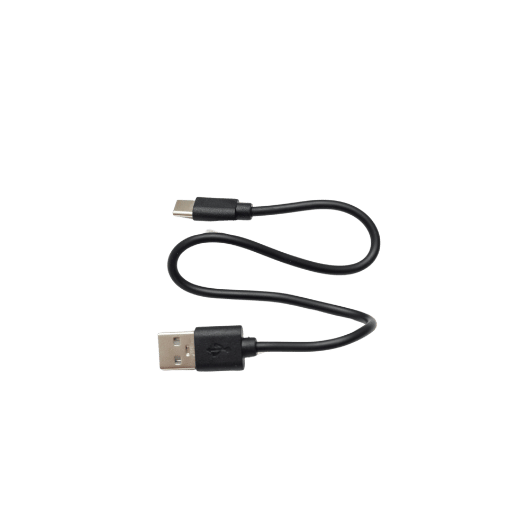
Standard Cables That can Be Found in Houses and Offices
- Cat5e (Category5e). Most popular among residential and business users, Cat5e cables are capable of supporting speeds of up to 1 Gbps (Gigabit Ethernet), and are good for everyday networking activities, including browsing the internet and sharing files.
- Cat 6 (Category 6). These days a standard in networks, Cat6 cables offer increased bandwidth of up to 10 Gbps over short distances (up to 55 meters), along with improved crosstalk reduction, making them ideally suited for high-speed usage.
- Cat 6a (Category 6a). Created for greater performance, Augmented Cat 6, as the name implies, is designed to support higher speeds over greater distances of up to 100 meters; additionally, it has greater shielding so is less vulnerable to external elements, making it perfect for data centers or high performance networks.
- Cat 7 (Category 7) These cables have high levels of durability and shielding. They can support 10 Gbps and are usually found in professional environments where there is high need for data integrity and therefore the signals need maximum interference protection.
These types of cables have unique functionalities catered to specific environments, which ultimately help in setting up networks that are cost effective and scalable.
How Network Cables Differ From Electrical Cables
Network cables and electrical cables serve different functions as they carry different forms of signals. Network cables are built to carry data signals with great accuracy, often using interference-prevention techniques like shielding or twits pairs to enable communication over long distances. On the other hand, electrical cables are made to carry power; they have the ability to carry high voltage and current which are needed to energize devices or loads. In addition, the composition and design of network cables are etched in such a way as to ensure that the signal is undamaged, as opposed to electrical cables whose focus is on damage and safety for power requirements. Each cable type is specially made to suit its specific task due to such differences.
Examining the Functions of Power Cables in Electrical Systems
Power cables are amongst the most important electrical components in systems, which primary feature is carrying electric power from the source to a device or an infrastructure. Tailored to carry great levels of voltage and current efficiently, they guarantee that power is supplied safely. The most important characteristics of power cables are by far their insulation as well as tough outer layer construction, which protects against outside conditions as well as electric faults, promoting reliability in the system. These cables are widely used in industries, commercial centers, as well as in homes which makes them fundamental in meeting energy requirements today.
How Twisted Pair Cables Work and Their Practical Applications

An Overview of Components and Characteristics of Unshielded Twisted Pair Cables
Unshielded Twisted Pair (UTP) cables work by focusing on the reduction of electromagnetic interference (EMI) in signal transmission. These Have minimal shielding which allows them to be more flexible than their counterparts. In this case, pairs of insulated copper wires are twisted together to reduce crosstalk between adjacent wires. Even without additional shielding, the twisting technique maintains good signal quality over short to medium distances.
UTP cables are among the versatile cables that find primary application in telecommunications and data network systems such as Ethernet, telephone lines and LAN (Local Area Network) connections. Their benefits include low cost, easy installation and wide-range compatibility make them popular with both residential and commercial users.
Uses of Twisted Pair Cables in Network Interconnections
Owing to their low cost, dependability, and straightforward installation, twisted pair cables have found numerous applications in modern network interconnections. They are used to connect routers, switches, and computers in Ethernet networks, which allows the use of these devices together with other peripherals. These cables are also used in telephone networks to carry voice signals from subscribers to local exchanges and back. Besides, twisted pair cables are also important for Local Area Networks (LANs) as they allow communication between a number of users within an office or home. Their wide range of applications makes them a preferred choice for wired communication, the Internet, and telecoms infrastructure.
What Makes Coaxial Cables Stand Out?
Understanding the Structure of Coaxial Cables
Every coaxial cable has a layered design that serves to prevent signal loss while ensuring efficient signal transmission. The structure consists of a cylindrical conductor, typically made of copper, at the center of the cable which carries the signal. An insulating layer surrounds the coaxial conductor and prevents the signal from being lost. This inner layer is enclosed in a metallic shield, usually braided wire or foil, to further reduce electromagnetic interference. The last layer is protective and made out of durable material that enables the cable to be shielded from physical damage. Coaxial cables are constructed in such a manner to make them perfect for the transmission of high frequency signals. These systems include the use of cables in televisions, the internet and telecommunications systems.
Where Are Coaxial Cables Commonly Used?
Coaxial cables can be often found in applications requiring reliable transmission of signals with high frequencies. They are extensively utilized in cable television systems for the transmission of audio and video signals. Also, coaxial cables serve as the primary media for internet services offered by cable operators. Moreover, coaxial cables are notable in telecommunications networks for connecting devices and ensuring that there is effective communication. Their durability and shielding makes it possible to use coaxial cables for residential as well as commercial purposes.
Why Are Fiber Optic Cables Preferred for High-Speed Connections?

The Technology Behind Fiber Optic Cables
Given that fiber optic cables transmit data using light instead of electricity, they are preferred for high speed internet connections. Light is faster than electricity and fiber optic cables consists of thin glass or plastic fibers which guide light with minimal loss. These cables also have greater bandwidth meaning that large volume of data can be transmitted simultaneously. They are less affected by electromagnetic interference meaning stable performance can be guaranteed even for large distances. All of these factors make fiber optic technology perfect for modern telecommunication and high speed internet services.
Benefits of Fiber Optic over Traditional Cables
As far as other people are concerned, the advantages of fiber optic cables over traditional cables are self evident. These cables provide the fastest date transmission speeds which are necessary in the present data oriented world. These cables, due to high capacity bandwidth can transfer large volumes of data without any issues, stable performance is guaranteed because there is less electromagnetic interference. Their suitability even for long distance telecommunication modern makes them ideal for supporting high speed internet.
How Ethernet Networks are Improved by Fiber Optic Cables in Depth
Ethernet networks are improved with the use of fiber optic cables because of their unmatched speed, reliability, and scalability. Their capacity to send data at the pace of 100 Gbps or higher guarantees that they will be able to keep up with the evolving needs of contemporary communication and data transmission systems. For example, multimode fiber is commonly used for shorter distances that are confined to data centers, whereas single-mode fiber is capable of transmitting data for distances greater than 60 miles, enabling its use in long-haul telecommunication networks.
Fiber optics come with a richly packed plethora of advantages, with one of them being low latency. Fiber optic cables, unlike traditional copper cables, have have minimal signal quality degradation over extended distances, ensuring better and more dependable communication for complex tasks like advanced video conferencing or high frequency trading. Besides that, fiber optic cables are less prone to electromagnetic interference, making it ideal for use in environments with high electrical noise, like industrial or congested urban areas.
In addition, the use of fiber cables increases network performance because the bandwidths are higher than that of copper alternatives. Fiber systems also allow the use of dense wavelength division multiplexing (DWDM) technology which supports the simultaneous transmission of multiple data channels. This ease of scalability is important for companies who need high-capacity networks to support cloud computing, IoT devices, and extensive data analytics.
Even though the initial cost for fiber optic installations is higher than traditional cabling, their reduced maintenance and long life span makes them cost effective over time. Research suggests that due to the sturdiness and low energy usage of fiber optic networks, operational costs can be reduced by as much as 30%. Thus, integrating Fiber with Ethernet networks not only makes businesses future-ready, but also guarantees great performance, reliability, and growth in the digital age.
Choosing the Right Type Of Electrical Cable For Your Needs
Considerations When Choosing Electrical Wires and Cables
- Current Capacity: Select wires and cables with sufficient current handling capabilities to avoid overheating and fire hazards.
- Voltage Rating: Check that the cable’s voltage rating is equal to or greater than system voltage for safe and efficient operation.
- Environmental Conditions: Cables must be rated for certain environmental factors like temperature, moisture, chemicals, or UV exposure.
- Conductor Material: Common conductor materials include Copper and Aluminum. Copper has better conductivity and will last longer, whereas aluminum is lighter and cheaper.
- Insulation Type: The insulation material must be adequate for the installation, PVC for general use, and XLPE for increased resistance to heat.
- Compliance with Standards: The wires and cables must be checked for industry standards and quality assurance to guarantee safety.
- Application-Specific Requirements: Address special needs relevant to the application, like flexibility for motion or armoring for mechanical protection.
Attending to these needs means that safety and efficiency are ensured while considering the most suitable electrical wires and cables for your needs.
Differentiating Low-Voltage Cables from High-Voltage Cables
As the terms indicate, low and high voltage cables are distinct from one another based on their voltage capacity in addition to their intended usage and design features:
- Voltage Capacity: High voltage cables have a voltage threshold of over 1,000 volts, and low voltage cables are designed for systems of 1,000 volts and lower.
- Insulation: For operational safety and protection from electrical failure, high voltage cables possess thicker and sturdier insulation. Low voltage cables possess lighter insulation because the stresses are lower.
- Construction: High voltage cables often contain extra layers such as conductive shields or semi-conductive layers which mitigate the damage caused by electric fields. Low voltage cables do not have these components.
- Applications: Low voltage cables are commonly used for wiring in housings, businesses, and industries while high voltage cables are required for power distribution in extensive networks such as power grids.
You can determine which cable to use for an electrical system by acknowledging the distinctions above.
Design of Cables for Various Use Cases
How Insulation and Shielding Contribute to Cable Design
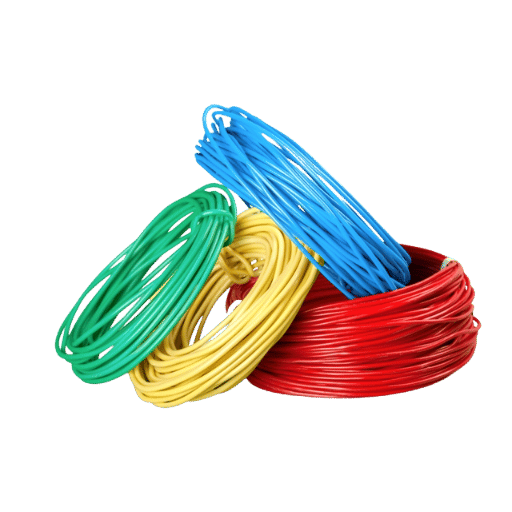
Insulation and protection in electric wires is of utmost importance as it not only allows the wire to perform safely, but also with exceptional quality.
- Insulation: Covers a conductor to stops it from losing electric current to the ground, liquefied substances, or circuits while also stopping heat, moisture, or chemicals from fleeing. Common materials that serve as insulators are Polyvinyl Chloride (PVC), rubber, and polyethylene.
- Shielding: Cables became increasingly complex, requiring additional features, such as advanced protection against external signals and emission of the cable’s own signals. The most common configurations used aim to block outside electrical noise and mix, braid seem collectively enclosed wires that comprise foil covers or other dielectric materials.
Both, the covering within the cable and outside, provides maximum guarantee that the cable will operate properly in exceedingly sensitive surroundings, including high-performance systems or where failure can cause serious consequences.
Reasons of Using Armored Cables for Added Protection
Cables that are likely to suffer from extreme physical stress or damage need the use of armored cables which provide great protection. The armoring which consists of steel and aluminum wraps the cable and protects it against impacts, hardness, and roughness while also preserving the internal conductors. These cables can be found in industrial settings as well as in outdoor and underground environments where water, steam, or other external influences can cause damage. Armored cables provide peace of mind in terms of proper performance at even the most extreme conditions due to increased resistance and durability.
Frequently Asked Questions (FAQ)
Q: In networks, what are the three primary types of Ethernet cables?
A: Cat5e, Cat6, and Cat6a are the three primary types of Ethernet cables categorized based on their data speed and frequency capabilities. These cables are used to transfer information between the devices in a network.
Q: Describe the construction an Ethernet cable.
A: An Ethernet cable usually consists of a twisted pair of copper wires with the specialization of transmitting data signals. The cable has an insulator which protects users from electrical shocks and short-circuiting ensuring safe data transmission.
Q: What is the difference between shielded and unshielded Ethernet cables?
A: Shielded cables have an extra layer that helps defend against electromagnetic interference making it useful in a surrounding with drastic interference. Most of the time, unshielded cables are the most commonly used type for residential applications where interference is not an issue.
Q: What are flat cables, and where are they used?
A: Flat cables are a type of Ethernet cables which can be used in narrow areas that do not allow the traditional round cable, making them versatile. These types of cables are widely used not only in home Ethernet applications but also in places like offices where the need for space and aesthetic is valued.
Q: What’s the difference between an electric cable and an Ethernet cable?
A: A cable intended for electricity is an electric cable, which is meant to carry electric current, while Ethernet cables are used for interlinking computers in a network and for transmitting data signals.
Q: What important details should be kept in mind when selecting various types of electrical cable for any project?
A: In selection of various types of electrical cables, attention should be given to power requirements, cable run lengths, environmental factors, and the need for flexibility or high-temperature capability.
Q: Are Ethernet cables applicable for residential use?
A: Computer users in homes routinely apply the use of Ethernet cables to link computers, routers, and other network equipment for fast and reliable internet access, so Yes.
Q: What is the purpose of some cables being insulated, and how is this beneficial?
A: Insulated cables cannot be shorted or shocked, so the insulated layer serves as protection for safe use while dealing with the signals or current being passed through the cable.
Q: What is an NM cable? Where is it typically used?
A: An NM (Non-Metallic) cable also known as Romex is a type of electric wire used for wire installations in houses. Its application is interior, and is mainly used to connect sockets, lights, and other electrical appliances found in homes.
Reference Sources
- Wires, Conductors, and Cables
- Author: L. Slavin
- Type: Conference Paper
- Publication Year: 2020
- Summary: This paper examines the primary function of utility poles and their ancillary hardware as supporting structures for conductors, cables, or wires that stretch between adjoining poles. It classifies wirelines into three principal types:
- Messengers/Strands
- Electric Supply (Power) Conductors
- Communication Cables
- Key Findings: The paper emphasizes the different materials and constructions used for these types of cables, depending on their specific applications(Slavin, 2020, pp. 31–38).
- The thermal resistance and current-carrying capacity of three-core screened and S.L.-type cables
- Author: H. Waddicor
- Type: Conference Paper
- Publication Year: 1935 (not within the last 5 years but relevant)
- Summary: This study presents an experimental method to determine the thermal effects of screens in three-core screened-type cables. It compares the thermal resistance of cables with different types of screens, specifically:
- 3-mil Copper Tape
- 1.5-mil Aluminium Foil
- Key Findings: The results indicate that copper-tape screens reduce thermal resistance by about 30 to 40 percent, while aluminium-foil screens reduce it by about 15 to 30 percent(Waddicor, 1935).
- Impact of Flashover Fire Conditions on Exposed Energized Electrical Cords/Cables
- Authors: C. Weinschenk, Daniel Madrzykowski, P. Courtney
- Type: Journal Article
- Publication Year: 2020
- Summary: This research explores the exposure of various types of electrical cords and cables to fire conditions, specifically focusing on six types of cords and cables. The study aims to determine the conditions under which these cords would trip circuit protection devices.
- Key Findings: The study found that all cords were energized and installed on a non-combustible surface, and the experiments revealed significant insights into the fire resistance and failure mechanisms of these cables(Weinschenk et al., 2019, pp. 959–991, 2020, pp. 959–991).
- Computer network
- Twisted pairExplore the different types of network cables, including twisted pair, coaxial, and Ethernet. Discover their applications and find the right cable for your needs!