Spring wire coiled cable, also known as retractile cable, plays a paramount role in several industries because of its flexibility, durability, and reliability. These cables are manufactured to extend and retract automatically, ensuring they do not hinder performance even in tough conditions. From medical equipment to industrial automation and consumer electronics, spring wire coiled cables are made for various functional requirements while space and efficiency are optimized. In this article, you will learn everything you need about these coils, from their design and material composition to the range of their applications and benefits, to be fully equipped for your business or project needs.
What is the Product Description of a Spring Wire Coiled Cable?

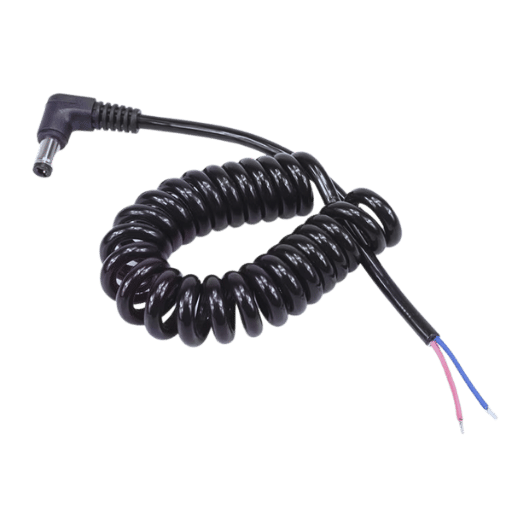
A spring wire coiled cable refers to a style of cable that has a coiled or helical shape, which enables it to stretch and retract with ease. These types of cables are usually made of strong yet flexible materials to guarantee durability and performance. Such wires are made to preserve flexibility in tight spots, avoid tangling, and endure repetitive extension and retraction. Ideal in situations where movement and the sparing use of space are crucial, these spring wire coiled cables are employed in medical equipment and devices, industrial tools, as well as in telecommunications.
Understanding the Spring Wire Coiled Cable
Screws of spring wire coiled cables are tailored to guarantee flexibility and durability, making them apt for use in dynamic environments. The coiled design enables extension and retraction without retaining deformation, ensuring consistent performance under repeated use. Common materials include but are not limited to PVC, polyurethane, and rubber, all selected for their tenacity and elasticity. These cables are primarily used in areas seeking mobile electronics, such as medical devices, robotics, and industrial automation, where sophisticated compactness and resiliency are sought.
Key Product Details and Specifications
- Material Composition: The applied cables are made from top-grade materials, including PVC, polyurethane, and rubber, and they are noted for their extreme durability, flexing ability, and wear resistance. Furthermore, these materials maintain optimal functionality under harsh environmental conditions such as elevated moisture levels or temperature fluctuations.
- Operating Temperature Range: The cables are designed to reliably operate from -40°C up to 105°C, thus reliably withstanding extreme cold and heat.
- Voltage Ratings: The cables come with voltage ratings of up to 600V, adequate for numerous applications such as industrial robotics which require high electrical performance.
- Tensile Strength: The cables are designed to sustain repeated extension and retraction cycles while maintaining tensile strength parameters suitable for increased dynamic operations over long periods without damage to the cable.
- Abrasion Resistance: These fabrics will withstand damage from cuts, scrapes, and other forms of abrasion which is essential for her use in demanding industrial settings due to specialized coatings added to textiles.
- RoHS and REACH Compliance: All parts of the cables incorporated are devoid of harmful substances and are eco-friendly meeting international environmental and safety standards.
- Applications and Industries:
- Medical Devices: Designed for apparatus needing flexing while maintaining signal integrity.
- Robotics: Designed for robotics applications requiring mobility and high-reliability power transmission.
- Industrial Automation: Ideal for devices needing a miniature, scalable, and strong connection.
These features confirm that the cables are best designed to meet performance requirements in harsh environments, crafted to give users confidence in intricate industrial and technological applications.
Common Applications for Coil Cable
All industries make use of coil cables because of their flexibility, strength, and dependable efficiency. A wide variety of coil cables can be found in the market for numerous purposes. Look below for a detailed breakdown of some of the prominent applications:
Mechanical Components:
- In connection with patient monitoring systems and other types of surgical machinery, they are utilized in devices with flexible connections that can be easily retracted.
- Data Transfer Capacity: Ensures medical-grade accuracy during high-fidelity data transmission.
Automobile Industry:
- Serves as an electric umbrella for hand-held electric equipment. Also found in vehicle diagnostics systems.
- Durability Rating: Exposed to extreme chemicals, oil and UV will not shorten the lifespan.
Robotics:
- Due to repeated flex motion and repeated motion, they can be found in robotic arms and automated machinery.
- Flex Life Expectancy: Thousands of retractions and extensions means my maintenance costs will not be so high.
Telecommunication:
- Employed in microphones and radio headsets for superior quality audio and signal transmission, supporting expansion.
- Signal Integrity Range: Data loss is small compared to signal strength, which is less than 0.1% over long distances.
Industrial Automation:
- Critical in equipment that has parts that move, like conveyor systems and automated production lines.
- Environmental Resistance: In extreme temperatures and moisture, these cables can withstand.
Aerospace:
- For control consoles or equipment in aircraft systems that need dependable retractable cabling, these cables are pivotal as they provide constantly dependable and sturdy cabling guarantees.
- Weight Efficiency Ratio: To optimize lightweight materials without losing function or effectiveness.
Consumer Electronics:
- Can be found in portable devices including but not limited to, retractable phone chargers or headphone cables, and even computer peripherals.
- Compact Design Feature: Portability without loss of performance.
Every one of these uses helps to illustrate the unique adaptability and technical strengths of coil cables, assuring their place in specialized and general-purpose industries.
How Do I Access Customer Reviews for Spring Wire Coiled Cables?
Exploring Customer Reviews on Popular Platforms
For platforms that feature customer reviews of spring wire coiled cables, these are most useful:
- E-commerce Websites: Websites like Amazon, eBay, and even specialized supply stores include detailed product descriptions with verified reviews. Ratings, feedback on performance, and user experiences are included in these reviews.
- Manufacturer Websites: A lot of manufacturers post customer testimonials and reviews on these products which may impact their purchase decisions. These too can be helpful regarding the credibility and reliability of their products.
- Industry Forums and Communities: More professional reviews are made available on online forums like Reddit or on industry specific discussion boards where professionals post their reviews and discussions on these cables.
Accessing these reliable platforms will collect important customer feedback relevant to meeting purchasing goals.
What to Look for in Customer Feedback
When utilizing customer feedback, it is critical to note dimensions that relate to product execution, dependability, and value over time. In particular, comments usually focus on the following areas:
Performance Indicators
- Customers often mention signal clarity, durability, and overall system compatibility during cable reviews. For example, durability comments can address a cable’s lifespan under heavy usage which definitely speaks to the overall material and quality of the connectors.
Reliability Under Certain Conditions
- Check for comments that discuss the product’s performance in various settings. As an example, comments from customers who use cables in industrial or outdoor settings may shed light on weather-proofing or the functionality of protective outer sheaths.
Difficulty in Implementation
- Shoppers’ comments tend to note the convenience of setting up and configuring the products. In this case it would relate to a product’s flexibility and the ability to navigate through narrow areas or its design.
Uniformity in Performance
- A collective assessment from a broad pool of users strengthens the claim of the product’s quality. For example, if customers repeatedly state that certain features like data transfer rates are consistent or signal loss is kept to a minimum, this reflects sound product engineering.
Warranties and Support Evaluations
- Look closely at the relevant during and after sales service comments and warranty concerns. Efficient customer care and active help desks are usually indicative of a product from a well established company.
Continuing to pay attention to this as part of customer feedback evaluation helps you choose the right products for your particular technical and operational needs.
How Does a Spring Wire Cable Differ from Other Cables?

Comparing Spring Wire and Regular Cables
The main difference between spring wire cables and cables is their design and purpose. Unlike regular cables, these spring wire cables are coiled. This unique structure allows for extension and retraction without tangling or stretching; making it perfect for scenarios where flexibility and space efficiency is needed. Regular cables do not have a coiled structure, which limits their adaptability in dynamic environments. Furthermore, spring wires are capable of enduring repeated movements or tension, while regular cables work best for static installations.
The Benefits of Retractable Cables
Due to their numerous applications across different industries, retractable cables are quickly becoming the go-to option. Below is a summary of some of their greatest features.
Saves Space
- Retractable cables are conveniently built to retract into smaller spaces, which is extremely advantageous relative to other types of cables. This feature is beneficial in settings where clutter is to be avoided, like in medical devices, offices, or automotive parts.
Increased Lifespan
- Because retractable cables are kept in a coiled structure, there is lesser strain on the wires during pulling and pushing movements. Tests have shown that high quality retractable cables can withstand thousands of cycles of extension and retraction without degradation, saving companies money in the long run.
Adaptability To Constant Movement
- These cables are great for use in industries where a lot of moving or shifting is required. Robotics and industrial machinery, for example, run smoother thanks to the reduced chance of tangling or kinking, reducing the number of replacements needed for cables.
Cleans Up Work Hazards
- The natural retraction when the cables are not in use helps prevent tripping and other workplace accidents. This feature is important in busy areas like construction sights and assembly lines.
Improved Aesthetics
- Consumers, especially in the retail and healthcare industries, appreciate well-organized setups. The use of retractable cables not only enhances organizational structures but is also visually appealing due to their compact design.
Customization Options
- Retractable cables are adaptable as they can be made to specific length and conductor materials as well as coatings. This flexibility makes them suitable for various fields such as telecommunications, medical devices and even aerospace.
Resistance to Environmental Factors
- Due to their durable and harsh condition-resistant design, many retractable cables can endure exposure to extreme temperatures, UV radiation, and chemicals. This makes them ideal for use in the outdoors and industrial settings.
Cost and Maintenance Efficiency
- The use of retractable cables reduces maintenance efforts as well as replacement costs over time, particularly to organizations that deal with tangling and wear issues. Due to the long-term savings that can come from implementing these cables, organizations can enhance their economic standing.
Industries are able to optimize safety standards alongside space utilization and operational efficiency all while enhancing versatility and durability by utilizing retractable cables.
Understanding Telescopic Wire Features
For both mobile and retractable connection applications, telescopic wires offer operational dependability and efficiency. These wires provide reliable performance in various industries such as automotive, robotics, or telecommunications owing to the advanced materials and engineering techniques used on them.
Material Composition and Durability
- Telescopic wires are commonly crafted from high-grade copper or alloy materials, providing excellent conductivity and wearable resistance. Many products use insulation coatings because of their reliability to endure extreme conditions, such as ranges of -40°F to 250°F, utilizing materials like PVC or Teflon.
Extension and Retraction Mechanisms
- Telescopic wires possess coil or spool configurations that are capable of stretching to enlarged lengths, often extending up to five times the size of the contracted wire while maintaining expandable integrity. This characteristic is advantageous for use in confined spaces or dynamic systems.
Load Capacity and Signal Integrity
- Telescopic wires serve the purpose of power and data transmission. The wires are optimized for great consistency in operations at signal redundancy, increasing reliability while transmitting a signal. Thanks to advancements in shielded cabling, electromagnetic interference (EMI) is non-existent, further bolstering functional reliability in electro noise contaminated systems.
Operational Lifespan and Efficiency
- Some models of telescopic wires are rated for more than 10,000 extension-retraction cycles. This endurance improves cost efficiency because it reduces the number of replacements that need to be done over time.
Applications in Automation and Mobility
- These wires are crucial to robotic systems and automated mobile machines and provide effective interconnection solutions. For example, power and data transmission in robotics is completely integrated into dynamic movements of arms through telescopic wires.
Telescopic wires are specially designed to meet changing needs in the industry by providing dependable, adaptive, and resilient connectivity to advanced equipment, in addition to enhanced tensile strength, intractability, and resistance to environmental factors.
What Materials Are Used in Tin-Coated Spring Wire Coiled Cables?
The Role of Tin in Cable Construction
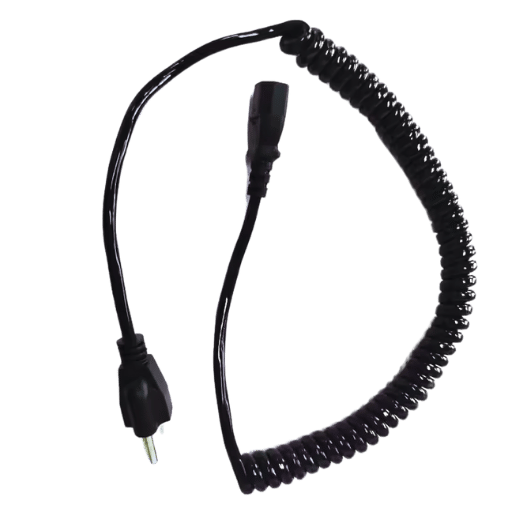
Tin is vital in constructing cables because of its corrosion-resistant properties. Coating spring wire with tin increases its environmental stiffness, protects it from moisture and oxidation, and ensures optimal performance and durability even in harsh operating conditions. Spring wire’s durability is of paramount importance in harsh conditions. Moreover, tin’s coating helps to enhance the ease of joining tin with other constituent parts of the cables, making the tin wires easily attachable to the electronic parts, which is very important in many industrial applications.
Advantages of Using Copper Wire
Great Electrical Conductivity
- Because of its purrified copper conductivity of 100% IAC (International Annealed Copper Standard), copper is widely celebrated for its unmatched electrical conductivity during power transmission making it the best material with minimum energy loss.
Thermal Conductivity
- Copper is widely used in motors and transformers as copper wire due to its superior thermal conductivity because of its ability to transfer heat easily which helps in maintaining stable functionality by removing overheating.
Corrosion Resistance
- Copper has a natural resistance making it suitable for industrial and even severe marine environments which extends the life cycle of copper based components over time.
Malleability and Ductility
- Custom applications can benefit from the unparalleled bendability of copper as it can be shaped without snapping. It’s malleable nature allows it to be shaped into thin wires reducing mechanical failure.
High Tensile Strength
- Perfect for construction and aerospace copper wires are excellent for bearing mechanical stress because of its strength and flexibility markign it as ideal for durable applications.
Recyclability
- Since copper can be recycled fully without any degradation in quality, it is a green material. Using recycled copper contributes to less mining of raw materials and promotes sustainable practices in industries.
Resistance to Overloading
- Copper has a high melting point of 1984°F, thus making copper wires less vulnerable to damage from overheating or overloads, improving safety and reliability in electrical systems.
Wide Range of Applications
- Owing to their versatility and reliability, copper wires are used in construction, electronics, automotive, telecommunication, and the energy sectors. This also leverages them in various industries.
All these factors have made copper wire a preferred choice in traditional as well as cutting edge technological applications.
How do you send your message for custom orders?
Contacting the Cable Manufacturer
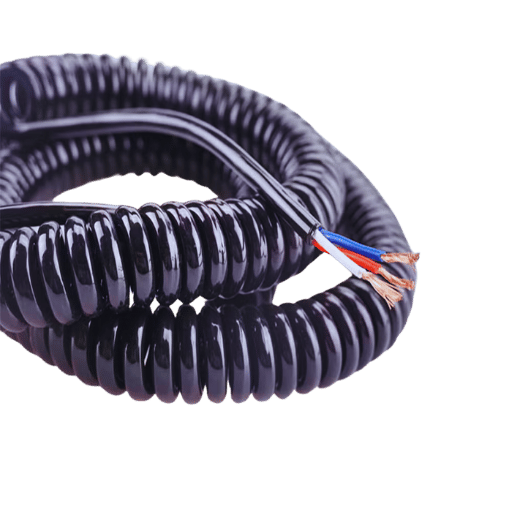
Order cables by contacting the cable manufacturer directly using the provided custom ordering methods. This usually consists of a customer service email, phone contact, or inquiry form located on their website. Don’t forget to include all pertinent details such as wire gauge, length, material, custom application, and other specifications pertinent to the custom order. Proper detailing will result in faster and more precise responses to help the client with order fulfillment.
Details on Product Customization
- Identify Requirements: Describe as thoroughly as possible every detail that pertains to your product including size, type of materials, how well it should perform, and what it is going to be used for.
- Consult the Manufacturer: Send the detailed requirements to the respective manufacturer. Ensure to utilize the appropriate channels specific to the company in order to get the right information.
- Approve the Design: Look at and accept the design or prototype put forward and ensure it meets your expectations before going ahead with production.
- Confirm Lead Time: Set the conversation on and finalize the production pace so that your expectations of the project are met.
- Verify Cost Estimates: Instruct the company to provide an all inclusive estimated price which should be customized per the customer’s needs as well as other incurred expenses in order to eliminate surprise costs.
Frequently Asked Questions (FAQs)
Q: What is a spring wire coiled cable?
A: A spring wire coiled cable or spiral cable is a type of retractable electrical cable that is able to coil and uncoil, springing back into its original form. It has a wide variety of uses in applications where cables are required to stretch and retract to their original position.
Q: How does the elasticity of spring cables benefit their usage?
A: The elasticity of spring cables provides smooth stretch and contraction which allows them to be used in restricted spaces in home remodeling or equipment that gets moved around a lot.
Q: What are the common applications for a 2-core spring telescopic wire?
A: A 2 core spring telescopic wire is frequently found in use where space is limited but also requires an expandable power supply, such as communication devices, car electronics, or industrial tools.
Q: How does a shielded coiled cable differ from a regular coiled cable?
A: A shielded coiled cable is different from a regular coiled cable because it has an extra electromagnetic interference (EMI) shielding, which improves its efficiency in high EMI environments.
Q: Which materials are used for making spiral coiled wire cables?
A: These cables are produced from materials such as PUR (polyurethane) because it is strong and resists oil, as well as cold. This allows the cables to function well in many environmental conditions.
Q: Are coiled extension cords compatible with every type of power tool?
A: Most power tools can be used with coiled extension cords, however, the coiled extension cord should be rated for the tool’s specifications so that it doesn’t get overloaded, creating potential danger.
Q: Where can I research details and pricing concerning spiral cables?
A: You can access detail and pricing information about spiral cables on multiple retail websites such as amazon.com.be that also allow you to view product reviews and ratings to guarantee that the products meet quality assurances and customer satisfaction.
Q: What is the benefit of employing a spiral-coiled wire cable for home projects?
A: The primary benefit of employing a spiral coiled wire cable for home projects is that it is tidy and well organized. Cables can extend when in use, and retract back to save space when not in use, reducing clutter and trip hazaards.
Q: Why should oil and cold resistance be taken into account while dealing with coiled cables?
A: Coiled cables require oil and cold resistance capabilities to guarantee that the coiled cable will function properly under extreme environmental conditions.
Reference Sources
1. Title: The Inconstant Spring Pates of Tensile Coil Sprrings of Pearlitic Steel Wire Heat Treated at A0 Transformation Point Spring Constant.
- Authors: Kenta Mizusaki, S. Kotake.
- Journal: Transactions of Japan Society of Spring Engineers.
- Publication Date: March 31, 2024.
- Citation Token: (Mizusaki & Kotake 2024)
- Key Findings:
- This paper focuses on the problem of the inconstant spring constant in tensile coil springs fabricated out of pearlitic steel wire, especially when heat-treated near the A0 transformation point.
- The findings point out how insufficient treatment has the potential to alter the spring’s performance beyond controllable limits.
- Methodology:
- The spring constant’s mechanical properties were experimentally modeled after determining the boundaries of heat treatment.
- Mechanical testing was carried out in order to determine the stability of the spring constant under different conditions and repeated cycles.
2. Title: Constructive and Experimental Realization of Shaping Method of Spring Cables Utilizing Fuzzy Control.
- Authors: Runxian Yang et al.
- Journal: Applied Sciences.
- Publication Date: December 27, 2021.
- Citation Token: (Yang et al., 2021)
- Key Findings:
- This study provides the solution for Spring cables shape controlling using fuzzy control algorithm which enhances the quality and efficiency of production to previously unattainable levels.
- The method enables the efficient rapid shaping of coil bar current heating spring cables, which fulfills the market’s requirements for high precision.
- Methodology:
- This research encompasses the creation of a fuzzy control system for managing the shaping of spring cables.
- Compared to conventional shaping methods, the experimental results validated the efficacy of the approach being implemented.
4. Wire