Managing cables can feel daunting, particularly with complex setups in offices, workshops, or home entertainment systems. Outer sheaths with spiral wraps simplify cable management by organizing and protecting them. Wherever they are, loose and tangled wires create an unpleasant sight and may reduce efficiency, increase safety risks, and even damage your equipment. Spiral cable wraps are unique and highly functional gadgets that organize, safeguard, and improve your wire management system. This guide is designed to give you everything you need about spiral cable wraps, their benefits, various applications, and how to cut and install them effectively for the best results. From professional technicians to DIY advocates, this article will help you keep your workspace uncluttered and organized. Keep reading to understand how spiral cable wraps can change your perspective on wire management.
How to Choose the Right Spiral Cable Wrap for Your Needs

When it comes to choosing a spiral cable wrap, the following primary considerations stand out:
- Size: Measure the diameter of your cable bundle. A wrap that is too big will cause it to be loose, and a wrap that is too small will create tension. Accurate measurements guarantee precision.
- Material: The environment should dictate the type of wrap used. In this case, we need to use durable polyethylene or nylon to withstand high heat.
- Flexibility: The type used must be adaptable for easier adjustments in frequently used spaces requiring real-time repositioning.
- Length: The ideal loop length should encompass the entire bundle while allowing future adjustments without compromising coverage.
- Application Environment: Perhaps the most ignored aspect of cable management, environmental conditions like moisture, sunlight, and chemical contact all dictate the type of wrap to be used.
Focusing on these components will ensure the spiral cable wraps function according to a user’s precise requirements and effectively control cable clutter.
Determining the Bundle Diameter for Your Cable
To find out the bundle diameter for your cable, you need first to group all the wires that need to be wrapped together. Make sure the overall diameter is below the temperature limit of the spiral wrap you want to use. Execute measuring the diameter of the assembled cables with a flexible measuring tape or caliper at the broadest section. Be sure that any connectors or non-standard features that might add to circumferential bulk are considered in the calculation and that the dieth ammeter is the distance across a sphere. This should inform you to choose a spiral cable wrap big enough to prevent excessive constriction or slack on the secured cable bundle.
Choosing Between Nylon and Polyethylene Spiral Wrap
It is paramount to analyze the application and operating surroundings when choosing between Nylon and Polyethylene spiral wrap. They serve different purposes and suit various conditions. Covers made from nylon are tough, resistant to abrasion, have higher temperature tolerance, and thus are well-suited for industrial and high-performance applications. Meanwhile, Polyethylene wraps are lighter, more affordable, and well-suited for general use in moderate environments. To choose the best option, Bold defines its project scope with parameters like lower and upper temperature limits, flexibility, and chemical exposure.
Understanding PTFE and Its Benefits in Spiral Wrap
Polytetrafluoroethylene (PTFE) is a high-performance material used in manufacturing spiral wraps due to its outstanding advantages. PTFE is known to endure extremely high temperatures and can operate efficiently in environments from -450°F to 500°F. Its impressive characteristics include chemical resistance, which makes it suitable for application in harsh, corrosive environments. In addition, PTFE can reduce friction and provide high flexibility, making the PTFE spiral wraps ideal for movement without putting the cables at risk. These features make PTFE spiral wraps perfect for use in demanding industrial aerospace and chemical processing applications where durability and performance superiority are critical.
What Tools Do You Need to Cut Spiral Cable Wrap?
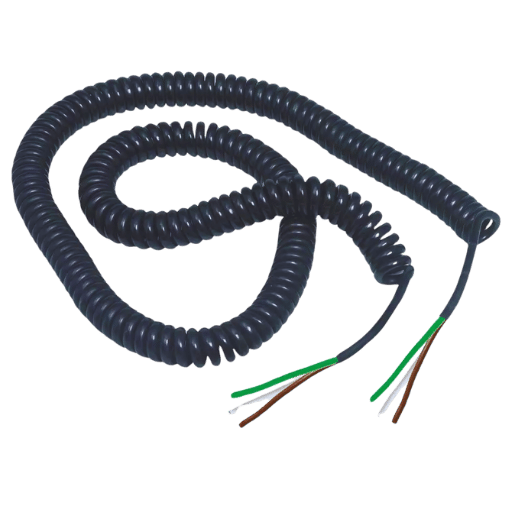
Essential Cable Cutter Types and Their Uses
Choosing the right tool for cutting spiral cable wrap is one of the most essential elements for making clean, non-destructive cuts. The following tools are the most popular:
- Standard Cable Cutters: These tools are general-purpose cutters. They work well with lighter materials and smaller diameters.
- Scissors with Serrated Blades: This type of scissors has serrated edges that increase control and grip, helping prevent slipping for those cutting spiral wraps.
- Specialized Spiral Wrap Cutters: Specialized wrap cutters are made explicitly for cutting spiral wraps and work to cut them quickly and accurately without causing fraying or deformation.
Cutting tools maintain the performance and durability of the wrap and enable easy and seamless installation.
Using a Heat Gun for Precise Cuts
A heat gun can facilitate sharp, clean, and precise cuts for spiral wraps by softening the material before cutting. Apply heat evenly to the part of the spiral wrap you wish to cut; avoid overheating, as it may cause warp or damage to the material. After it becomes soft and pliable, a sharp cutting tool can carve precise cuts. This method minimizes the chances of fraying while preserving the structural integrity of the spiral wrap. As with any tool, observe safety regulations when working with a heat gun to ensure commensurate safety and damage to materials.
Safety Tips When Using Metal Cutting Tools
- Wearing all Personal Protective Equipment (PPE): Wear gloves, safety goggles, and ear protection to defend against debris, sharp edges, and damaging noise.
- Inspect Tools Before Use: Check that all cutting tools have no visible damage. Blades must be sharp to ensure precision and reduction of accidents.
- Secure Materials: Materials should be either clamped or firmly held to avoid movement during cutting, preventing injury or cuts that are not level.
- Maintain Order: To maintain an orderly work area and avoid hazards, the workspace should be free of unnecessary items or debris, especially when working with connectors and clamps.
- Observance of Recommended Guidelines: Tools should be used according to the guidelines provided by the manufacturer, using the recommended speeds and techniques to ensure safety and efficiency.
- Avoid Covered Areas: Proper ventilation should be guaranteed to avoid inhaling fumes, especially when working with coated metals.
- Stay Focused: Avoid distractions during the operation, which can lead to increased risks.
How to Properly Install and Manage Spiral Cable Wrap

Step-by-Step Guide to Spiral Cable Installation
- Measure the Cables: First, estimate the length of the cables to be bundled. Then, cut the spiral cable wrap to that specific length. If there may be future changes, allow for more length.
- Organize the Cables: Arrange all of the cables neatly, making sure that there are no overlaps or twists in the alignment.
- Start Wrapping: Begin at one end of the cable bundle. Starting from the first spiral, place the wrap and rotate it evenly around the cables consistently without breaking the overlap norm.
- Secure the Ends: Carefully secure the wrap’s start and endpoints to prevent slipping. Zip ties may be helpful in increasing stability.
- Test Flexibility: When the cables have settled in the position, move around them freely to ensure that the wrap is not too tight around them.
- Inspect Regularly: Check for optimal installation cable management and any signs of damage from time to time.
Best Practices for Cable Organization
- Improved Safety: Organized cables lower the risks of injuries and fires due to tripping or accidentally damaging the wires.
- Enhanced Efficiency: An orderly cable system improves identification, maintenance, and troubleshooting processes and saves time.
- Prolonged Equipment Lifespan: Not allowing cables to bend, tangle, or be stressed too much increases their lifetime and the lifetime of devices connected to them.
- Professional Aesthetic: Tidy cables portray a polished image critical in shared and professional settings.
- Minimized Signal Interference: Proper routing, especially for data and power cables, lessens electromagnetic interference, optimizing device performance.
Common Mistakes to Avoid in Cable Management
- Overloading Cable Paths: Do not bundle too many cables in a small area, as this will cause overheating and damage over time.
- Improper Labeling: Not providing cable labels complicates troubleshooting and other future changes.
- Using Incorrect Cable Ties: A zip tie that is too tight will nick or bite into the cable’s insulation, damaging it. Instead, opt for Velcro straps that can be reused multiple times.
- Neglecting Cable Maintenance: Untidy or dusty cables are unmaintainable in the modern world, which leads to lowered performance or physical deterioration.
- Insufficient Slack: Some cables require slack to prevent unnecessary tension, which can lead to damaged connectors or ports.
Avoid these mistakes to ensure your cable management system is complete, reliable, and secure.
Is Spiral Cable Wrap Resistant to Environmental Factors?

Assessing Spiral Wrap’s Durability Outdoors
When assessing the quality of spiral cable wrap for outdoor use, its resistance to UV light, extreme temperature, chemical exposure, and moisture must be considered. Polyethylene and nylon are flexible and durable materials commonly used in making spiral cable wraps. However, those materials differ in their ability to withstand harsh environments.
An example would be Polyethylene spiral wraps, which have fantastic resistance to UV rays, thus making them ideal for use in areas with long sunlight exposure. Some products are even enhanced with UV stabilizers that perform better outdoors. A specific range of temperatures also poses a challenge; most quality spiral wraps operate within a range of -40°F to 185°F (or -40°C to 85°C), which enables them to function correctly in freezing and hot weather.
Combined with strong moisture resistance, chemicals, and high temperatures, those properties make many spiral wraps more durable. For example, many spiral wraps have hydrophobic characteristics, making them appropriate for wet or humid areas. Moreover, their resistance to prevailing industrial chemicals, oil, and fuel makes them ideal for demanding outdoor applications in agricultural, automotive, or marine settings.
It is advisable to pick spiral wraps specifically marked for outdoor use, as they are made to withstand the difficult conditions presented by the outdoors. By knowing product material specifications and choosing the right one, users can guarantee proper management and protection of cables, even when dealing with tough outdoor conditions.
How Spiral Wrap Protects Against Abrasion
Spiral wrap is a good protective candidate of abrasion because it shields wires and cables in a flexible and resilient encasement. Constructed of polymers like polyethylene or nylon, these wraps are engineered to resist constant rubbing and friction from sharp edges, vibrations, and contact with harsh surfaces, which can cause physical damage. Research shows that good-quality wraps can increase a cable’s lifespan by nearly 50% in highly abrasive environments. Their design allows them to distribute pressure evenly across the wires, preventing excess damage. Spiral wraps undergo testing to meet abrasion resistance requirements such as ISO 6722, proving dependability in harsh conditions.
Comparing Spiral Cable Wrap Materials for Resilience
Flexibility is equally important when considering the durability and environmental impact of various materials used in spiral cable wraps. These materials include Polyethylene (PE), Polypropylene (PP), Nylon, and Thermoplastic Elastomer (TPE), all of which have unique benefits based on the application requirements.
For outdoor applications, Polyethylene (PE) is ideal because of its lightweight, cost-effectiveness, and chemical and UV resistance. Conversely, Polypropylene (PP) boasts exceptional rigidity and is reliable in high-temperature environments. With superb chemical and abrasion resistance, Nylon is popular in high-stress areas such as industrial machinery and robotics. On the other hand, thermoplastic elastomers (TPE) provide the best flexibility and toughness, enabling application in dynamic systems where repetitive motion occurs.
Studies analyzing material performance claim that nylon spiral wraps can outlast PE in abrasion resistance five times because of continuous mechanical stress. TPE materials extend their functionality out of a normal temperature range of -40°F and 275°F (-40°C and 135°C), ensuring longevity in harsh conditions. They can also withstand belts under specific extremes of belt temperature. Therefore, selecting the best material should closely follow the application’s mechanical, thermal, and environmental requirements.
What Are the Benefits of Using Spiral Wrap-Around Cables?

Enhancing Cable Bundle Aesthetics
Spiral wrap-around cables help improve visual appeal by organizing cable bundles in an orderly manner. They also improve the clean look of the workspace by reducing the number of exposed wires into a single streamlined bunch. This makes it much easier to access tools and reduces the chances of workplace accidents, making the workspace efficient. These wraps can be modified to any shape or color, making it easy to meet design requirements.
Improving Wire Harness Longevity
Proper maintenance paired with a proficient installation will greatly enhance the durability of wire harnesses. Avoid routing wires in a manner that subjects them to sharp turns, high-stress environments, or other forms of wear, as this will be detrimental in the long run. Regular checkups should be performed to detect damage, such as fraying or corrosion; doing so allows for timely replacements. Using high-grade materials that withstand heat, moisture, and abrasion is also paramount. Furthermore, protecting the wire harness with cable conduits or wraps further guards it from external harm, thus improving durability and performance.
The Role of Spiral Pattern in Heat Dissipation
The shaft of the cable is designed in a spiral shape and, as such, improves the spiral configuration’s ability to dissipate heat by increasing the amount of surface area available to facilitate heat exchange. This results in more uniform and efficient heat dissipation across the surface of the cable, which minimizes the chances of overheating and insulation failure. The spiral shape also improves the airflow around the cable, which aids in better thermal regulation. This pattern is handy for high-performance devices or those that operate at high temperatures to provide sustained operation with minimal thermal stress on the system.
Frequently Asked Questions (FAQs)
Q: What is Cable Spiral Wrap and What Are Its Functions?
A: Spiral or spiral wrap tubing is a flexible sheath designed to bundle cables and wires so they can coil without tangling. Its design allows it to be wrapped around cables for protection and organization. The wrap can be applied from one end to organize cables without unplugging them, making it ideal for a clean configuration.
Q: How do I know which size of spiral cable wrap is appropriate for me?
A: To find the correct size of spiral cable wrap, it is essential to know the total diameter of the cable bundle that needs wrapping. For a proper fit, the diameter should be wrapped in a cable slightly less than the bundle’s circumference. The ideal measurement tool is the caliper or dowel.
Q: Can spiral cable wrap be used in the open air?
A: Yes, many spiral wraps are made to be abraded and are defendable to severe environmental conditions. Ensure that the product you select is specified for outdoor use, considering factors such as UV exposure and temperature range.
Q: What is the standard material for spiral wraps?
A: Spiral wraps are usually constructed from rigid polyethylene wrap, nylon spiral, or other heavy-duty materials designed for harsh environments. Another benefit is that nylon self-extinguishes, thus lessening fire hazards.
Q: In what ways is spiral cable wrap fundamentally different in function from electrical tape or conduits?
A: Unlike the use-it-and-toss-it nature of adhesive tape, spiral cable wrap can be adjusted to a user’s needs multiple times. With conduits, these are much stiffer and designed for fixed installations, unlike spiral wraps, which are accessible for easy assembly adjustment.
Q: Can spiral wrap be used on the mining industry’s hydraulic hoses and other parts?
A: Certainly, spiral wrap is often employed in industrial applications, including the mining industry and hydraulic hoses, because it is resistant to abrasion. Its design and construction help the component resist damage and wear.
Q: What is the procedure for applying spiral wrap to a cable bundle?
A: The procedure for applying spiral wrap involves starting from one end of the cable bundle and covering it by wrapping it in a spiral manner around its length while leaving slack at both ends for the connectors. A quick wrap can be adjusted to remove or add cables as needed. However, it is essential to leave some slack at the ends.
Q: Is spiral cable wrap acceptable for use in automobiles?
A: Spiral cable wrap is indeed suitable for automotive applications. It offers high flexibility and provides protection from mechanical wear and heat, making it appropriate for use in places like engine bays and other high-temperature regions.
Q: How do I alter the length of the spiral cable wrap?
A: To attain the desired length of spiral tape, you need a sharp object like a hacksaw or grinder that can cut it cleanly so the outer sheath is not damaged. This will ensure that the edges of the wrap do not fray and become damaged.
Q: What should I do if I need assistance choosing the right spiral wrap?
A: Please get in touch with us if you need help choosing a suitable spiral wrap. Our experts will provide tailored recommendations based on your needs and application situations.
Reference Sources
1. Performance Degradation of Multi-layer Spiral Cable During Manufacturing Procedure
- Author: Xuan Zhou and others
- Publication Year: 2024
- Citation Token: (Zhou et al., 2024, pp. 1–5)
- Summary:
- This study focuses on the performance degradation of multi-layer spiral compact cables concerning manufacturing processes, mainly mechanical damage.
- The research utilizes FEM simulations to estimate the strain, current performance and predicts mechanical impacts on cables, underscoring the need for understanding the effects of mechanics on cable functionality.
- The results showed the most significant degradation of current after bending, which is critical for the dependability of superconducting applications.
2. Analysis of Electromagnetic-Mechanical Coupling in Superconducting Spiral Cable
- Authors: Xuan Zhou et al.
- Publication Year: 2025
- Citation Token: (Zhou et al., 2025, pp, 1-5)
- Summary:
- This work analyses the electromagnetic-mechanical relationships within superconducting spiral cables with special attention to the operational mechanical and electromagnetic forces acting on the system.
- This study simulates electromagnetism and mechanics, considering the residual strain due to the cable’s winding process and performance, especially when wrapped in a protective sleeving.
- This study is useful when designing or applying large-scale superconducting magnets, where the interactions of system components must be understood to ensure operational safety and effective performance.
3. Wire wrap