Deciding on a type of cabling when designing a reliable and efficient network infrastructure can be a challenging task. Selection criteria include environmental and organizational needs, which makes both Unshielded Twisted Pair (UTP) cables and Shielded Twisted Pair (STP) cables popular solutions. The question is, how do these cables differ? This article examines the comparison between UTP and STP cable design, functionality, and their primary application areas. This content is essential not only for a network engineer or an IT professional but also for anyone interested in the elementary principles of structured cabling.
What is a UTP Cable?

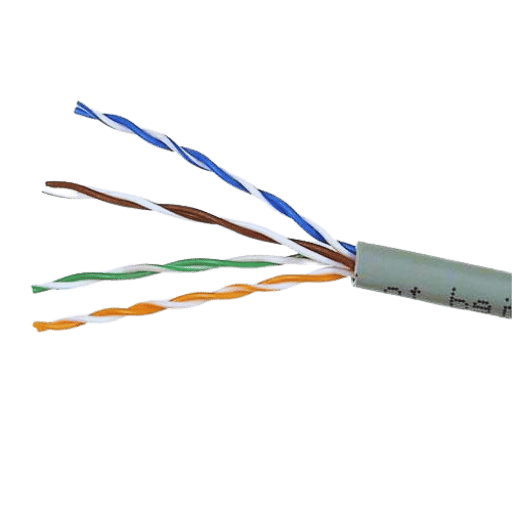
As a network cable used for data communication in Ethernet networks, Unshielded Twisted Pair (UTP) cable competes with other cabling options on the market. It comprises copper wires that are insulated with pairs and twisted with each other to mitigate electromagnetic interference. UTP cables are not shielded, which increases their flexibility, light weight, cost-effectiveness and makes them non bulky. In residential, as well as business settings, UTP cables are extensively used to connect the internet, telephones, video systems and many more.
Understanding Unshielded Twisted Pair Composition
UTP cables contain several groups of insulated copper wire pairs which are twisted together, often in sets of four pairs. The twisting of the wires reduces electromagnetic interference and crosstalk between adjacent pairs. UTP cables have no metal shielding, resulting in reduced weight and increased flexibility. They are widely used for transmitting data, voice, and video signals in networking and telecommunication applications, where they perform well over short to medium distances.
How UTP Ethernet Cables Work
Data signals with Ethernet UTP cables are sent as electrical pulses through multiple pairs of twisted copper wires which represent binary code. Reduction of interference through the creation of balanced lines in the pairs allows for the maintenance of signal integrity during the process of transmission. The wire twisting ensures that external EMI is contended with and results in neutralization along the line as the sober-named noise cancels itself. The design maintains dependable communication in industrial areas and network-dense regions while simultaneously countering interference.
The modern market boasts numerous variants of UTP cables, such as Cat5e, Cat6, and Cat6a, with each defined by their max data transfer rates alongside signal frequency. The standards set also define the performance category; for instance, Cat5e cables support speeds up to 1 Gbps over distances of up to 100 meters. Meanwhile, Cat6a cables, owing to better insulation containing tighter twist standards, which reduce crosstalk, can handle 10 Gbps at the same distance. The advanced types of UTP cables also support the usage of Power over Ethernet (PoE), which enables electrical power and data signals to be transmitted through a single cable, drastically simplifying installation alongside infrastructure costs.
These types of cables are important in constructing a local area network (LAN) as they link computers, routers, and switches. UTP cables can only be used effectively for short to medium distances, as excessive length can lead to attenuation. In order to maximize performance, network installations pay special attention to stress relief, bending, and other structural integrity compromising techniques. UTP Ethernet cables continue to be the industry standard due to their ease of use and flexibility in design.
Advantages of UTP in Networking
Cost-Effectiveness
- One of the cheapest available network cabling options is UTP (Unshielded Twisted Pair) cables. Compared to coaxial and other types of cables, UTP cables are simpler in design and lack elaborate shielding materials. This makes them more cost-effective. Therefore, for applications with tight budgets UTP would be the appropriate choice.
Ease of Installation
- Due to their flexibility and lightweight construction, UTP cables can be routed and installed in tight spaces. Also, their universal compatibility with RJ-45 connectors means no specialized tools are required. This greatly simplifies the installation process.
High Data Transmission Speeds
- UTP: Category 5e, 6, and 6a are some of the modern UTP cables supporting very high data transmission rates. Bandwidth capacity for certain categories is as high as 10 Gbps. Such data speeds render UTP fit for nearly all local area network (LAN) settings.
Wide Compatibility
- A variety of network equipment including routers, switches, and modems are UTP compatible. Their application in Ethernet networking standards ensures interoperability regardless of setup.
Reduced Electromagnetic Interference (EMI)
- Even though UTP cables are not shielded, they do lessen the effect of electromagnetic interference with their twisted pair construction that cancels out cross-talk between the pairs. This construction makes them more dependable in environments with moderate electrical noise.
Scalability
- The UTP cabling solutions are highly flexible and can accommodate the increasing demand of the network. Switching to higher categories of UTP cables improves performance without the need for considerable infrastructural changes.
Durability in Standard Use
- UTP cables do not require any additional protective measures like shielding, as they are durable durable enough to withstand standard operational conditions. This reliability helps provide signal integrity in most common networking deployments.
Availability and standardization
- UTP cables are well distributed across the globe. They are also captured in relevant and important general industry norms TIA/EIA-568 and IEEE (Institute of Electrical and Electronics Engineers) standards. Such standardization guarantees that different manufacturers and installations will have the same level and grade of quality and efficient performance.
With these benefits, UTP cables allow users to develop and maintain flexible, effective networking systems for different environments ranging from residential to commercial.
What is an STP Cable?
The Role of Shielded Twisted Pair in Data Transmission
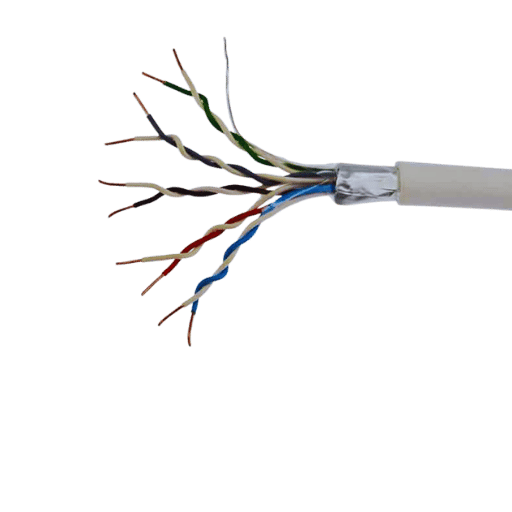
Employed in the context of data transmission, STP cables are important as they cross over electromagnetic interference (EMI) and crosstalk). These cables prove effective in shielding electrical noise with wrapped shielding at the twisted pairs; they guarantee the efficacy of the signal. I recommend employing the use of STP cables in industrial places or areas highly saturated with emi for low-interference setups.
Features that Make STP Cables Effective
- Protection from Electromagnetic Interference (EMI) Cables: The shielding layer of STP cables protects from external EMI, thus ensuring that the data being transmitted is not interfered with by other electrical noise. This property makes these cables suitable in places where there is heavy machinery or other electronic devices.
- Decreased Crosstalk: The unique design of the twisted pairs, together with the added shielding, minimizes crosstalk or the inadvertent transmission of electrical signals through adjacent wires. This attribute is important in high-density installations that have multiple cables running parallel to each other.
- Enhanced Integrity of Signals: Even with the increasing distance, vigor of the signal does not alter due to the shielding preventing ingress and egress of electrical noise. This is important when dealing with high-speed data transfer.
- Efficiency in Operations in Environments with High EMI: STP cables are meant to work in harsh industrial environments, data centers, and other areas with high electromagnetic interference, maintaining functioning reliability in STP cables even when surrounded by challenging conditions.
- Support of High Frequency Data Materials: The specially designed shielding stood the requirement of higher data rates and frequencies supported by STP cables for advanced networking applications like Gigabit Ethernet and others.
- Long Operational Lifespan: Compared to other unshielded STP cables, numerous are designed with robust materials that cover the shielding layer and internal wiring. These designs result in increased durability during operations and longer lifespan.
Understanding STP vs UTP in Network Environments
Both STP (Shielded Twisted Pair) and UTP (Unshielded Twisted Pair) cables have their unique functions in a given networking setup.
- STP cables are equipped with an extra shielding layer that protects them from electromagnetic interference (EMI). These cables are best suited for areas with high levels of interference, like industrial zones or places with heavy machinery. While they are optimal for high-speed, high-frequency applications, they tend to be more expensive and less flexible due to their construction.
- UTP Cables, on the other hand, do not have any shielding which makes them light and relatively cheap compared to other cable options. They have become the standard choice for ethernet applications because they function well in low interference environments, like office spaces and residential networks. UTP cables are also incredibly convenient to install.
Both cable types have been designed to suit specific networks with respect to cost, performance needs, and environmental provisions. UTP cables are ideal for most general-use networks, but STP cables are best suited for more demanding situations and are resistant to interference.
How Does Shielding Affect Performance?
Exploring Sources of Interference in Network Cabling
The performance of network cabling can be substantially impacted by interference, causing higher latency, data loss, and slower transmission rates. Electro Magnetic Interference (EMI), Radio Frequency Interference (RFI), and crosstalk are the main interference culprits.
Electromagnetic Interference (EMI)
EMI affects the signal within a cable due to external electromagnetic fields. Industrial machinery, power lines, and fluorescent lighting can all cause EMI. For example, unshielded twisted pair (UTP) cables are highly susceptible to data integrity problems in high-voltage environments. STP cables and fiber optics are better suited for these applications since they suffer less from EMI. These cables protect against the interference.
Radio Frequency Interference (RFI)
RFI affects cell towers and antennas, as well as anything that relies on microwave transmission. When devices are competing to operate on the same frequency, they interfere, which reduces network performance. To reduce RFI, it is advisable to ground the cables, use shielded cables, or use high category cables like CAT6A and higher.
Crosstalk
Crosstalk describes the unwanted interference that occurs when signals in neighboring cables or pairs spill over into each other. This type of interference may be classified into two types: near-end crosstalk (NEXT) and far-end crosstalk (FEXT). Signals interfere at the transmitting end; this is NEXT, whereas FEXT occurs at the receiving end. These problems are common in congested cable installations. Newer designs of twisted pairs, better shielding methods, and adherence to TIA/EIA standards lessen crosstalk and preserve signals.
Data And Statistics
Recent studies show that in industrial environments without adequate shielding, EMI and RFI account for up to 60 percent of signal degradation. It is also estimated that optimal designs of cables could reduce errors associated with crosstalk by almost 85 percent. The use of cables designed for the required operational envelope can conceivably eliminate up to 95 percent of network-perturbed putative disturbances, even under harsh uncompromising conditions.
To achieve dependable performance of the network, reducing the associated interference is vital. Knowing the degree of interference associated with your installation environment can assist in selecting the right cabling and shielding options.
The Impact of Electromagnetic Interference on Data
Electromagnetic Interference (EMI) significantly impacts data transmission due to signal decline, terror, and degradation of network performance. This form of interference occurs when external electromagnetic signals disrupt the normal functioning of cables, devices, or systems. To reduce the EMI impact, shielded cables should be employed, cable routing should mitigate interference sources, and proper grounding should be made. All these practices help maintain data and network reliability even in environments with strong electromagnetic forces.
Minimizing Crosstalk with Proper Cabling
Crosstalk is the unwanted transfer of signals between communication channels, which can lead to decreased network efficacy and data corruption. Adequate cabling practices are critical in reducing this interference. Twisted pair cables like Category 5e, 6, or 6A feature tightly twisted wire pairs that reduce crosstalk by canceling much of the electromagnetic interference between adjacent pairs.
In order to lessen crosstalk, adherence to proper installation techniques is paramount. Ensure sufficient distance from data cables to power lines to mitigate the chances of cross-interference. If the network supports it, shielded twisted pair (STP) cables or even fully shielded cables are recommended as they provide greater protection against electromagnetic interference and background noise.
Based on laboratory tests and proven industry standards, properly terminated Category 6A cables have the potential to reduce alien crosstalk to as low as 15 dB. Other advancements, such as enhanced connector designs, also illustrate a measured reduction in near-end crosstalk (NEXT), which maintains signal strength over extended distances. These progressions underscore the need to strategically invest in quality cables and initiate best practices during installation.
When to Use UTP or STP?

Determining the Best Cable Type for Your Needs
Factors to consider when distinguishing between Unshielded Twisted Pair (UTP) and Shielded Twisted Pair (STP) cables include the technology, the environment that they will be placed in, and the level of performance desired for a reliable network system.
Electromagnetic Interference (EMI)
- For StP, the shielding facilitates greater protection from under-stated EMI. Therefore, these are suitable for use in situational areas of grave interference, such as industrial zones where there is heavy machinery moving around or positioned near power lines. Research indicates that STP properly shielded cables can emit up to 90% of EMI, enabling stable signal transmission. UTP cables, on the contrary, are generally suitable in areas with minimal interference, for instance, residential setups or small offices.
Cost and Complexity of Installation
- In general, UTP cables incur lower installing costs and charge less for their services because they do not require specialized grounding or special treatment during installation. It is reported that UTP installation can save 25% – 30% in time and labor costs for STP. STP cables, however, require proper grounding to sustain their performance, which complicates and increases the cost of deployment.
Data Speed and Bandwidth
- UTP and STP cables both offer high-speed data transmission, but STP is superior in long-range scenarios with minimal loss of signal quality. For instance, in data centers and other high-performance applications, STP cables are preferred because they offer better signal integrity over long distances.
Surrounding Factors
- In outdoor or industrial settings, UTP cables are more susceptible to external noise and rough elements, unlike STP cables, which are better out in the open. In contrast, UTP cables are best suited to calm indoor conditions. This versatility helps maintain the reliability and performance of your network with little maintenance.
Summary of Use-Cases
The previously stated scenarios suggest that UTP cables are more cost-efficient for low-voltage EMI situations like home networks or small businesses. However, STP cables outperform UTP in high-density areas like industrial sites or data centers where advanced signal shielding is mandated. Striking the appropriate balance between these factors tailored to your organization’s needs is vital when selecting the right cable type.
Common Applications of UTP Cables
The Unshielded Twisted Pair (UTP) is a type of cable that is sensitive to interference, making it inexpensive and easy to set up compared to other cables of similar technologies that protect against EMI. These features, along with their sufficiency in terms of performance for casual users, make them ideal for use in homes and less demanding business environments. Below is a comprehensive list of UTP applications.
Local Area Networks (LANs)
- As stated above, UTP cables are preferred for use in LAN configurations, especially in homes and small businesses. Their popularity stems from their reliability and effectiveness relative to their price. Cat5e and Cat6 UTP cables have become go-to options for linking computers, routers, and switches.
Telecommunication Systems
- As mentioned, UTP are used as a backbone in telecommunications infrastructures which include telephone lines. For such applications, it is important for the cables being used to support voice transmission, while not interfering with other signals, which is something UTP cables do with ease.
Ethernet Interfaces
- With the rise in popularity of Ethernet ports, telephone sockets have become a common UTP for Ethernet connections, especially the 10Base-T, 100Base-TX, and gigabit standards. Based on the performance and bandwidth needs, these standards incorporate Cat5, Cat5e, and Cat6 variations.
Residential Wiring
- In most homes, UTP cables are commonly put to use in the transmission of data and voice. They are a functional and low-cost option for the rest of the world wanting to set up a decent home network.
Video Surveillance Systems (CCTV)
- IP cameras, along with other video surveillance systems, are compatible with UTP cables. These cables allow for smooth data transfer and are frequently used with baluns for longer distance video signal transmission.
Control systems
- UTP cables can also be found in construction automation systems like HVAC (Heating, Ventilation, and Air Conditioning), where reliable signaling and lack of shielding are required.
These applications show the remarkable scope and flexibility of these cables across different fields. With low cost and high reliability, UTP cables stand out in most non-industrial settings.
Recommended Uses for STP Cables
In data centers, broadcasting settings, industrial facilities, and even high-broadcast environments where there is high or extreme EMI (Electromagnetic Interference), STP (Shielded Twisted Pair) Cables are very useful. These cables are often employed for transmission of sensitive data through high-speed networks, audiovisual systems, and even security systems. STP STP (shielded twisted Pair) cables have enhanced shielding which improves the quality of the output signal. This makes them suitable for installations where maintaining data transmission is critical.
Comparatively Analyzing UTP vs. STP
Comparing Twisted Pairs in Each Cable
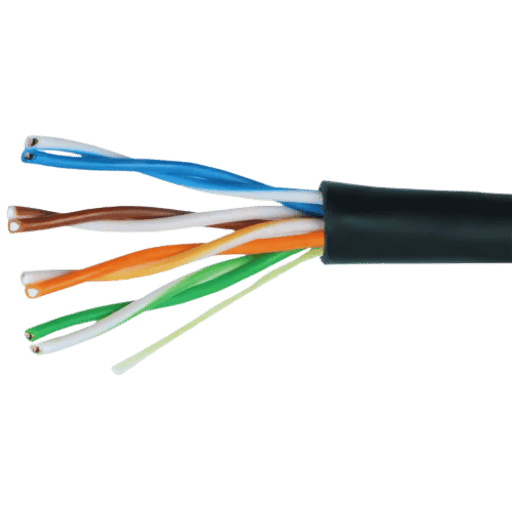
The pairs in both Unshielded Twisted Pair (UTP) and Shielded Twisted Pair (STP) cables are mechanically intertwined in a helical form to help reduce electromagnetic interference and crosstalk. Their implementations, however, vary greatly in functionality and effectiveness.
UTP Cables
The only method of reducing interference in UTP cables is the twisting of the pairs. Due to the absence of shielding around the pairs and the entire cable, UTP cables are lightweight, flexible, and easy to install. These advantages make UTP cables very inexpensive for use in residential houses or standard offices with minimal electromagnetic interference. UTP cables typically support transmission speeds of up to 10 Gbps over short distances, like 100 meters for Cat 6 cables.
STP Cables
Like all other types of cables, STP cables are constructed the same, except for the fact that they have additional shielding wrapped around them. This shielding can either be an overall wrap around the entire cable or can be done to the individual pairs. This specific type of shielding offers much more protection from external EMI and internal crosstalk, which allows STP cables to function at a peak level, even in very harsh conditions like when near heavy machinery or in industrial settings. This shielding does allow for better performance, but it also makes the cables thicker, more rigid, and difficult to install. Similar to UTP cables, STP cables do support high transmission speeds; however, as opposed to UTPs, STP cables do tend to maintain signal integrity over greater distances or in harsh conditions.
Performance Metrics:
In measuring data transmission, SNR, and attenuation when comparing STP and UTP cables:
- Due to a lack of shielding, UTPs exhibit relatively high attenuation with increased distance.
- In high-EMI surroundings, STPs ensure reduced error rates with better SNR, providing lesser chances of corrosion in data being passed.
For example, a Cat 7 STP cable comes with proper grounding enabling it to constatnly perform beyond the standard 100 meter mark achieving flawless noise cancellation.
In the end, UTP and STP cables differ from one another based on their application requirements, environmental factors, and budget prioritization.
Evaluating Longer Distances in Cable Runs
Signal attenuation, timing delays, and compliance with performance standards should be part of the considerations for network infrastructure requiring longer cable runs. Ethernet cabling, such as and Cat 5e, Cat 6, and Cat 6a, generally observe the TIA/EIA-568 standard limitation of 100 meters (328 feet). Exceeding this limit results in diminished signal integrity, increased error rates, and reduced performance.
To address longer distances, deploying fiber optic cables is often the preferred solution. Multimode fiber (MMF) facilitates up to 550 meters of Cable runs for10 Gbps transmission, while single-mode fiber (SMF) supports in excess of 10 kilometers. For copper cabling, using repeaters and signal boosters helps to maintain signal quality for greater lengths, albeit at the cost of added latency, complexity of the system, or delay.
With new advancements in Ethernet technologies like with 10GBASE-T and 25GBASE-T, furthering Ethernet’s capabilities is more achievable due to better shielding and signal processing. Regardless of the preferred transmission, optimal data transmission and network reliability hinges on staying within the cable-rated distances. Electric magnetic interference (EMI) or other electromagnetic factors require keen attention for optimal reporting and planning for effective signal flow over long cable runs.
Considerations for Network Cabling Investment
When planning your network cabling investment, consider its scalability and compatibility so your system can grow in the future without major infrastructure changes. Depending on your requirements, pick Cat 6A or Cat 8 cabling that supports current and expected data throughput on your network. Comply with industry standards for robust performance and interoperability. Consider factors like exposure to EMI shielding and environmental conditions; choose cables with adequate shielding if necessary. Lastly, minimize operational downtime and ensure reliable equipment longevity by partnering with specialists and certified products.
Frequently Asked Questions (FAQs)
Q: What’s the main difference between UTP and STP cables?
A: The distinction between UTP (Unshielded Twisted Pair) and STP (Shielded Twisted Pair) cables lies in the shielding. Unlike UTP cables, which lack any protective covering, STP cables incorporate a shield, whether it be braided or foil, to guard against interference.
Q: In what scenarios should I consider STP cables over UTP?
A: STP cables should be employed in settings that have strong potential interference, like regions with heavy machinery or electronic equipment. UTP provides less protection than STP against electromagnetic interference, which is why STP is the better option.
Q: What does STP stand for, and why is it important?
A: STP means Shielded Twisted Pair. This type of cable is important due to its shielded construction which helps reduce interference and signal degradation, improving performance in more demanding settings.
Q: Are STP cables more expensive than UTP cables?
A: Yes, STP cables come with higher costs and complex STP installation compared to UTP. This is owing to the extra materials and design features they’re equipped with, such as shielding.
Q: How do STP cables reduce interference?
A: STP cables mitigate interference by employing a braided shield or aluminum foil that encompasses the twisted wire pairs. Such construction helps reduce the impact of external electromagnetic fields on signal transmission.
Q: What type of connectors are used with STP and UTP cables?
A: RJ-45 connectors are used with both STP and UTP cables for interfacing with networking equipment. The connectors work with both types of cable.
Q: Do all twisted pair cables require shielding?
A: No, not all twisted pair cables require a shield. The requirement for shielding will depend on the cable’s operating environment and the amount of interference present. Most standard environments are suitable for UTP.
Q: What are the advantages of UTP cables over STP?
A: UTP cables are less expensive and easier to install because of their simplified design in comparison to STP cables. They are appropriate for most basic networking functions where interference is minimal.
Q: Are STP cables applicable for every type of network installation?
A: STP is useful for installations where interference is a possibility, though it may not be required for all types of network installations. Each network installation has specific environmental conditions and network requirements that need to be met.
Q: What is the reason why STP cables are the best choice for installation?
A: STP is one of the most applicable types of installations near electromagnetic interference sources like motors and other electronics because these areas require better shielding and signal integrity, which STP cables provide.
Reference Sources
1. An Examination of Common-Mode Filter CMF Impact on UTP and STP Lines Using Chain Parameters Matrix
- Authors: Nobuo Kawabara, T. Matsushima, and Y. Fukumoto
- Date Published: 07/29/2023
- Source: 2023 IEEE Symposium on Electromagnetic Compatibility & Signal/Power Integrity (EMC+SIPI)
- Key Highlights:
- This paper studies the suppression effects of a Common-Mode Filter CMF on UTP and STP lines through a chain parameter matrix.
- Significant factors in the transmission loss and characteristic impedance of the CM transmission line were found to critically influence the suppression effect.
- The study suggests that the analytic technique employed is useful for assessing the suppressive impact of CM currents and electric fields radiated on the wires.
- Methodology:
- The authors model the CMF with the interface cable using a chain parameter matrix and determine S21 at the cable’s far end.
- To affirm the analytical approach, measurements were performed using UTP and STP cables (Kuwabara et al., 2023, pp. 196 -201).
2. Common-mode radiated emissions from UTP/STP cables with differential high-speed drivers/receivers
- Authors: S. Caniggia, P. Santi
- Date Published: 10/14/2003
- Source: 2003 IEEE Symposium on Electromagnetic Compatibility. Symposium Record
- Key Takeaways:
- This article analyzes the impact of common-mode currents on emissions radiated from UTP and STP cables.
- It emphasizes the issues concerning the asymmetry between the rise and fall times of the differential outputs of line drivers intended for high-speed digital signaling.
- Methodology:
- Using UTP and STP cables, experimental measurements, numerical simulations, and SPICE simulations were employed to characterize the three driver families, LV34, LVDS, and LVPECL (Caniggia & Santi, 2003, pp. 564–569 vol.2).
3. Uji Performansi Jaringan dengan Kabel UTP dan STP
- Authors: K. Nugroho, A. Kurniawan
- Published: 2017-06-30
- Key Findings:
- The study tested the performance of networks using UTP Cat6 and STP Cat5 Cables.
- Results showed that latency was lower with STP cables than with UTP cables, and the maximum lengths of cables for sustaining 0% packet loss were lesser in the case of STP cables.
- Methodology:
- The authors conducted the performance evaluation using ICMP packets of size 1000 bytes, measuring latency, throughput, and packet loss(Nugroho & Kurniawan, 2017, pp. 48–59).
4. Twisted pair
6. Ethernet