The invention of cross-linked polyethylene (XLPE) cables has improved contemporary electrical systems. It is highly reliable and offers superior performance everywhere, from power transmission and distribution to industrial operations. XLPE insulation withstands even the most extreme environments. What is the reason behind the global popularity of XLPE cables among engineers and electricians? In this comprehensive guide, we will delve into the construction and practical applications of XLPE cables, especially the properties of XLPE. The insights shared here will enhance your understanding of why XLPE insulation is the backbone of modern infrastructure.
What is an XLPE Cable and How Does it Work?

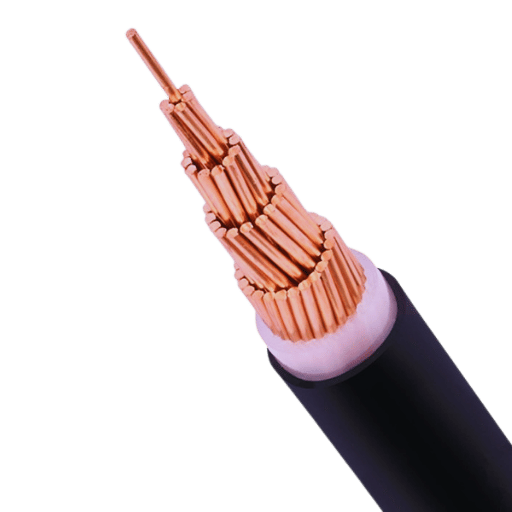
Cables with cross-linked polyethylene (XLPE) insulation have electrical wires encased with insulating cross-linked polyethylene material. The unique cross-linking technique improves polyethylene’s thermal, mechanical, and chemical characteristics, allowing for efficient performance under high temperatures and other demanding conditions. Deformation due to heat does not occur in XLPE insulation; it has good dielectric strength and is moisture and chemical-resistant. These qualities make XLPE cables suitable for industrial and residential power transmission and distribution.
Understanding XLPE: An Overview
Cross-linked polyethylene (XLPE) is a tough substance used for insulation in electric cables. It is produced by a cross-linking process that improves the polymer’s strength and resistance to heat, moisture, and chemicals. This makes XLPE an exceptional selection for uses requiring dependability in high-temperature and high-stress settings. It provides improved dielectric properties that assure reliable electrical performance while efficiently maintaining structural integrity under harsh conditions.
The Role of Insulation in XLPE Cables
The insulation of XLPE cables aims to thwart electrical leakage while also shielding the cable from external factors that may damage performance—using cross-linked polyethylene (XLPE) as the insulating material offers these cables high reliability in electrical transmission and distribution. The insulation provides excellent thermal resistance, ensuring the wires can perform at elevated temperatures without degrading, a key property of the XLPE. Moreover, protecting from moisture and chemical exposure guarantees consistent operational performance regardless of the conditions. This combination of factors makes XLPE insulation performance wire and cable critical for maintaining safety and efficiency in electrical systems.
How XLPE Technology Enhances Electrical Properties
The technology of XLPE (Cross-Linked Polyethylene) improves electrical properties by enhancing dielectric strength, allowing the insulation to endure high voltage and preventing breakdown. It also has a cross-linked structure that minimizes conductivity under electric stress, which results in energy loss. Moreover, XLPE insulation withstands heat without suffering from thermal resistance degradation; high temperature doesn’t affect its performance. It also has greater efficiency in power transmission and reliability in electrical systems over long periods, which is seminal for systems requiring long-term installation. Therefore, XLPE cable is ideal for enduring installations. These capabilities emphasize why XLPE is a top industry material and serves applications requiring high performance and stability.
Why Choose XLPE Insulated Cables for Your Needs?

The Benefits of XLPE in Power Transmission
XLPE insulated cables have reliable power transmission due to their excellent durability, thermal resistance, and electrical efficiency. They do not degrade through high temperatures, maintaining effectiveness consistently. Protection against energy loss, increased safety at high-seal consummation, and resistance to chemicals and moisture contribute to safety. The other insulation advantages, coupled with a long-term cost incurred economy, garner reduced XLPE system maintenance requirements, which thus makes these cables prime components of modern electrical infrastructure.
Superior Insulation Material Properties
Cross-linked polyethylene (XLPE) is widely used as an industrial standard in electrical engineering because of its unique properties as an insulator in power transmission applications. One major advantage of XLPE is its thermal stability, which allows operation at continuous temperatures of up to 90°C while enduring short-term overloads of up to 250°C. Such capabilities further enhance the reliability of electrical systems in extreme environments.
Additionally, XLPE’s dielectric strength is unparalleled compared to traditional materials, allowing it to withstand extreme voltage stresses with minimal electrical losses. Due to its cross-linked molecular structure, XLPE has remarkable resistance to oxidation and aging, which helps improve its life span. This is further aided by the material’s mechanical properties, such as high tensile strength, resistance to abrasion and impact, and enhanced resiliency in both underground and aerial installations.
Research suggests that XLPE-insulated cables withstand harsh environmental conditions. They are highly resistant to moisture, UV radiation, and chemicals, which helps prevent the electrical components from failing or degrading over time. These factors, alongside the low dielectric constant and low dissipation factor, make them suitable for use in modern grid infrastructure, which poses severe challenges to reliability and efficiency.
Lastly, improvements in manufacturing technologies have optimized the performance of XLPE insulation for use in renewable energy applications like offshore wind and solar power plants where longevity and functional reliability are critical. These advancements continue to strengthen the material’s positioning as an optimal selection in superior insulation engineering.
Comparing XLPE and PVC Cables
XLPE and PVC cables differ based on their material properties, temperature tolerance, and applications. XLPE cables have the best thermal stability and the highest operating temperature range (typically up to 90°C with surges up to 250°C), making them suitable for high-voltage and heavy-duty applications. On the contrary, PVC cables have lower thermal tolerance than XLPE (usually up to 70°C), limiting their use to low- to medium-voltage purposes.
Moreover, XLPE insulation has moisture and chemical exposure, making it perform better in harsh environments. PVC cables are valued for their flexibility and flame resistance but are weak in extreme temperatures. These differences make XLPE cables more suitable for industrial and renewable energy projects. In contrast, PVC cables are still cost-effective for low-intensity residential and commercial construction.
How Does XLPE Insulation Improve Cable Performance?
Enhancing Electrical Stress Management
XLPE insulation helps manage electrical stress by evenly distributing electric fields across the cable, reducing localized stress and the chances of dielectric breakdown. Its cross-linked structure improves thermal stability and performance at high voltage and temperature, showing the benefits of cross-linked polyethylene cable. As a result, XLPE insulated cables are more reliable and durable under high electrical and thermal loads.
Increasing Voltage Limits for Safety and Efficiency
Transmitting power at a high voltage reduces energy transmission losses and greatly improves the power transfer efficiency of the system—particularly for long distances. For example, resistive conductor losses are reduced due to low current flow when power levels are higher and transmission voltages increase. Industry standards indicate that UHV systems, such as those designed for 800 kV and above, have a 30-40% better transmission efficiency when compared to lower voltage systems.
Transmitting bulk amounts of energy reduces the chances of grid strain. They improve system reliability and contribute to a resilient energy network. Higher operational voltages make these systems, more substantial asset utilization, and the support for extensive renewable energy project integration possible. Alongside modern insulation technologies such as gas-insulated substations and GIS and XLPE insulated cables, safety standards are more straightforward to comply with. The advancements enable safe operation at higher voltages.
The combination of clearer design guidelines and technological advancements, allowing for high-voltage systems, helps to sustainably and securely meet modern energy demand while optimizing distribution in more complex and interconnected electrical networks.
What are the Different Types of XLPE Cables Available?

Unpacking Types of XLPE Insulated Cables
Cables with XLPE insulation come in a variety of types depending on the application involved:
- Low-Voltage (LV) XLPE Cables: These are used in residential areas, commercial centers, and small-scale industries to distribute power at voltages up to 1kV. They are excellent for power distribution and have high thermal resistance.
- Medium-Voltage (MV) XLPE Cables: These cables transport electricity at voltages of 1kV to 45kV and are used in urban distribution systems, industrial facilities, and construction projects.
- High-Voltage (HV) XLPE Cables: Used in applications that require voltages of 45kV up to 400kV. These cables are crucial for systems that deal with power transmission, such as connecting substations and providing long-distance electricity.
- Extra-High-Voltage (EHV) XLPE Cables: Used in grid systems where the voltages are above 400kV, these are fundamental in assuring that national or regional electricity networks are dependable.
All of the above types of XLPE cables are designed for optimal performance at their specific voltage ranges with high durability, heat resistance, and low energy wastage.
Exploring High Voltage Applications
High-voltage applications are crucial for efficiently transmitting and distributing electrical energy over long distances. These include the power grid, industry, and renewable energy systems. To reduce energy loss, increase reliability, and conserve the enormous electrical loads in these systems, high-voltage cables like XLPE cables are employed. Modern insulation materials guarantee safety and performance, even under harsh conditions, making these elements vital to contemporary electrical networks.
Understanding Armoured Cable Variants
The designs of armored cable variants attend to the enhanced mechanical protection and durability inflicted in extreme environments. Common types include steel and aluminum wire armored (SWA) cables and aluminum (AWA) cables. SWA cables are mainly utilized in low and medium-voltage systems as they are highly resistant to physical damage. In contrast, AWA wires are used in systems that require protection from electromagnetic interference; thus, they are ideal for single-core systems. The selection of armoring depends on the environmental conditions an installation is exposed to, while functionality ensures safety and reliability in electrical systems.
How Does Cross-Linked Polyethylene Benefit Cable Lifespan?

Durability and Longevity in XLPE Insulated Power Cable
Due to its unique thermomechanical characteristics, cross-linked polyethylene (XLPE) is known to improve the durability of power cables. Compared with other insulating materials, XLPE insulation offers superior resistance to thermal degradation, which helps prevent material failure during prolonged usage. Moreover, it is extremely resistant to moisture and chemicals, which mitigates the chances of insulation failure in harsh conditions. These factors contribute to the reliability and durability of XLPE-insulated cables, which perform exceptionally well in nearly all conditions.
Environmental Resistance of Polyethylene Insulation
Insulation polyethylene’s resistance to harsh factors is second to none, which is why it is environmentally friendly. This type of insulation is impermeable to water, meaning there is little chance of moisture escaping and damaging the electrical components and structure of the insulation. Equally, its exposure to many solvents and acids does not change its ability to withstand the chemical aides, which further protects its insulation capabilities during intense conditions. It can also be used in high and low temperatures, an added benefit as it can be relied upon in different situations and environments. Its applicability across many fields and its usefulness in facilities ensure it is suitable for industrial use, which is why polyethylene insulation is also used outdoors.
Frequently Asked Questions (FAQs)
Q: What does XLPE cable mean?
A: XLPE cable is an electrical cable with an insulating layer of cross-linked polyethylene, which provides greater thermal and mechanical strength and enhances electrical performance.
Q: What are the benefits of XLPE insulated cables?
A: The benefits of insulated XLPE cables include superior electrical performance, more excellent resistance to heat, enhanced mechanical strength, and longer lifespan compared to polyvinyl chloride and other materials.
Q: What is the difference between XLPE and PVC cable insulation?
A: The difference between XLPE and PVC cable insulation is that XLPE has higher thermal elasticity, meaning it can withstand higher temperatures, improving the cable’s longevity and reliability.
Q: Why should I use XLPE cables?
A: XLPE cables should be used for applications that require high durability under elevated temperatures, excellent electrical performance, and enhanced mechanical strength, making them ideal for power distribution systems.
Q: What is the role of cable insulation in electrical cables?
A: Insulation of electrical cables assists in preventing electric shocks, protects the wire and cable from environmental damage, and ensures power is reliably and efficiently transmitted.
Q: In which typical applications are XLPE cables used?
A: XLPE cables are utilized in power distribution and installing underground and high-voltage cables because of their exceptional thermal and electrical properties.
Q: In which ways does the cross-linking affect XLPE cables?
A: The cross-linking process enhances the thermal and mechanical stability of XLPE cables, allowing them to withstand greater voltages and environmental stresses without failing.
Q: What sets XLPE apart from other types of cable insulation?
A: The distinction between XLPE and other cable insulations like PVC is that XLPE has a cross-linked structure that provides higher resistance to heat, greater dielectric strength, and enhanced mechanical strength.
Q: What impact does the cable manufacturing process have on the attributes of XLPE cables?
A: The attributes of XLPE cables are affected by the cable manufacturing process due to cross-linking and insulation quality, which determines their electric efficiency and lifespan.
Q: Is there a preference for using XLPE cables within the cable industry?
A: Yes, XLPE cables have been noted as a preferred choice of wires in the market due to their adaptability, reliability, and better performance when compared to conventional materials such as PVC.
Reference Sources
1. Forthcoming Publication: A Novel Condition Assessment Method for Corrugated Aluminum Sheathed XLPE Cables Based on Evolved Gas Analysis
- Authors: Jiamin Kong et al.
- Published in: IEEE Transactions on Dielectrics and Electrical Insulation, 2023
- Key Findings:
- The study presents a self-performed condition assessment method for a cable’s evolved gas analysis (EGA) for XLPE cables.
- It characterizes different cable faults, including thermal and electrical faults with unique gas generation patterns.
- The method is likened to a blood test for cables as it assists in detecting faults.
- Methodology:
- Gas generation characterization through TG and MS was performed using simultaneous TG-MS.
- Simulated experiments were created to determine gas generation from electrical faults (Kong et al., 2023, pp. 883–891).
2. Detection of Partial Discharge Utilizing Fiber-Optic Mach Zen der Interferometer System For XLPE Cables
- Authors: Y. Hao et al.
- Published in: Electrical Engineering, 2022
- Key Findings:
- According to the paper, interferometric techniques have been advanced by implementing a fiber optic Mach-Zehnder Interferometer for partial discharge detection in XLPE cables.
- The approach developed improves the sensitivity and accuracy of partial discharge detection, which is one factor that affects cable integrity.
- Methodology:
- The design and testing of the fiber optic sensing system aimed at monitoring partial discharges on XLPE cables was carried out in this study (Hao et al., 2022, pp. 2133-2140).
3. Conducted Studies Relating To The Lifespan Prediction Of Cross-Linked Polyethylene Material Used For XLPE Cables
- Authors: YI Zhang et al.
- Published in: 2020 Applied Sciences
- Key Findings:
- The study determines the corresponding aging parameters in the dielectric properties and gel content of XLPE cables.
- Derives a lifespan prediction method equipped with parameters enabling evaluation of the aging degree of XLPE cables.
- Methodology:
- Employing various methods of aging characterization comprising gel content determination and differential scanning calorimetry (DSC) analysis of XLPE samples. (Zhang et al., 2020).