Coaxial cables have gained widespread popularity for their precision and reliability in signal transmission and form an important part of today’s modern communication systems. However, have you ever thought about the reason these cables are specifically termed “coaxial”? The answer lies partly in the name, as it gives a clue to the special construction that distinguishes these cables from others. This article explains the technical specifics of the term “coaxial” and analyzes the inventive engineering features that enable the use of these cables in various applications, from the Internet to cable television. At the end, you’ll have an insightful perspective on their design, function, and relevance in an interlinked world.
What Is a Coaxial Cable?
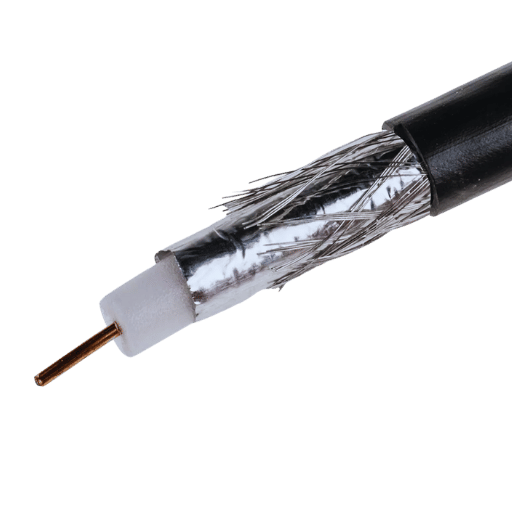
A coaxial cable is a type of electrical cable designed to minimize signal interference. It includes four main components: a central conductor that carries the signal, a surrounding insulator, a metallic shielding layer that reduces electromagnetic interference, and an outer protective layer/jacket. Coaxial cables deliver high-frequency signals over long distances with great efficiency, aiding in television broadcasting, internet connections, telecommunications, etc.
Definition of Coaxial Cable
A coaxial cable is a single type of electrical cable that permits the transmission of high-frequency signals and helps reduce interference. This type of cable is assembled with multi-layered construction, where a central conductor, typically copper or copper-clad steel, forms the core which is responsible for signal transmission. There is also a dielectric insulating layer that separates the conductor from a metallic shielding layer, braided copper or aluminum, that encloses the assembly and serves the purpose of electromagnetic interference (EMI) shielding. A durable outer jacket with Polyvinyl Chloride (PVC) or Polyethylene is added to protect the assembly from physical damage and other environmental factors.
Telecommunications alike widely employ coaxial cables for TV signal distribution. They are also mounted on broadband internet connections. As this type of cable can handle a wide range of frequencies from 20 kHz to over 3 GHz, it is able to support long-distance data transmission with reduced loss of signal. For instance, a cable TV system utilizing a good quality coaxial cable is capable of transmitting signals reaching 500 MHz over distances of more than 100 feet with minimal usage of amplifiers.
Coaxial cables are RG-6 and RG-11 which are more advanced and meet modern digital transmition requirements because they offer additional shielding and greater bandwidth which is needed for high-speed broadband and 4K video streaming. Because of the coaxial cables durability and versatility they will remain a critical part of current data transmission and communication technologies.
History and Evolution of Cable Design
Communication or data transfer needs have always driven advancements in the design of cables, from early systems like the twisted pair wire cable that sought to reduce interference within telephone networks, to coaxial cables which offered supior shielding and a higher capacity for radio and television signals in the mid 20th century.
The introduction of fiber optical technology in the 1970s marked a turning point in telecommunications and internet infrastructure. Fiber-optic cables, utilizing light for data transmission, are capable of faster speeds, greater bandwidth, and longer distances than traditional copper cables. This set the foundation for high-speed networks. Today, modern telecoms attempt to make cables with state-of-the-art materials and techniques to increase efficiency, reliability, and connectivity.
How Cables Are Commonly Used Today
Today, many industries depend on cables for power and world-wide communication. In the telecommunications industry, fiber-optic cables are indispensable because they provide high-speed internet which is necessary for video streaming, cloud computing, and operating IoT devices. As recent data suggests, global internet traffic will reach 351 exabytes per month by the year 2025, indicating a growing dependence on cable networks.
Apart from internet services, power cables for electricity are essential in every region, powering homes, businesses, and critical infrastructures. The development of submarine cables has also boosted efforts in renewable energy by linking offshore wind farms to national grids. An example is the North Sea Link, which is a 450-mile-long undersea cable connecting Norway and the UK. It is capable of transmitting 1.4GW of clean energy, which is enough to power 1.4 million homes annually.
Cables also play a key role in the automation systems of various industries, such as manufacturing, and in the interrelations of complex imaging and diagnostic devices within the healthcare sector. Even as new 5G infrastructure systems are implemented, cables still serve an essential function by linking cell towers with data centers, enabling low-latency communication. All of these systems showcase the ever-present need for cables in current technological systems and structures.
How Do Coaxial Cables Work?

Understanding Signal Transmission
The central conductor of coaxial cables transmits signals through a coaxial cable’s center; electrical currents that embody different data or communication signals are carried through the center’s wire. The transmission line is composed of an insulating layer, a metal shield, and finally, an outer protective jacket. Because the insulation and shielding prevent loss of the signal transmitted, obstruction to interfacing externally is halted, allowing the transmitted signal to maintain its integrity. Coaxial cables are dependable and efficient for use in multiple applications such as telecommunication, the Internet, and television.
The Role of the Outer Conductor
The outer conductor of a coaxial cable serves multiple critical purposes, which guarantee the smooth and dependable transmission of signals. First, it encloses the cable to reduce external electromagnetic interference (EMI) shielding. In high electronic noise environments like data centers and urban areas, interference can be very damaging. The outer conductor’s braided metal shield or foil works as a ground and ensures that the core signal is not distorted which guarantees consistent functionality.
Also, with regard to supporting signal integrity over long distances, the outer conductor affects the coaxial cable’s characteristic impedance. This is important because cables are standardized to have characteristic impedance values of either 50 or 75 ohms, depending on the type of usage. A good example is coaxial cables that have a 75-ohm impedance which is common for video and cable television applications while 50-ohm cables are the standard in laboratories and radio frequency settings.
Materials and construction techniques of the outer conductor from a technical standpoint also add to the level of attenuation – signal loss over a length of cable. The attenuation level is lower in high-quality conductors with copper braiding or braided denser conduits as these have lower attenuation rates suitable for advanced broadband or high-speed internet applications. For example, at lower frequencies, attenuation rates would range from about 0.2 dB to 0.5 dB per 100 meters, but this increases at higher frequencies.
With the combination of shielding effectiveness and control over impedance, the outer conductor remains a vital part in the design of coaxial cable looking at the use in telecommunications, broadcasting and industrial systems. If this layer is absent, signal transmission will be more susceptible to increased noise and inefficiency which adversely affects the dependability of communication and data transfer.
Importance of Impedance in Coaxial Transmission
Impedance matching in coaxial transmission systems is vital as it aids in efficient signal flow and reflection minimization. An incorrect impedance between components could lead to enhanced power, signal, and reflection losses which would tarnish quality during transmission. Standard values such as 50 ohms and 75 ohms are commonly used for different applications to improve high-frequency and broadband systems. Maintaining proper impedance throughout the entire length of the cable and the devices it is connected to is paramount in order to sustain high-fidelity signals and dependable communication.
Why Use Coaxial Cable Over Other Types of Cable?

Comparing With Twisted Pair Cable
A key difference between coaxial cables and twisted pair cables relates directly to their unique designs, which fulfill specific needs and give them purpose within a system of communication. Coaxial cables have a central conductor, which is enclosed under a layered shielding, which greatly lessens electromagnetic interference (EMI). Thus, coaxial cables are appropriate for high-frequency applications like cable TV, internet, and radio frequency (RF) signals. Twisted pair cables consist of two insulated copper wires, which minimize the crosstalk and EMI for low-frequency data transmitting devices such as Ethernet and telephone networks.
In relation to performance, owing to the newly invented Cat 7 and Cat 8 cables, twisted pair cables are said to sustain data rates of 10 Gbps, albeit over short distances. In contrast, coaxial cables show lower attenuation when used over long distances, where they provide superior bandwidth capacity and can frequently reach several gigahertz. An example of this is when the RG-6 coaxial cable transmits 1 GHz power over 150 feet without losing signal. Furthermore, because of the shielding provided to coaxial cables, they perform better in adverse environmental conditions due to having a lower temperature and electromagnetic interference.
Like most technologies, cost and ease of installation distinguish both options. The twisted pair is less expensive and simpler to install because of its lightweight design and greater flexibility. However, coaxial cables, which are more expensive initially, provide better performance in RF signal transmission or high-speed broadband systems that demand precision at high frequencies. Other factors that help make the decision include the bandwidth needed, the environment, and the distance the information must be transmitted.
Differences from Fiber Optic and Copper Cable
Material Composition
- Fiber optic: It employs delicate threads of glass or plastic to transmit data in the form of light signals.
- Coaxial Cable: Copper formers signaling covered by insulating material, and shields encapsulate the wires to carry electric signals.
- Twisted Pair: Contains two copper wires insulated from each other and wound to lower the impact of electromagnetic forces.
Signal Transmission
- Fiber Optic: Transmit data via light, ensuring lossless transfer over long distances and exceptional speeds.
- Coaxial Cable: Modestly loses effectiveness when electric signals are transmitted over moderate distances, but shielded interference ensures enhanced signal reception.
- Twisted Pair: Signals noise is considerably high while the distance is short; however the intensity of electric signal transmitted is also lower when compared to coaxial cables and fiber-optic counterparts.
Bandwidth Capacity
- Fiber Optic: Outstanding in terms of bandwidth as it accommodates terabits in terms of data, being lied at the center of varying demanding applications.
- Coaxial Cable: Suffers Eh bandwidths, settling from hundreds of Mbps to some Gbps, which suffices requirements for services like television, broadband internet.
- Twisted Pair: Shallower is in its disabling range but greatly varies from under 100 Mbps to 10 Gbps due to the specific categories such as Cat5e and Cat6 supporting these thresholds.
Signal Loss and Distance
- Fiber optic: experienced a relatively lower sign lose making it sufficient for long distance communication as it enables the transmission of hundreds of kilometers with add bangles on them.
- Coaxial Cable: Within the range of a few miles, it works well for short to medium-range applications. There is signal loss, but not too drastic over distance.
- Twisted Pair: There is relatively higher signal degradation for longer distances, however they are mainly used for distances up to 100 meters.
Cost
- Fiber Optic: They cost significantly more with complex materials and installation requirements, but become more cost-effective in the long run when used for demanding performance applications.
- Coaxial Cable: Reasonably priced. It falls right in the middle when considering performance and cost. Serves a lot of consumer and enterprise use cases.
- Twisted Pair: The cheapest option. Economically most favorable in basic networking applications.
Durability and Environment
- Fiber Optic: When properly encased, they can withstand harsh environmental conditions. They are also resistant to electromagnetic interference.
- Coaxial Cable: Moderately durable because of the shielding, however they are more susceptible to wear and environmental interference compared to fiber.
- Twisted Pair: Least durable type. Without proper shielded (STP), they are prone to crosstalk and environmental noise.
These differences emphasize the need to analyze the specific application requirements like speed, distance, budget, or whether to use fiber optic, coaxial, or twisted pair cables.
Advantages of Internet Connections and Cable TV
The integration of internet services and cable television offers a high level of convenience and flexibility for users with respect to information and entertainment. This synergy provides access to high-speed internet for browsing, streaming, gaming as well as cable television, which has numerous channels, both entertainment and news.
Bundling is one major perk wherein the overall expenditure made by the users is lower than if they purchased the internet and television services individually. Industry studies indicate that bundling services provides savings of approximately 10-25% to households on their monthly bills. Moreover, bundling also provides convenience with a single bill for the two services instead of multiple ones.
In terms of technology, modern packages of internet and cable television services are offered together and often employ sophisticated coaxial or fiber optic cable that guarantees reliable service with limited lag or interruptions. Especially, fiber optic internet has a speed exceeding 1 Gbps which is beneficial when there is a requirement for 4K streaming or online gaming, as well as extensive cable television services.
Also, the merging of the internet and television has resulted in smart TVs with integrated on-demand viewing, recording, and streaming capabilities. This enables users to personalize their viewing and browsing experiences to their liking, thereby enhancing their media enjoyment.
What Are the Types of Coaxial Cable Available?
Understanding RG-6 Coaxial Cable
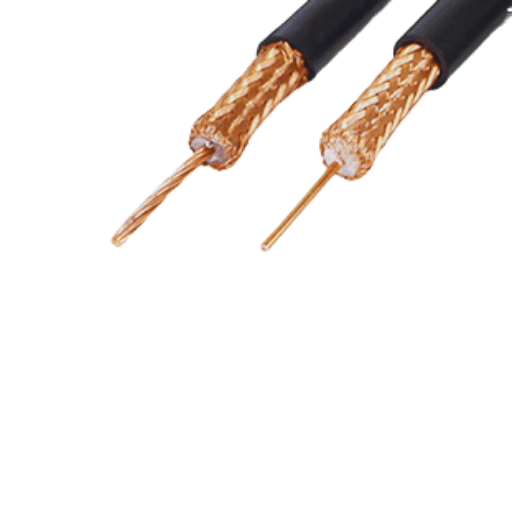
RG-6 coaxial cable is a cable type which, in comparison to older coaxial cable types, has a thicker core conductor. The thicker core allows for better signal quality over longer distances. RG-6 cables are often used with satellites, internet, and cable television. Due to modern improvements, it is now accompanied with enhanced shielding which reduces interference making it ideal for HD video and broadband signals.
When to Use RG-59 Cables
RG-59 cables are most appropriate for use in transmitting signals of lower frequency over shorter distances. Such cables are widely used in analog video systems like closed-circuit television (CCTV) and composite video interfacing. Because of RG-59’s smaller core conductor and decreased shielding relative to RG-6 cables, these cables are not as good as preserving signal quality over distance or at higher frequencies.
For instance, RG-59 cables are still used in older video surveillance systems since these cables are capable of transmitting standard-definition video signals over short distances, like within a building. Moreover, RG-59 cables can still be employed for certain audio and video interconnects where the signal’s high frequency or bandwidth limit is not an issue. It should also be noted that while RG-6 cables have much lower signal attenuation rates and are, therefore, more suitable for modern digital applications, such as HD television or broadband internet, these other applications render the RG-59 useless.
If you are considering using RG-59, be sure the distance from the signal source to the endpoint does not exceed 250 feet for best results. Good connectors and matching impedance are also very important for signal integrity in these types of systems. For high-frequency installations that require longer distances or more advanced signal needs, modern technical standards may require an upgrade to RG-6 and, under the advanced signal requirements, even fiber optic cables.
Specialty Cables Are Commonly Used in Different Applications
Specialty cables are crafted to satisfy particularly defined needs for different industries and applications. For instance, shielded cables are employed in areas with high electromagnetic interference to mitigate noise, while fire-resistant cables have specific applications within structures to guarantee safety during emergencies. Moreover, industrial ethernet cables are used in factories and manufacturing plants for consistent and reliable connection in difficult conditions. These cables are made with appropriate materials and characteristics relative to their purpose, which ensures optimal performance and durability and meets set industry standards.
How to Properly Use Coaxial Cable?

Installation Tips for Cable System
Installation of a cable system is one of the most important factors in achieving top performance, durability, and safety. Follow the below guidelines and key points for coaxial cable installation:
Selecting the Correct Cable
- Choose the coaxial cable intended for the application. For instance, RG6 is preferred for television and internet because of its insulation and bandwidth capabilities, whereas RG11 is used for long distance applications owing to its low attenuation.
Keeping The Minimum Bend Radius
- To maintain signal level, coaxial cables have specific minimum bend radii. Exceeding this radius can cause damage to the cable’s internal structure which will lead to signal loss. For instance, RG6 cables should not be bent tighter than approximately 2.5 inches in radius.
Establishing Proper Grounding
- Grounding the coax cable system ensures user safety as well as protects equipment from electrical surges. In order to comply with electrical code regulations, a grounding block must be employed and connected to a reliable ground.
Avoiding Sharp Edges Or Pinching
- When routing coaxial cables, care should be taken to avoid sharp edges or pinching that could deform the cable. Physical deformation disrupts the impedance, resulting in degraded signal quality. Clip or saddle the cable in such a way that they do not exert excessive force.
Prevent signal interference
- To avoid possible interference, coaxial cables should be routed at least six (6) inches away from electrical lines. Use high quality connectors and make sure they are properly secured to minimize signal leakage.
Considerations regarding the length of the cable
- To minimize the undesirable impact of signal loss due to electromagnetic interference, keep cable runs as short as possible, especially with higher frequencies. For example, RG6 cables lose approximately 6.5 dB of signal strength per 100 ft of cable at one (1) GHz. If long distances are required, consider the use of amplifiers or signal boosters.
These recommendations alongside local electrical codes and standards will enable you obtain an efficient installation of coaxial cables which will result in signal integrity, system durability, and coaxial cable longevity.
Maintaining Coaxial Cable for Optimal Signal Quality
In order to maintain the integrity of coaxial cables over time, periodic maintenance is required. Regular checks should be done to identify external or superficial damage like cuts, fraying, and bent connectors because they can negatively affect performance. Ensure that all connectors are firmly affixed, and check for signs of corrosion or wear. Refrain from bending cables at sharp angles, subjecting them to excessive tension, or exposing them to harsh external conditions, as these tend to cause internal damage. To preserve structural integrity, clean the cables of any dust or debris, especially near connecting points. Install weatherproof shielding for outdoor use to guard against moisture and UV damage. Timely repairs of identified assessable issues will go a long way in preventing signal loss while optimizing system efficiency.
Common Coaxial Cable Connectors and Their Uses
F-type Connector
- F-type connectors are primarily used for residential subdivision cable television, Satellite TV, and broadband internet installations. These connectors offer dependability, value, and good transmission of high-frequency signals.
BNC Connector
- BNC connectors are greatly applied in the professional video transmission of CCTV systems and broadcast equipment. Their easy plug-in style features simple and fast installation as well as good retention.
N-Type Connector
- N-Type connectors are typical in wireless communications and radio frequency (RF) systems. They are made for high frequency subjected connectors in several fields. Multiband antennas, for example, undergo lots of wear and tear so they need durable and weather proof TNC connectors, which is why they are so popular in outdoor installations.
RCA Connector
- In consumer grade audio equipment and video equipment, RCA connectors are still in use. Even though modern coaxial pieces do not have much popularity, older analog appliances still make use of them.
TNC Connector
- These connectors, which are commonly used in wireless systems and applications that face harsh conditions, are an updated version of BNC connectors. Apart from its threaded form, a TNC has the additional feature of glue to make it strong and provide better protection.
One of the most important aspects to consider when selecting a coaxial cable connector is its application, the signal needs, and the conditions surrounding the cabling and its peripherals. Most importantly, do not forget about the type of cable since it determines the performance.
Frequently Asked Questions (FAQs)
Q: Why is it called coaxial cable?
A: Coaxial refers to the cable is made of two or more forms with a common axis. Coaxial cable is coaxial because the conductor and the shield are on the same geometric axis; it is in the coaxial cable because the conductor and the shield are on the same geometric axis which improves performance compared to other cables.
Q: What is the unique design feature of a coax cable?
A: Coax cable’s unique design feature is its construction that consists of a layered arrangement with outer and inner conductors, an insulator and a metallic shield. This structure helps reduce signal loss and interference.
Q: How does the shield function in a coaxial cable?
A: The shield in a coaxial cable prevents external electromagnetic interference from affecting the internal signal carried by the cable. It also ensures that the noise caused by external factors does not distort the signal that is being conveyed through the cable.
Q: What are the common uses for coaxial cables?
A: Coaxial cables are primarily used in the transmission of television signals, internet through cable modems, and for use in the computer network backbone infrastructure. They are very advantageous in the cases where reliable and high frequency transmission is needed.
Q: How does a coaxial cable differ from a fiber optic cable?
A: Coaxial cables transmit data through electrical signals, whereas Fibre optic cables transmit data with light signals. Fibre Optic cables are recognized for having higher bandwidth, as well as more efficient long-distance data transmission.
Q: Why are coaxial cables still used in modern technology?
A: Coaxial cables continue to see a lot of use because they remain one of the best options available for economically efficient transmitting services, such as high-frequency analogue television and internet services. Their strong construction also helps protect the cables from loss of data over distance.
Q: Can coaxial cables experience signal loss?
A: Yes, coaxial cables can suffer from loss of signal, most notably from long distances or some sort of physical damage, but they do mitigate a lot of loss when it comes to these situations because of their construction.
Q: What is a semi-rigid coaxial cable?
A: A semi-rigid coaxial cable has a solid outer conductor that provides excellent shielding and minimal signal loss, and it is often employed in applications where the cable must retain some specified geometric form or specific routing.
Q: Coaxial connectors link different parts of the cable system. What function do they serve?
A: Coaxial connectors serve the essential purpose of securing the cable ends so there is no signal degradation; therefore, loss or interference is the lowest possible.
Q: What applications used to be used for coaxial cables?
A: The coaxial cables were historically used with various other devices, including the first transatlantic telephone and television cable, which started in New York because of their unrivaled radiotelephone transmission quality.