From personal electronics to industrial equipment, cables are integral to almost all applications. Flat cables and flexible cables are two types of cables that offer specialization and utility for a great number of tasks. These two types of cables possess notable differences, and understanding these differences can aid in deciding which is best suited for a particular need. With this in mind, this article seeks to define flexible cables and flat cables, highlighting the possible use cases of each in detail. As a reader- whether you are a professional working in the industry, a curious engineer, or simply interested in cable technology- this article aims to equip you with the understanding and knowledge necessary to make reasoned choices.
What is a Flat Cable?

A flat cable, or ribbon cable, is a type of electrical cable that is both flexible and flat as its conductors are parallel to each other on the same plane. Due to this, flat cables can remain compact while preserving organized signal routing. These cables are typically relied upon in situations with limited space or simplified connections, for example, in computers, printers, or other devices. The shape improves flexibility and lessens interference, which enhances cross talk, making flat cables ideal for high density and efficient wiring settings.
Characteristics of Flat Cables
- Flexibility: Because flat cables are exceptionally flexible, they are perfectly suitable for use in dynamic or mobile applications.
- Space Efficiency: Their low-profile shape allows them to occupy less space, enabling them to fit into tight spaces.
- Signal Integrity: The coupling of conductors in parallel minimizes crosstalk and electromagnetic interference.
- Ease of Installation: The orderly arrangement enhances the routing and connection procedures.
- Durability: Most flat cables offer a degree of longevity under repetitive folding or bending because their performance is maintained.
- Versatility: Appropriate for a wide range of applications such as used in telecommunication, consumer electronics, medical devices, and industrial machinery.
Applications of Flat Conductor Technology
Flat conductor technology encompasses a wide range of industries due to its compact design, reliability, and optimum performance. Below are important uses of flat conductor technology and their tailored benefits.
Consumer Electronics
Flat cables serve a critical role in connecting the compact internal components of smartphones, laptops, and tablets. The design of flat shape cables provides better efficiency and saves space in highly sophisticated designs.
Automotive Systems
Infotainment systems, dashboards, and advanced driver-assistance systems (ADAS) marks the use of flat conductor cables in many vehicles. The cables are also subjected to vibrations and harsh operating conditions which make them reliable and ensure long term performance.
Industrial Machinery
Among other uses, flat cables are incorporated into robotics, machine tools, and assembly lines that require minimum electromagnetic interference. This allows for precise signal transmission, which is crucial for accuracy in automation.
Medical Devices
The compact size and flexibility of flat conductor cables makes them vital in imaging diagnostic equipment, surgical instruments, and patient monitoring devices. They are easily integrated into intricate designs while providing uninterrupted performance.
Space and Defense
Instruments like satellites, defense systems, and aircraft are integrated with flat cables, which provide durability and lightweight connections to meet the exacting standards of military and aerospace operations.
To optimize space and increase interconnectivity, Data Centers and Networking Infrastructure make use of numerous types of flexible cables.
These high-bandwidth cables are employed for the rapid data transfer and proper signal allocation in controllers, thus achieving low latency and enhanced functionality within digital communication systems.
Advantages of Flat and Flexible Designs
Space Optimization
Compact design is a notable benefit of flat cables considering their routing organization. Unlike round cables, flat cables do not cause clutter, as their design optimizes the use of space in electronic assemblies.
Expanded Flexibility
These cables can be incorporated in moving applications, such as dynamic machinery or robotic arms, due to their flexible design. Their use in procedures involving continuous bending or flexing does not hinder performance, which increases operational lifespan.
Increased Signal Integrity
Controlled geometry and arrangement of conductors in flat cables leads to lower crosstalk and electromagnetic interference (EMI). This propels the integrity of the signal, particularly with the transmission and data of power at high speeds.
Reduction of Weight
Significant savings in weight can be attributed to the use of flat cables and their materials, as they are designed with light materials. This benefit is especially important in applications such as aerospace, автoмotive, and wearable devices due to the strict restrictions on weight.
Improved Heat Dissipation
Because of the flat geometry of these cables, the surface area is increased which allows for better dissipation of heat. This protects these cables from the risk of overheating, while ensuring reliable operation even in high-power or densely packed environments.
Installation and Maintenance
Due to its flat, ribbon-like structure, flat cables can easily be installed and managed. Its neat and recognizable arrangement facilitates troubleshooting and replacement attempts, which saves time and costs and reduces maintenance expenditures, particularly when using flat or round cables.
Cost Efficiency
Flat cables often lead to lower overall production costs due to reduced material usage and simpler assembly processes. Moreover, their durability and reliability consistently reduce downtimes which further enhances economic value in the long-run.
This flexibility, alongside the strong performance and cost-effectiveness under evolving technological demands makes flat and flexible cable designs the preferred choice across multiple industries.
Exploring Flexible Cables
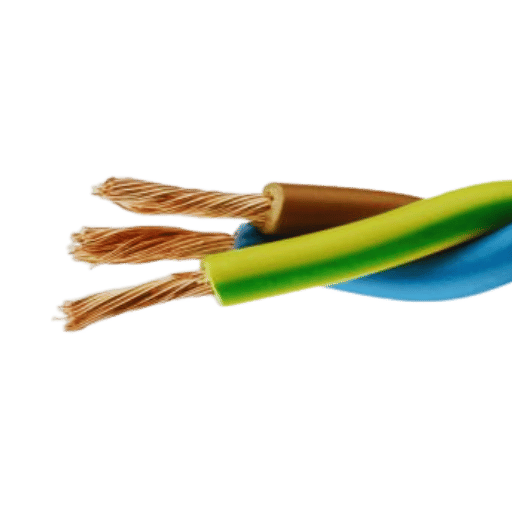
Features of Flexible Cable Systems
1. Exceptional Flexibility and Endurance
Performance is not compromised by the intense flexing, twisting, and mechanical strain of motion due to the special design of flexible cable systems. For dynamic uses such as robotics and automated equipment, fine-stranded copper conductors and their specialized insulation further enhance durability.
2. Everything Is Packed Effeciently
Flexible cables don’t consume much room due to their compact build, making them easier to work within constricted frameworks of today’s equipment. Further, streamlined profiles of flexible cables lead to better thickness and efficient management of densely packed installations.
3. Best electrical performance
Power supply and transmission at high-frequency applications are assured through advanced flexible cable systems. Reliable transmission power, data, interference, and signal loss are ensured, making them suitable for sensitive fields such as telecommunications aid and automation.
4. Resistance to Heat And the Environment
Excessive UV rays, chemicals, and extreme temperatures are withstood by modern flexible cables made with special polymers through outdoor design and certain industrial standards such as UL or IEC certification. Weatherproof and chemical resistant cables made for outdoor and industrial purposes use строгие стандарты таких, ***UL*** или ***IEC*** герметизация.
5. Adaptability Throughout Different Uses
Flexible cables are utilized in various industries such as automotive, aerospace, medical, and even in renewable energy. Other specific designs include drag chain cables or torsion cables, which are meant for specialized functions that require motion or rotation. Data from the cable manufacturing industry suggests that these cables improve operational efficiencies by as much as 30% in certain automation settings.
6. Life Expectancy
Flexible cables tend to have greater operational life compared to other traditional cable systems because of their sturdy build and ability to withstand significant mechanical stress. This leads to less maintenance and replacements, thus reducing costs over time.
Flexible wire systems are adapting with the technological advancements in the industry and shifting focus towards performance and reliability while improving industrial and commercial grade adaptability.
Uses of Flexible Plastic in Cabling
Flexible plastic materials can be very helpful in the advancement of cabling systems. Their modern applications require durability and performance, which flexible plastics offer. Some of the primary uses and benefits are as follows:
Enhanced Insulation and Protection
As insulation materials, PVC and XLPE are used widely because of their dielectric properties and resistance to high temperature, chemicals, and moisture. These characteristics aid in the protection of the internal conductive cores, as well as enhance the cable’s lifespan during severe environmental conditions.
Lightweight and Space Efficiency
Flexible plastic contributes to the thinness and lightness of cables, which allows for ease in installation in dense areas. This is very helpful in the aerospace, automotive, and robotics industries because flexible materials are the focus of design for those industries.
Improved Flexibility and Bending Performance
Elastomers and thermoplastic polyurethane (TPU) exhibit considerable flexibility, which enhances the performance of cables in terms of bending and repeated torsion cycles. The flexibility of the cables aids in dynamic applications like drag chains and robotic arms to mitigate cracking or mechanical failure over time.
Fire Safety and Resistance
Advanced flexible plastics such as Halogen-Free Flame Retardant (HFFR) materials are enhancing fire safety regarding public infrastructure and other critical facilities. They also have a low tendency to produce smoke or toxic gases, which helps to curtail hazards during fire emergencies. There is evidence of their increased use in system wiring for buildings, as well as public transport systems, trying to comply with rigorous safety policies safety policies’.
Energy Transmission Efficiency
System of flexible plastic cabling has an advantage because it incorporates low dielectric loss and high current capability, which maximizes energy transmission efficiency. This is very important in the case of renewable energy, for instance, in solar and wind power plants, where reliability in energy distribution is crucial.
Customization for Particular Uses
The degree of customization possible with flexible plastics is immense. This provides the opportunity for manufacturers to adapt the design of the cables to suit the specifications of the relevant industry. This includes but is not limited to ultraviolet resistance for outdoor use, oil resistance for industrial plant uses, and bio-compatibility for medical devices.
The flexible plastic cable market has grown steadily over the years, with projections indicating a CAGR greater than 6% in the last ten years. This demand is driven by the adoption of smart technologies, automation systems, and renewable energy solutions, which all require advanced cabling systems. Furthermore, with the ever-changing flexible plastic materials in engineering, modern cabling systems are sure to be redefined in capability and use.
Benefits of Greater Flexibility in Flexible Cables
Improved Durability
Performance is not compromised with flexible cables, which are custom-made to endure continual bending and movement. Research indicates that more flexible cables outperform conventional cables by bending up to 10 times more cycles than previously possible, therefore, significantly enhancing operational lifespan.
Better Space Utilization
Flexible cables, due to their configuration, aid in attaining tighter bending radii, thereby, increasing their space saving capabilites during installation. This is advantageous in restricted spaces such as automotive or industrial machinery applications.
Outstanding Performance in Moving Applications
Robotics and conveyor systems that require constant movement are ideal use cases for flexible cables. For example, robotics manufacturers claim that flexible cables can sustain millions of cycles of movement without failure, proving their reliability in highly demanding environments.
Lowered Installation Costs
Installation is completed quicker owing to the reduced stiffness in flexible cables, allowing easier handling and positioning during placement. This qualifies flexible cables for large scale projects, where installation time can be cut by 20% in labor costs.
Reduced Stress on Connectors and Mounted Equipment
The risk of maintenance problems is increased with greater straining of connectors and adjacent equipment. Flexibility aids in reducing strain, which is especially crucial in high vibration areas like aerospace or the transportation industry.
Complex Design Matching
Unlike rigid cables, flexible cables, especially braided ones, are more easily integrated into sophisticated systems, including medical equipment and wearable technology. Moreover, they conform to the design specifications of contemporary compact systems.
Increased Protection
When compared to other types of cables, flexible ones are more resistant to cracking or breaking under stress. This minimizes the possibility of electrical malfunctions and improves the safety of sensitive applications in areas like medicine and hazardous industrial regions.
These features underscore the trend toward increased flexibility concerning cable design and modern engineering and technological systems.
Understanding FFC and FPC Technologies

What’s the Difference Between FFC and FPC?
Both Flexible Printed Circuits (FPC) and Flat Flexible Cables (FFC) are widely used in contemporary electronics for their versatility and compact designs. However, they vary greatly in structure, applications, and characteristics.
Structure
FFC cables consist of a series of parallel conductive strips that are laminated in between two plastic materials, polymers such as polyimide or polyester, flexible materials. They are often utilized for connections between two electronic components and usually have a standardized pitch or spacing between conductors.
Flexbable Printed Circuits (FPC) are thin, more flexible than FFC, circuit boards. Unlike FFC, they are fabricated by etching flexible copper onto a substrate which allows for better customization in the design of intricate or complex circuits. FPCs have the advantage of containing multiple layers along with vias and other components such as resistors and capacitors.
Applications
FFC cables can be found in devices like printers and televisions because they perform less complex, repetitive functions like connecting displays to motherboards. They are also easy to manufacture and less expensive which is preferred in simpler designs.
FPC circuits are applied in high-density devices such as smartphones, aerospace equipment, and medical devices due to their ability to incorporate circuit features directly onto the surface. Their delicate construction allows multi-functionality within compact spaces.
Flexibility and Strength
Despite both choices having considerable adaptability, Flexible Printed Circuits (FPCs) outperform their counterparts (FFC) in bending and mechanical endurance throughout their lifespan due to reinforced designs. FPCs stand out for applications with movement or bending, like robotic arms and wearables.
Data and Performance
Advantages of FPCs include the ability to convey high-frequency signals and enhanced thermal dissipation, making them appropriate for high-speed tasks. FFCs suit low-demand signal transmission. For example, FPCs can support several GHz, while FFCs work best in these lower frequency ranges.
Cost Implications
Manufacturing FFC cables is relatively cheaper due to their simple design. FPCs, on the other hand, require elaborate production techniques, making them pricier. Nevertheless, the added functionality and ability to miniaturize provided by FPCs make them worthwhile in high-performance contexts.
Discrepancies in FFC and FPC help guide engineers and designers toward appropriate solutions based on application-specific requirements, weighing flexibility, complexity, cost, and durability.
Applications of Flexible Printed Circuits
Flexible Printed Circuits (FPCs) are used in a variety of industries due to their light weight, small size, and ease of use. Below is a more detailed list of their applications:
Consumer Electronics:
FPCs find widespread use in smartphones, tablets, laptops, and wearable gadgets. Their flexibility and ability to house dense circuitry enable sleek and light designs. For example, FPCs serve vital functions in smartphones such as internal connections for modem interfaces, linking the camera module, the display, and the batteriesolar cells. Market analysis suggests that more than 60% of consumer electronics have some form of FPC.
Automotive Industry:
The Automotive sector employs FPCs in critical systems like Advanced Driver Assistance Systems (ADAS), in-dash displays, infotainment systems, and sensor connections. They endure vibration, temperature changes, and spatial constraints, which makes them ideal for automotive uses. FPCs are also important in the design and development of electric vehicles (EVs) since they allow for compact designs of battery management systems.
Medical Devices
Flexible printed circuits (FPC) have an important role in medicine because the medical field requires compact nonlinear structures for diagnostic equipment. They are also utilized in imaging systems, wearable monitors, and implantable devices like pacemakers. Their reliability and biocompatibility results in life-critical applications when precision is of utmost importance. The market for FPCs in medical applications is expected to expand significantly Because of innovations in technologies aimed at less invasive procedures.
Aerospace and Defense
FPCs have an integral role in aerospace and defense because of their use in avionic systems on satellites, radar systems, and in communication devices where increased dependability while reducing weight was needed. FPCs are rugged, allowing them to withstand harsh conditions such as high doses of radiation and fluctuating temperatures which are fundamental during aerospace missions.
Industrial Equipment
FPCs have added value to the construction of modern factory machinery and robotics offering increased performance. Thoroughly adapting to demanding environments, these circuits enable compact design of moving parts and self-wearing which improves the reliability of equipment.
Telecommunications
In the telecommunications industry, FPCs are integrated into routers, signal processors, and antenna units. Their capacity to provide stable electrical connection for seamless high-speed data transfer ensures communication across different platforms without interruptions.LED and Display Technologies
FPCs have significantly impacted modern illumination and display technologies. They are employed in LED strip lights, flexible OLED panels, and curved display monitors, providing design flexibility and energy efficiency.
IoT Devices
The Compact Internet of Things (IoT) devices greatly rely on FPCs for their lightweight and small size design. Smart home devices, sensors, and even wearable fitness trackers utilize FPCs for high performance in small spaces.
FPC’s diverse functional and design capabilities Flexible Printed Circuits are innovating different industries and driving the advancement of new technologies.
How FFC vs FPC Impacts Cable Management
The management of cables differs within Flexible Flat Cables (FFC) and Flexible Printed Circuits (FPC) due to their distinct features and functionalities:
- FFC in Cable management: FFCs are flat ribbon style cables and suit basic installation approaches that need uniform multi-directional connections. Their structured surfaces enable easy gripping and accurate sequential placement, thus aiding organization for straightforward arrangements.
- FPC in Cable management: The ability of FPCs to bend and their design flexibility allows them to be routed in confined spaces or curves. FPCS are best suited for highly sophisticated designs where the availability of space and geometrical configurations become dominating factors.
Adopting these styles guides a user in meeting specific project objectives in flexibility, space, and the complexity of installations desired for a given project.
The Role of Connectors in Flat and Flexible Cables

Types of Connectors Used in FFC and FPC
FFC and FPC connectors fulfill the purpose of providing reliable mechanical and electrical connections with specific sorts of connectors. Some of the most commonly employed are:
Zero Insertion Force Connectors (ZIF)
Frequent use of FFC and FPC is because of its simple to use and remove features. FFC and FPC is easier to use because of the locking system which does not need particular force when holding the cable. This helps in minimizing wear and increase stability.
Low-Insertion Force Connectors (LIF)
LIF connectors belong to ZIF sister connectors that offer more resistance when inserting the cable. They are generally located in places where the chance of reconnecting repeatedly is unlikely.
Board-to-Board or Board-to-Cable Connectors
These types of connectors connect FFC or FPC to the other parts of a printed circuit board (PCB). They are mainly used in compact devices where direct soldering is not conveniently performed.
Wire-to-Board Connectors
Wire-to-board connectors are not very popular, but they can be implemented in hybrid systems that mix flexible traditional cabling and rigid systems.
Meeting an application’s needs of precision tools such as connectors require specified parts like connectors based on sizes, ease to assemble, can withstand certain pressures, and general durability.
Importance of Connector Technology in Consumer Electronics
The expanding landscape of consumer electronics relies heavily on connector technology. The need for lightweight, compact, and highly functional devices such as smartphones, wearables, and IoT products drives innovation in connector design. Modern applications require durable, high-speed data transmission, and miniaturization.
An example is the USB-C connectors accepting a prominent place in the industry for fast charging and data transfer. They can deliver up to 100 watts of power and data transfer rates of up to 40Gbps using Thunderbolt technology. Similarly, the evolving micro-coaxial and flexible flat cable (FFC) connectors are responsive to the growing demand for high-density interconnections in compact devices. As market analysis indicates, the global connector market was valued at $80 billion in 2022. It is expected to grow at a rate of 6.5% through 2027, showing increased reliance on advanced connectivity solutions.
In addition, reliability and performance in harsh environments is an important function of connector technology, particularly for rugged consumer electronics such as action cameras. The use of gold plating which prevents corrosion and guarantees the integrity of the signal transference has advanced the durability and reliability of connectors. These innovations enable smooth operations and increased user satisfaction while completely addressing intricate design constraints encountered in the miniaturization of electronic devices.
Ensuring Secure Bond with Connectors
A complete and trustworthy bond must be formed in connectors to maintain optimal functionality and performance in anticipation of various operating conditions within electronic systems. Several design considerations and technological developments contribute to achieving a firm connection:
Contact Resistance and Conductivity
In modern connectors, low contact resistances are critical with regard to an efficient signal transmission and low power losses. The technology of connectors developed to the point where copper alloys are used with gold or silver coatings which improves conductivity and resists corrosion .unlike gold plating which has a lower contact resistance of 0.1 milliohms which is not a concern in deeper reliability applications.
Mechanical Durability
Bonding in connectors is classified according to the reliability in various aspects of work. A bond is formed, and there is a need to suggest high strength mechanical attributes in the connectors sustaining numerous mating cycles and other related circumstantial stress. New advanced spring loaded contacts have made robust housing materials polyetherimide or stainless steel, enabling more than 5000 mating cycles.
Environmental Protection (IP Rating)
Most of the time, bonds on connectors on sustaining specific environments become very favourable, which accompanies a high (IP) rating. For example, automotive equipment, industrial and outdoor IP67 enables complete protection from dust, and temporary submersion in water is protected by the water.
Tertiary and Vibration Stresses
Over long periods, connectivity can be reduced due to thermal and vibration-related stress. During testing, the EIA-364-28 vibration test standard is one of the protocols that testing confirms that the bond between the connector and cable is not broken during significant shocks and vibrations. In most cases, temperature ratings of -55°C to +125°C are noted for high-performance connectors used in the aerospace and automotive industries.
Locking Features
Accidental disconnection has been a challenge that many connectors have solved using advanced lock features such as bayonet lock or push-pull latch or even threaded coupling. Most of these locking systems do not allow forces of more than 100N which shows how powerful retention of these systems is under extreme conditions.
These designs and materials incorporated in modern connectors show that multifunctional strength is now a reality for devices ranging from consumer electronics to aerospace.
Comparing Flat Flexible Cable and Round Cable

When to Use Flat Flexible Over Round Cable
Some applications prefer Flat Flexible Cables (FFCs) over round cables due to their structural and performance benefits. Here are some areas within FFCs that have showcased competitive advantages:
Space-Saving Design
Compacted regions that require utmost preservation FFCs are best suited for those environments. Their flat, ribbon-like structure makes routing in some constrained regions like laptops, printers, and cameras more efficient. Industry research suggests that FFCs can save up to 70% of round cabling space.
Improved Flexibility and Bend Resistance
Most applications that involve repetitive bending require high flexibility which ribbon like structures offer. For robotics or moving parts in electronic devices, FFCs possess specific competencies. Research demonstrates that FFCs can endure up to 10,000 flex cycles without degradation unlike traditional round cables.
Reduced Weight
Simplicity in design helps downsize insulation materials meaning that FFCs are much lighter than round counterparts. These features make FFCs more appealing in the aerospace and automotive industries where weight is crucial.
Enhanced Heat Dissipation
When it comes to high-performance electronics where optimal thermal management is essential, FFCs are the perfect fit. The flat geometry of FFCs enables them to sustain harsh conditions as they enhance heat dissipation.
Trustworthy Signal Transmission
The crossover flat conductors (FFCs) possess a parallel conductor arrangement, minimizing both crosstalk and electromagnetic interference (EMI). This arrangement provides better signal fidelity, which is important for precision devices like medical equipment, instruments, and high-accuracy data processing and transmission systems.
Knowing these benefits helps design and system integration professionals to understand when Flat Flexible Cables offer better value than rounded cables in terms of complexity and cost. The FFC market is growing, propelled by advancements in material science and nanotechnology as well as industry-wide miniaturization trends.
Performance Differences in Round Cable Solutions
Robust construction and versatility are the key advantages of round cables with respect to the diverse industries that utililze them. One such advantage would be how these cables can withstand severe mechanical strength and strain during repetitive bending, twisting, or tensioning. Such resilience minimizes internal damage to the conductors and makes these cables optimal for robotics, mobile machinery, cranes, and other dynamic applications.
The round cable design also incorporates shielding from electromagnetic interference (EMI). Primary braiding or foil shielding effectively reduces signal loss leading to reliable data communication in telecommunication and industrial settings. With regard to current capacity, round cables have a singular advantage over other types of cables. They have a single protective sheath which enables their multiple conductors to be enclosed within them which increases their overall capacity.
In the case of these cables, the increase in diameter results in some complications. For instance, a larger diameter means more routing space which is a restriction in compact systems. A negating factor in round cables in comparison to other types such as Flat Flexible Cables is the increase in manufacturing costs, complexity, and material usage.
Recent developments in the design and engineering of advanced insulating materials have further enhanced the effectiveness of round cables concerning high-speed data transmission in the aerospace and automotive industries. For instance, studies evaluating the older PVC-insulated cables with newer Teflon and silicone materials demonstrate greater flexibility, strength, heat resistance, and durability over extensive periods of extreme and harsh environmental conditions. These advancements underscore the continuous development of round cable technologies to keep up with growing needs and expectations.
Choosing the Right Cable for Your Needs
Identifying the correct cable for your use case requires careful assessment of various factors including, but not limited to, the type of environment, industry performance expectations, and regulatory requirements relevant to the industry. In order to assist you make an informed decision, the considerations and relevant pieces of information have been summarized.
1. Considerations HVAC Engineers Should Take Into Account
Performance cables must be designed to endure the severity of the environmental factors to them. For example, the aerospace and automotive industries require the aforementioned performance cables to endure high-temperature, mechanically stressed, moisture-laden environments. For high-temperature environments, Teflon-insulated cables maintain reliable performance relative to PVC-insulated options from -200°C to 260°C. Silicone-impregnated wires are well known for reacting non-thermally, making them ideal for flexible applications at elevated and reduced temperatures.
2. Considerations Para Engineers Primarily Focus On
The cable’s electric characteristics are fundamental to the efficiency in the data transfer and power delivery. For instance, design considerations of coaxial cables for high-speed communication systems include enhanced signal attenuation and impedance mismatch. Advanced models are now available that operate with 1 GHz at 100 feet maintaining signal degradation under 2%, proving the effectiveness of the advanced models.3. Flexibility and Durability
Certain high-mobility applications need cables that can withstand being bent repeatedly without damaging them. Research conducted on robotics-grade round cables with polyurethane jacketing has shown that they can endure more than ten million flex cycles. With the proper shielding, the polyurethane round cables can be used for robotics grade usages as they can flex without loosing proper signal strength due to mechanical impacts.
4. Shielding and Interference Protection
Shielded or foil braiding gives protection to power transmission cables operating in an electromagnetic noisy zone such as industrial automation systems. For example, the performance of double-shielded cables is significantly better than unshielded cables. Double-shielded cables guarantee as high as 90% less electromagnet interference (EMI) compared to unshielded cables, which makes them ideal for sophisticated electronic systems.
5. Compliance and Certification
Most cables are certified with UL, CE, and RoHS to ensure the user can trust and rely on them for safety purposes. Test reports suggest a cable complying with these certifications tends to have better quality of material used as well as provide environmental safety, confirming through checking documents from multiple industries that use these regulations that claiming government rules of environmental safety standards.
6. Cost Versus Performance
In the end, the cost of the cable must be weighed against its performance features. While specialty materials like Teflon and silicone have a higher initial cost, their extended service life and reliability in extreme conditions can be cost-effective for critical applications.
Strategic analysis of these factors, in combination with technologic developments, allows one to optimally tailor cord performance to the requirements of the customer’s application.
Frequently Asked Questions (FAQs)
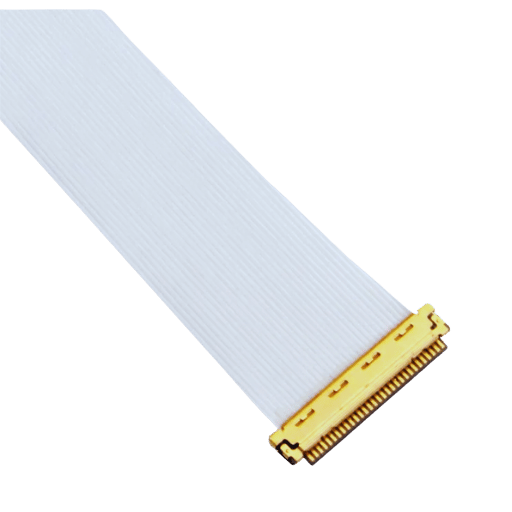
Q: What is the main difference between a ribbon cable and a flexible flat cable (FFC)?
A: Ribbon cables and flexible flat cables (FFCs) are often confused but have distinct differences. Ribbon cables consist of multiple flat, parallel conductors that are insulated and bound together, creating a flat, ribbon-like appearance. They typically have more rigid plastic insulation. In contrast, FFC cables feature conductors bonded to a flexible plastic film base, making them significantly more pliable. While both are types of electrical cable that is both flat and flexible, FFCs can bend and fold with much greater ease and take up less space, making them ideal for tight installation environments in modern electronics.
Q: How are FFCs (Flexible Flat Cables) different from flex circuits?
A: FFCs and flex circuits (or FPCs – Flexible Printed Circuits) differ primarily in their construction and capabilities. FFCs are simple conductors laminated between flexible plastic film layers, designed mainly for basic connection purposes. In contrast, FPC is a flexible printed circuit board built onto a flexible material that can include complex circuit patterns, components, and multiple layers. While FFCs simply transmit signals from one point to another, flex circuits can contain actual electronic components and circuits. This makes flex circuits more versatile but also more expensive than FFCs, which are preferred when only basic connections are needed in space-constrained applications.
Q: Can ribbon cable be used in applications that require frequent bending or flexing?
A: Ribbon cable is not ideal for applications requiring frequent bending or flexing. While it does offer some flexibility, it’s considerably more rigid than true flexible cables like FFCs or flex circuits. Ribbon cables have thicker insulation and cannot withstand repeated flexing without eventual damage to the conductors or insulation. For applications where the cable needs to bend regularly or fit through tight spaces that require sharp turns, flexible flat cables or flex circuits are better choices. Ribbon cables are more suitable for static installations where minimal movement occurs after installation.
Q: What are the advantages of shielded vs unshielded flexible cables?
A: Shielded flexible cables offer superior protection against electromagnetic interference (EMI) and radio frequency interference (RFI), making them ideal for sensitive electronic environments. The shield, typically made of metal foil or braided wire, prevents signal degradation and cross-talk between adjacent conductors. This is crucial in medical devices, industrial equipment, and high-precision instruments. Unshielded cables, however, are lighter, more flexible, less expensive, and take up less space, making them suitable for applications where EMI/RFI is not a concern. The choice between shielded and unshielded flexible cables depends on the specific electromagnetic environment and the sensitivity of the signals being transmitted.
Q: How do I properly connect the end of the cable in FFC and ribbon cable systems?
A: For FFC cables, connection is typically achieved using zero-insertion-force (ZIF) connectors or low-insertion-force (LIF) connectors. The end of the cable is usually reinforced and has exposed conductors that slide directly into the connector. Ensure the cable is inserted straight and fully seated, with the correct orientation (many FFCs are asymmetrical). For ribbon cables, IDC (Insulation Displacement Connector) technology is commonly used, where the connector has sharp contacts that pierce through the insulation when clamped. Alternatively, some ribbon cables use pre-stripped ends that connect to pin headers. In both cases, proper alignment is critical, and using the connector type specifically designed for your cable type will ensure reliable connections.
Q: In what applications are flex circuits preferred over traditional flat cables?
A: Flex circuits are preferred over traditional flat cables in applications requiring complex routing, three-dimensional installations, or where components need to be mounted directly onto a flexible substrate. They excel in devices that need to fold or bend during operation, such as smartphone hinges, camera mechanisms, or medical implants. Flex circuits are also ideal when weight and space are critical constraints, as in aerospace applications or wearable technology. Additionally, they provide better reliability in high-vibration environments since they have fewer connection points than traditional cabling solutions. For products requiring high component density in a compact, flexible form, flex circuits offer a level of integration that standard flat cables simply cannot match.
Q: What are the durability considerations when choosing between flat and flexible cables?
A: When assessing durability, several factors differentiate flat and flexible cables. Flexible cables like FFCs can bend and fold repeatedly without damage, making them suitable for moving parts in devices like printers or scanners. However, they’re more susceptible to tearing if handled improperly. Flat ribbon cables offer better resistance to pulling forces but will fail under repeated flexing. For environmental durability, consider that flexible cables typically have better resistance to chemicals and moisture, while some ribbon cables may provide better temperature resistance depending on their insulation material. The expected movement pattern, installation environment, and mechanical stress should guide your choice – dynamic applications generally favor true flexible cables, while static installations might be better served by traditional flat cables.
Q: How do custom cable assemblies compare with standard FFCs for specialized applications?
A: Custom cable assemblies offer significant advantages over standard FFCs for specialized applications, though at higher costs. Custom assemblies can be designed with precise conductor spacing, length, and termination methods specific to your application’s needs. They can incorporate mixed conductor gauges, selective shielding, reinforcement at stress points, and specialized connectors integrated directly at the end of the cable. For applications in extreme environments, custom solutions can feature materials with specific temperature, chemical, or flexibility requirements that standard FFCs don’t provide. While standard FFCs are more economical and readily available for common configurations, specialized medical devices, aerospace equipment, or industrial machinery often require custom cable assemblies that exactly match the mechanical, electrical, and environmental demands of the application.
Reference Sources
1. An EMI Mitigation Investigation on Flexible Flat Cables and Connectors
- By: Zhengrong Liang et Al.
- Date of Publication: July 26, 2021
- Publication: IEEE International Joint EMC/SI/PI and EMC Europe Symposium
- Major Results: The study focuses on the type and amount of common mode noise emanating from flexible flattening cables (FFC) and FFC connectors. The authors attribute the sources for common mode noise to ground discontinuity and voltage differences between the Printed Circuit Board (PCB) ground and FFC ground. Improvements on shielding and ground continuity enabled them to achieve an 11 dB reduction in total radiation power at 5 GHz.
- Approach: The authors performed full-wave and circuit simulations to evaluate noise sources and solutions for EMI reduction(Yan et al., 2021, pp. 515–519).
2. On Robust Assembly of Flexible Flat Cables Combining CAD and Image-Based Multiview Pose Estimation and a Multimodal Robotic Gripper
- Authors: Junbang Liang et al.
- Publication Date: 2024
- Journal: IEEE Open Journal of the Industrial Electronics Society
- Key Findings: The work proposes an integrated approach of CAD model-based object pose estimation and multiview fusion for accurate assembly of flexible flat cable (FFC) pose estimation. The method proposed in this work showed a high level of successful assembly, which proved its robustness for industrial applications.
- Methodology: This research included an FFC insertion task, which was designed as an experiment, including advanced pose estimation with robotic assembly accuracy enhancement as cited (Liang et al., 2024, pp. 1104–1114).
3. Grippers with Dexterous Tip Nails, Active Nails, and Reconfigurable Suction Cup Modules: Robotic Manipulation of Flexible Flat Cables
- Authors: Joao et al.
- Publication Date: 23/10/2022
- Journal: IEEE International Conference on Intelligent Robots and Systems
- Key Findings: This paper targets the problem of robotic flexible flat cable (FFC) manipulation. FFC handling and assembly robotic systems have been developed utilizing multi-modal grippers, which cope with multidimensional FFC flexibilities and fragilities.
- Methodology: The research involved designing and testing a gripper for specific tasks and assembling with distinct features such as interference screws and three degrees of freedom which advanced toss manipulation ability (Buzzatto et al, 2022, pp 1602-1608).