The difference between armored cables, flat and round, both structurally and functionally, needs to be understood thoroughly to make informed decisions. Every cable type has its distinct role in different industrial sectors like construction, telecommunication, manufacturing, and automation, especially in the setting up power cables. This guide highlights the significant differences between flat and round armored cables in construction, applications, and performance in various conditions. The primary focus of this article is to provide readers with vital information regarding the differences between flat and round armored cables to help them choose the appropriate cable that fulfills their requirements, making the projects efficient, safe, and durable.
What is a Flat Cable?
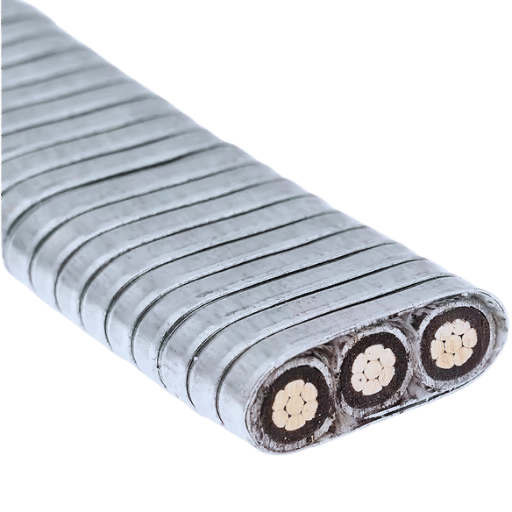
A flat cable is an electrical cable arranged in a flat ribbon shape to optimize space for ordering and connecting multiple cables in compact settings. Unlike traditional circular wires, flat cables allow routing with minimal straining bends and enhanced flexibility. Such wires are routinely utilized in robotics, elevators, and circuit board connections as they require precise alignment and effective electrical power distribution while optimizing the space, making these cables critical. Additionally, their design helps reduce electromagnetic interference, improving the entire system’s performance.
Characteristics of Flat Cables
- Space Efficiency: Flat cable installation is space-saving, making them suitable for smaller congested settings.
- Flexibility: Greater flexibility of these cables enables more straightforward navigation of tricky turns within small and intricate areas.
- Reduced Electromagnetic Interference (EMI): Flat design helps reduce EMI, which enhances overall system performance and signal integrity.
- Durability: These cables can withstand harsh conditions due to the strong insulating materials used, which increases their durability in hostile applications and overall low wear resistance.
- Simplified Installation: Round cables are neater and more straightforward to arrange due to their shape and cross-section.
Advantages of Using Flat Cables
Flat cables are widely used in sectors where space saving and preservation of a signal’s quality are crucial. Some of the primary uses are outlined below:
- Automotive Systems: Implemented the complex interconnection of automotive wiring to save space while optimizing automotive functionality.
- Consumer Electronics: Used in laptops, printers, and cameras for internal connections owing to their compact size and effectiveness.
- Medical Equipment: Applied in diagnostic devices and imaging systems due to the high accuracy and dependability required.
- Industrial Automation: Used in robotics and machinery owing to their versatility and excellent strength.
These cables are essential in the modern developments of technology in different areas.
Common Applications of Flat Cables
- Aerospace and Defense: Integrated in aircraft and military systems because of space-saving advantages concerning reliability in harsh environments.
- Telecommunications: Used in networking equipment and communication systems as a fundamental component for telecommunications interface connections.
- Automotive: Found in modern automotive vehicles with infotainment systems, sensors, and electronic control units.
These considerations demonstrate the importance of flat cables, especially control cables, across several advanced technologies and their applications.
Exploring the Round Armored Cable

Features of Round Armored Cables
- Durable Construction: These cables are mechanically robust owing to a protective outer layer, guaranteeing long-lasting dependability.
- Enhanced Flexibility: The round structure facilitates installation in tight spaces or intricate routing configurations.
- Moisture and Corrosion Resistance: Extreme exposure to harmful environmental elements, such as water and other chemicals, does not affect these materials.
- High Tensile Strength: Breaks or stretches are avoided during installation and operation due to the reinforced materials’ exceptional strength.
- Electrical Shielding: EMIs or Electromagnetic Interference are reduced due to the shielded design, allowing for precise and consistent signal transmission.
Benefits of Round Armored Cables
- Enhanced Durability: The armored design ensures reliability in challenging settings, providing superior protection against physical damage.
- Improved Signal Integrity: Effective shielding promotes consistent and reliable performance by decreasing loss and interference, assuring that signals remain intact.
- Environmental Protection: They are perfect for challenging conditions as they resist moisture, chemicals, and other ecological elements.
- Ease of Installation: Routing is greatly simplified due to the flexible but robust construction, which doesn’t forgo strength or safety.
- Longer Lifespan: These are designed to bear mechanical stress, harsh environments, and other such factors, ensuring a decrease in frequent replacement needs.
Typical Uses of Round Armored Cables
Round armored cables are used in different industries where advanced level protection and robust flexibility are fundamental. They are typically utilized in:
- Industrial Facilities: Supplying essential electrical power for machinery and apparatus in furnaces, factories, processing stations, and refinery units.
- Underground Installations: Protecting concealed or buried electrical structures.
- Outdoor applications: Protecting power supply lines in open, exposed environments such as building and construction sites.
- Critical Infrastructure: Supporting reliable operations in Hospitals, Data Centers, and other essential services.
These cables will maintain strength, effectiveness, and durability even in harsh conditions.
Key Difference Between Flat and Round Cables

Design and Construction Variances
The designs of flat and round cables differ in configuration and construction. The layout of flat cables is composed of conductors placed in parallel, which produces a distinctly compact profile. This design works best under applications requiring flexibility and space-saving, like wiring in small places. On the other hand, round cables have conductors grouped in a cylindrical form, with protective layers added for increased strength. This construction makes round cables more useful for areas that need additional protection against heavy mechanical stress and other environmental factors. Both designs have been adapted for a particular operational need, proving efficiency and effectiveness in their tailored use cases.
Performance in Different Environments
Different settings affect the performance of flat and round cables in distinct ways. Flat wires work best in robotics and electronics applications that require bendability and are space-constrained. Their small cross-section enables compact installations that still require movement. Besides spaces that need flexibility, round cables perform best in rigorous settings where strength and resistance against mechanical stress are required, like industrial areas or outside. Their construction and protective covering are ideal under abrasive conditions and ensure long-term durability.
Cost Considerations
Understanding the particular use and characteristics of flat and round cables is necessary before evaluating cost implications. Due to the simpler designs and easier manufacturing processes, flat cables are generally less costly. Their low weight and compact design can also lower shipping and installation costs. Round wires are more expensive than flat cables but offer better shielding and durability, which may warrant the additional cost in more demanding environments. In all cases, however, the cost should be evaluated against the intended use case’s performance requirements and operational demands.
How Armored Cables Provide Protection
Role of Armored Protection Layer
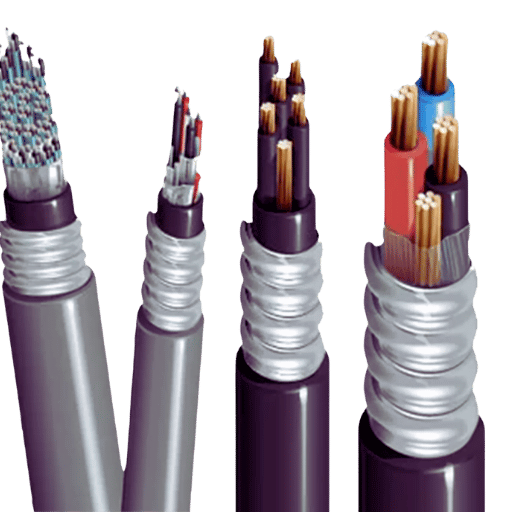
Cables with an armored protective layer help to prevent destructive forces like crushing, impacts, and abrasions to the cable’s internal structure. Since these materials are mechanically robust, this protective layer is commonly constructed from galvanized steel or aluminum. Furthermore, the protective layer resists environmental conditions such as water, rodents, and various other forms of external danger. Armored layers provide additional protection, essential in outdoor or industrial installations where heavy cables are used since such locations are known to have extreme conditions, making reliability and durability vital.
Durability and Strength of the Cable
As with most cables, the outer layer and core are the primary determinants of a cable’s durability and strength. The outer layer of such a cable is galvanized steel or aluminum; therefore, the cable is armored against all mechanical impacts, such as crushing and moisture exposure. Since the core materials of the cable are designed to function adequately under severe stress, exorbitant temperatures, and other adverse conditions, the cable is suited for control cable uses. These materials guarantee the cable will function well in standard and extreme operating conditions.
Suitability for Harsh Environments
Cables for challenging environments are built to withstand high temperatures, severe mechanical loads, water, and chemical substances. Their longevity is ensured through strong outer protective shields, fittings composed of anti-corrosive materials, and insulated cores that ensure dependability and good performance. These attributes make them ideal for oil and gas, mining, and sea operations where constancy over long periods and electrical power dependability are crucial.
Choosing Between Flat Cable and Round Cable for Your Needs

Factors to Consider in Your Decision
When presented with a flat or round cable choice, I consider the following factors first. To begin with, I pay special attention to the application’s spatial limitations, as flat cables are more appropriate for congested settings because they occupy less space and can get routed in tighter areas. After that, I consider the need for ease of movement and mechanical strength, which is usually better for round cables in the case of dynamic uses. Also, I think the type of wiring complexity and the subsequent installation, because of their better shape, flat cables make for better organized hierarchical structured cabling systems. Finally, I ascertained the external conditions where the cable would operate in CAD software MS Office Visio, ascertaining the need for temperature, moisture, and abrasion resistance.
Industry-Specific Use Cases
Both the industry and application, with their respective voltage and current parameters, determine whether to use round or flat cables.
- Manufacturing and Automation: Flat cables, due to their bending characteristics, are largely employed in organized, high-flex repetitive motion contexts like robotic arms and conveyor belts.
- Aerospace and Defense: Within these industries, round cables have a competitive edge due to their greater strength, easier routing within restrictive areas, and better environmental durability.
- Telecommunications: Round cables have a commanding presence here since they exhibit superior signal degradation over distance, which is critical for data transmission.
- Consumer Electronics: Printers and televisions use flat cables because of their compact and simplified internal wiring.
Industries can enhance performance and cost-efficiency in operational needs by optimizing the cable type to fit the environmental conditions of the cable used.
Technological Advancements in Cable Design
Integrating new materials within cable design has brought tremendous improvement along with other emerging technologies. Evolving new manufacturing processes has made the production of cables simpler than ever before. An example would be the high-speed data cables, like Cat 8 Ethernet cables, which allow faster transmission rates to keep up with modern networks. Moreover, the employment of lightweight but rigid advanced polymers and fiber optics has mitigated signal loss while increasing the durability and flexibility of cables. Furthermore, self-healing insulation and modular cable systems have streamlined maintenance and reliability in wire and cable applications. These improvements increase efficiency and compatibility, ranging from industrial automation to consumer electronics.
Frequently Asked Questions (FAQs)
Q: What is the primary distinction between flat and round armored cables in the cable sector?
A: The difference is their shape and specific purpose, which affect the cable type chosen. Compared to round wires, flat cables have advantages in tighter spaces during or with ease of installation. Round wires, with their steel wire armor, are often utilized in applications requiring considerable protection and flexibility.
Q: What is the purpose of using steel wire in armored electrical cables?
A: Steel wire is used in armored electrical cables because it offers considerable protective mechanical strength against external stresses and other environmental conditions. This helps the cable withstand some complex installation and ensures excellent shielding.
Q: How does the insulation in an armored electrical cable help its operation?
A: The armor’s insulation helps prevent the entry of moisture, chemicals, and unwanted electrical currents into the conductor, thus ensuring proper power passage and efficiency. Insulation is a vital part of guaranteeing safe and smooth electricity transmission.
Q: In what contexts is a flat armored cable more advantageous than a round one?
A: Flat cables are more advantageous when space is limited, or the wires must be laid in narrow channels or ducts. They simplify installation and organization, especially in situations involving multiple wires in relatively confined spaces.
Q: What does a steel wire armored cable protect?
A: Steel wire armored cables are ideally suited for underground and industrial applications because they offer excellent protection from mechanical damage and environmental influences like moisture.
Q: Why do some armored cables have higher prices than others?
A: While other factors like construction material (e.g., premium steel wire), design intricacy of the armored protective layer, and custom-tailored purpose requirements may apply, these add to the cost of the cable, making it more expensive than its unarmored counterparts.
Q: What are the types of electrical cables other than armored cables? When would you use an armored cable?
A: The use of armored cable is required due to the increased risk of mechanical damage, physically hostile locations, or outdoor exposure where environmental conditions can compromise the integrity of the cable.
Q: How does the mechanical strength of the cable affect its application?
A: The cable’s mechanical strength influences its durability, determining its effectiveness in environments with violent mechanical stressors, such as impacts or pressure. Therefore, it determines where and how the cable can be used effectively.
Q: Can flat steel wire armored cables be used in flexible applications?
A: Yes, flat steel wire armored cables are applicable in flexible applications, although their shape may restrict flexibility in comparison to round cables, which are better suited for flexible applications involving frequent movement or bending.